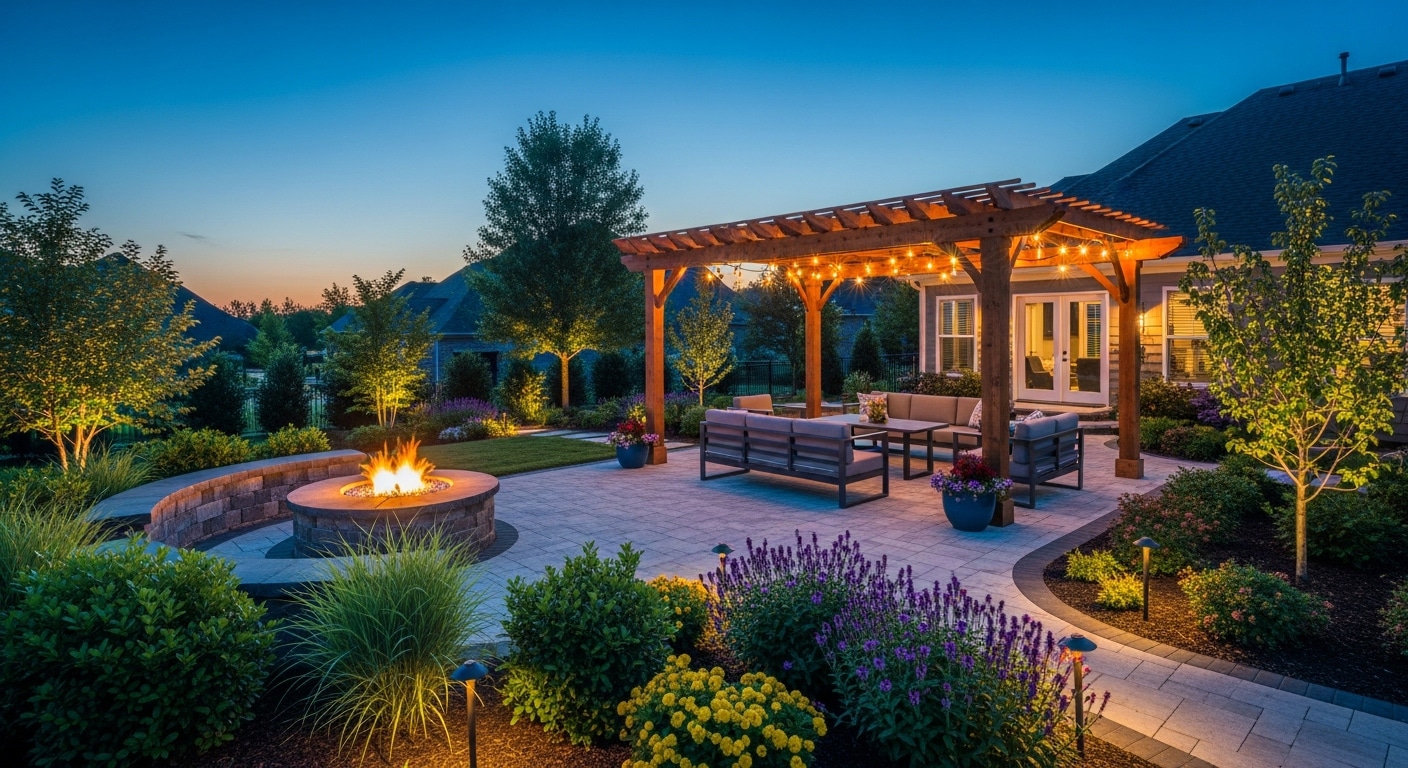
Paver patio installation in Tulsa requires specific base preparation for Oklahoma’s expansive clay soil — the installation process that produces a stable, level surface for 20+ years is fundamentally different from paver installation in sandy or loam soil regions. Here is the installation process VistaScapes & Design uses for every paver patio project in the Tulsa metro.
Paver Patio Installation Steps for Tulsa
- Step 1: Excavation and grade preparation – Excavate 8-10 inches below finished surface grade; Oklahoma clay requires deeper excavation than sandy soils because the base course must be thicker; establish proper drainage slope (1/8 inch per foot minimum, 1/4 inch preferred) away from the home foundation; remove all organic material from the excavated area; the excavation depth is the most important variable in paver longevity on Oklahoma’s clay soil
- Step 2: Geotextile fabric installation – Lay woven geotextile fabric over native clay soil before base material; geotextile separates the gravel base from the clay subgrade, preventing clay migration upward into the base material over Oklahoma’s wet-dry seasonal cycles; overlap fabric seams 12 inches minimum; the installation step that most directly extends paver patio life in Tulsa’s soil conditions
- Step 3: Gravel base compaction – Install 4-6 inches of clean crushed gravel (3/4 inch minus) in 2-inch lifts; compact each lift with a plate compactor to 95% compaction; the gravel base provides drainage and distributes load across the clay subgrade; Oklahoma’s clay soil requires 4-6 inch base minimum (not the 2-3 inch base acceptable in less expansive soils); this is the step most often shortcut by under-qualified contractors, producing paver patios that settle and shift
- Step 4: Bedding sand and screed – 1-inch layer of coarse bedding sand (concrete sand or manufactured sand, not beach sand) screeded to a precise level plane; provides the final adjustment layer for paver setting; the bedding sand layer should be exactly 1 inch after compaction — thicker sand beds compact unevenly and cause paver settlement
- Step 5: Paver installation and cutting – Set pavers in the specified pattern (running bond, herringbone, or basketweave most common); maintain consistent joint width of 1/8 to 3/16 inch; cut edge pavers to fit with a wet saw or paver splitter; install edge restraints on all perimeter edges before jointing; edge restraints prevent edge spread that causes paver pattern migration over time
- Step 6: Polymeric sand jointing – Sweep polymeric sand into all paver joints; compact with plate compactor to drive sand into joints; mist with water to activate polymeric binder; the final step that locks joints against weed growth and ant intrusion in Oklahoma’s environment; reapplication every 5-7 years maintains joint integrity
Call VistaScapes & Design at (918) 779-1317 for a free paver patio consultation in Tulsa. We install paver patios to Oklahoma-appropriate specifications — not the shortcuts that cause settlement in Tulsa’s clay soil. Free on-site visit, no obligation.