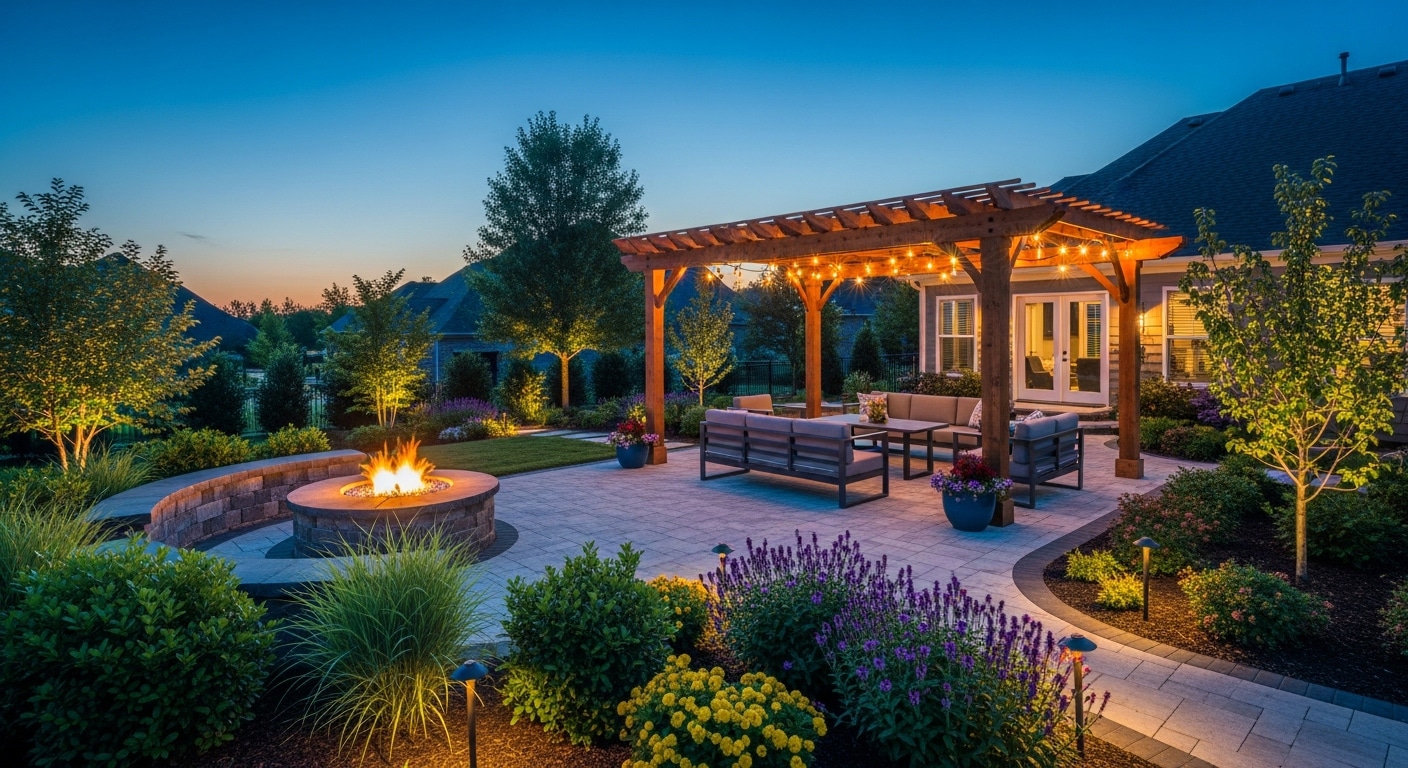
Smoke management is one of the most common practical concerns Tulsa homeowners raise when designing a covered patio with an outdoor kitchen — the last thing anyone wants is a smoke-filled covered patio that drives guests away from the grill rather than toward it. VistaScapes & Design designs outdoor kitchen layouts with smoke management as a deliberate consideration, not an afterthought, and helps homeowners understand how grill placement, patio orientation, and wind patterns interact to create a comfortable outdoor cooking environment.
Grill Placement Within the Covered Patio
The single most effective smoke management decision in a Tulsa outdoor kitchen is grill placement — positioning the grill at the downwind perimeter of the covered patio structure rather than in the center or at the house-attached wall. Oklahoma’s prevailing winds come from the south and southwest for much of the year, which means a grill positioned at the south or southwest edge of the covered patio sends smoke outward and away from the covered structure rather than into it. A grill at the house-attached wall — the most common default positioning — is often the worst location for smoke management because it positions the smoke source at the point of least air movement and most enclosed space. We discuss grill placement relative to the home’s orientation and Oklahoma’s prevailing wind patterns at every outdoor kitchen design session.
Open Sides and Air Movement
A covered patio that is enclosed on three or four sides — with privacy screens, glass panels, or walls on multiple sides — will accumulate smoke more readily than one with open or screened sides that allow natural air movement. For outdoor kitchen projects where homeowners want privacy screening, we recommend positioning privacy elements on the north and east sides of the covered patio (away from prevailing winds) rather than on the south and west sides where they would block the air movement that carries smoke away from the cooking zone. Ceiling fans on the covered patio also contribute to smoke dispersal — moving the air within the covered structure reduces smoke concentration during calm wind conditions, which Oklahoma has plenty of on humid summer days.
Grill Hood and Airflow Design
The grill’s own hood design affects how smoke exits the cooking zone — built-in grill hoods that are properly sized for the burner area and close fully when not in use direct smoke upward more effectively than ill-fitting or partially open hoods. Some homeowners in fully enclosed outdoor kitchen environments consider dedicated grill exhaust systems — a hood structure above the grill connected to a duct that exhausts smoke through the covered patio ceiling and above the roofline. These systems add construction cost and complexity, and they are typically unnecessary for standard Tulsa covered patios with adequate open area on at least one side. For enclosed outdoor kitchen environments or very low-clearance covered structures, we evaluate whether a dedicated exhaust provision is warranted at the design phase.
Call VistaScapes & Design at (918) 779-1317 for a free outdoor kitchen consultation in Tulsa. We’ll design a grill placement and covered patio layout that manages smoke naturally so your outdoor entertaining environment stays comfortable.