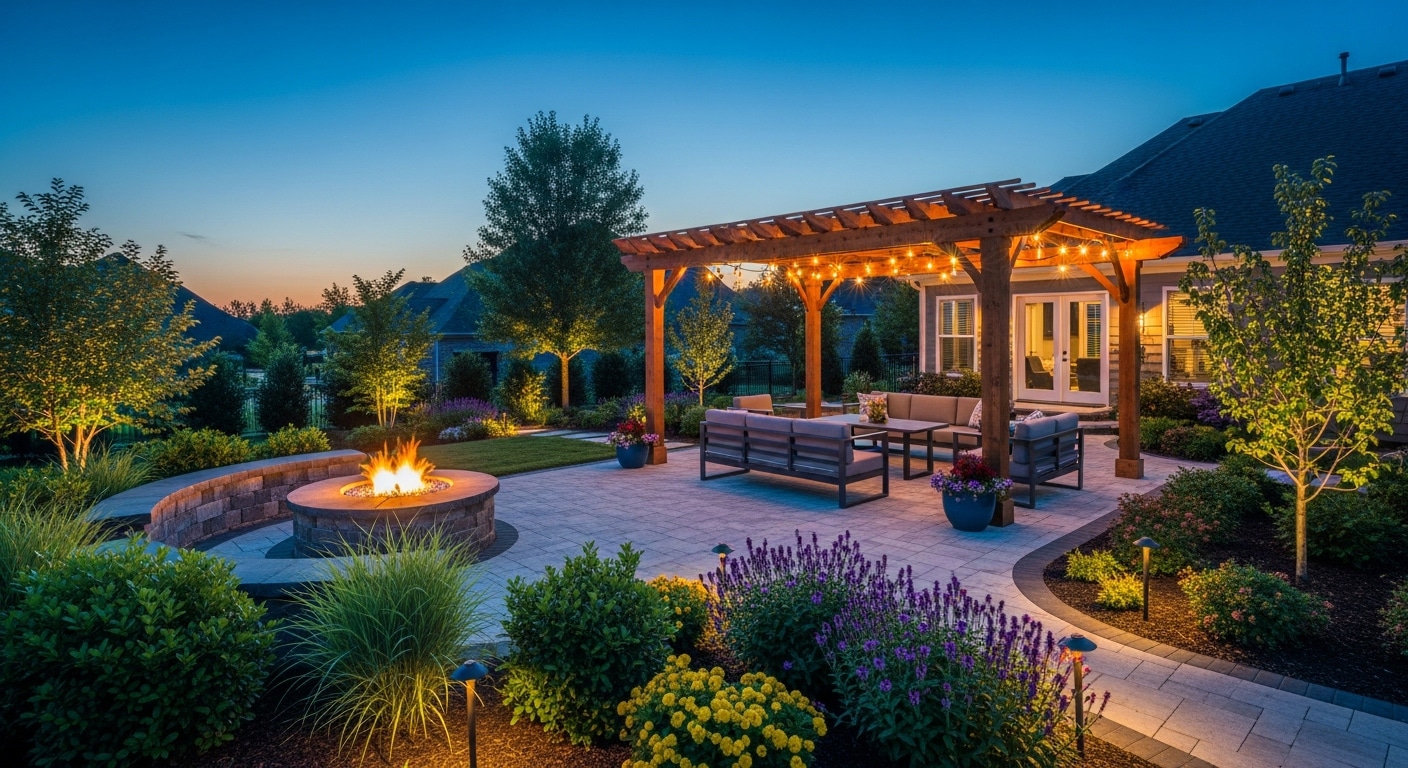
Tulsa’s climate allows comfortable outdoor living from April through October — but the November-through-March shoulder season represents an additional five months of potential outdoor use if the covered patio can be made adequately comfortable in cooler temperatures. Oklahoma’s mild winters (average January high of 47°F, with temperatures frequently in the 50s and 60s through December and February) mean that heating a covered patio to a comfortable temperature requires much less energy than in colder northern climates. VistaScapes & Design helps Tulsa homeowners evaluate heating options for their covered patio and outdoor kitchen at the design phase so the right heating infrastructure is in place from day one.
Overhead Infrared Heaters
Electric overhead infrared heaters — ceiling-mounted units that radiate heat directly downward onto occupants rather than heating the air — are the most practical heating solution for most Tulsa covered patios. Infrared heaters are effective in open or partially open covered patios because they heat the people and objects directly below them rather than the air volume, which dissipates quickly in an outdoor environment. A 1,500 to 2,000-watt overhead heater positioned above the dining table or seating area provides comfortable warmth at 40 to 50°F ambient temperatures, making November and March outdoor entertaining genuinely comfortable rather than cold. We pre-wire for ceiling heaters during covered patio construction — a dedicated 240V or 120V circuit overhead, positioned at the structural beam location above the dining zone, ensures the heater can be installed without post-construction electrical work. Infrared heaters for covered patios cost $400 to $1,200 for a quality unit, with installation included in the electrical pre-wire scope.
Gas Fire Features
A gas fire pit or outdoor fireplace integrated into the covered patio or adjacent outdoor living area provides both radiant heat and ambiance — the combination that makes outdoor entertaining in cool weather feel intentional and inviting rather than just tolerated. A gas fire table in the seating zone of a covered patio provides heat for the 3 to 4 guests seated closest to it and creates a focal point for the outdoor living space in the cool-weather months when the grill is used less. A masonry outdoor fireplace — a full-height firebox and chimney structure built on the covered patio’s perimeter — provides the most heat output and the most architectural presence of any fire feature option, but adds $8,000 to $20,000 to the project cost. We coordinate the gas supply line for fire features during the outdoor kitchen construction to avoid separate mobilizations for the gas rough-in.
Portable Propane Heaters
Portable mushroom-style propane heaters — freestanding units that run on 20-pound propane cylinders — are the lowest-cost entry point for covered patio heating and are perfectly adequate for occasional cool-weather outdoor use. A quality portable propane heater ($150 to $400) provides enough warmth for a small gathering in 40 to 55°F weather and requires no installation or electrical infrastructure. The trade-offs: propane cylinders require replacement or refill (typically 8 to 10 hours of heat per 20-pound cylinder), the heater occupies floor space in the entertaining area, and the heating zone is limited to the area immediately surrounding the unit. For homeowners who entertain outdoors only occasionally in cool weather, portable propane heating is often the most sensible choice — the capital cost is a fraction of installed heating, and the units can be repositioned or stored when not in use.
Call VistaScapes & Design at (918) 779-1317 for a free covered patio consultation in Tulsa. We’ll design a covered patio and outdoor kitchen that stays comfortable through Oklahoma’s extended shoulder seasons with the right heating infrastructure for your entertaining style.