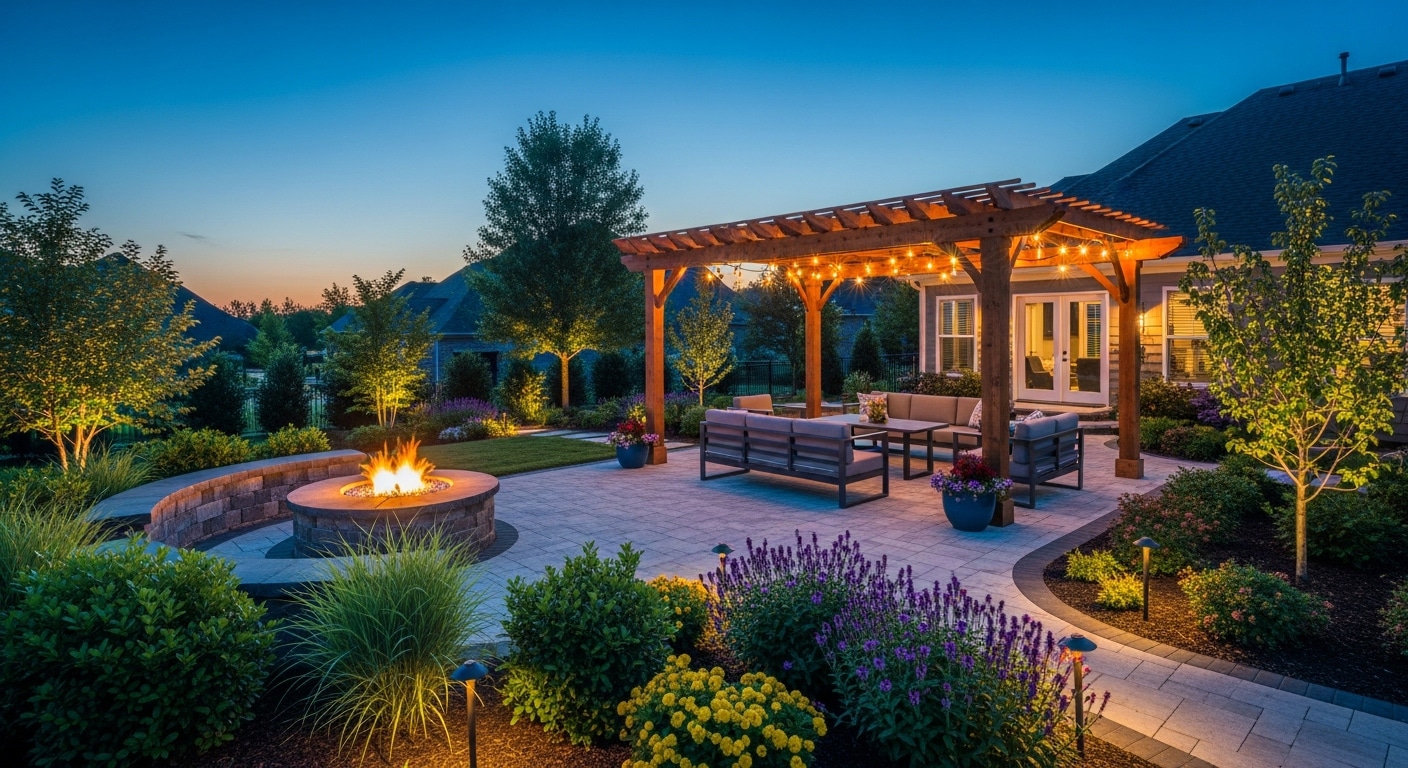
Homeowners planning a new patio in Broken Arrow regularly face the concrete vs pavers decision. Both are viable. They have real differences in cost, appearance, durability, and how they perform in Oklahoma’s climate. Here’s an honest comparison from a contractor who builds both.
Poured Concrete Patios in Broken Arrow
Poured concrete is the most economical patio option and the most common base slab for outdoor kitchens. A well-poured concrete patio with proper base preparation, adequate thickness (at least 4 inches, ideally 5–6 under kitchen loads), and control joints will last 20–30 years with minimal maintenance. In Broken Arrow’s clay-heavy soil, proper subbase preparation is critical — concrete poured over inadequately compacted or improperly graded clay will heave and crack within a few years.
Concrete Pros
- Lower cost — typically $8–$15 per square foot installed for standard broom-finish
- Smooth surface that’s easy to clean and furnish
- Integral color and stamped texture options available
- Strong foundation for outdoor kitchen island footings
Concrete Cons
- Oklahoma freeze-thaw cycling and clay soil movement will crack most concrete patios over time — control joints help but don’t eliminate this
- Cracks are permanent and visible unless ground and resealed
- Standard broom finish looks utilitarian — requires stamping, staining, or overlay for premium appearance
- Cannot be easily repaired or modified once poured
Paver Patios in Broken Arrow
Concrete pavers (and natural stone pavers) sit on a compacted gravel base with polymeric sand joints — a flexible system that accommodates soil movement and freeze-thaw cycling better than poured concrete. A properly installed paver patio in Broken Arrow’s clay soil will outlast an equivalent concrete pour because the individual units move slightly with the soil rather than cracking under tension. Individual damaged or sunken pavers can be reset without replacing the entire patio.
Paver Pros
- Significantly more design flexibility — hundreds of colors, shapes, patterns, and textures
- Better accommodation of Oklahoma soil movement — individual units flex rather than crack
- Individual units can be reset or replaced if damaged or settled
- Premium appearance that photographs and shows better for home listings
- Natural stone pavers (limestone, flagstone, travertine) create a genuinely distinctive outdoor space
Paver Cons
- Higher cost — typically $18–$35 per square foot installed depending on material and pattern
- Joints can allow weed growth if polymeric sand degrades — requires occasional reapplication every 5–8 years
- Individual paver surface can be uneven after significant soil movement — requires occasional re-leveling
- Oklahoma clay soil requires careful base preparation for stable long-term installation
Which Is Right for Your Broken Arrow Project?
- Choose concrete if: Budget is the primary constraint, you’re building a utilitarian slab primarily as an outdoor kitchen base, or you’re comfortable with stamped/stained options for aesthetic upgrade
- Choose pavers if: Design quality is important to you, you want a premium appearance that adds real value to a listing, you’re investing $45,000+ in the overall outdoor room project (the patio surface should match the investment level), or you want the flexibility to repair or modify the surface in the future
Our most common recommendation for Broken Arrow outdoor kitchen projects in the $50,000+ range: concrete block or poured concrete base slab under the kitchen island footings, with concrete paver or natural stone patio surface surrounding the island and extending to the dining and seating zones.
Free Broken Arrow Patio Estimate
Call (918) 582-7890 or fill out the form below. We’ll help you select the right patio surface for your project scope, budget, and aesthetic goals.
[contact-form-7 id=”contact-form” title=”Contact Form”]