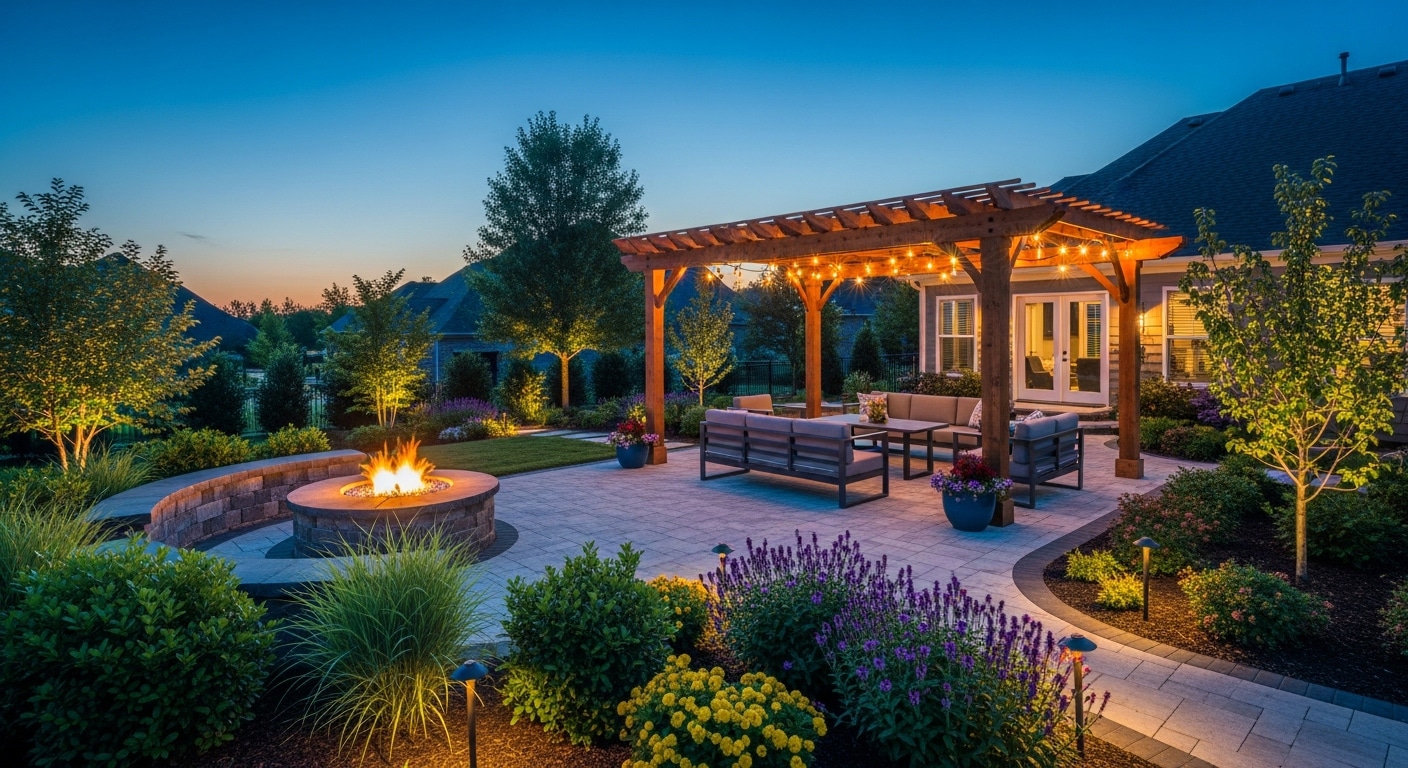
Integrating an Outdoor Kitchen with Your Outdoor Dining Area in Oklahoma
The outdoor kitchen and the outdoor dining table should feel like one cohesive space — not two separate zones that happen to share a backyard. When the integration is done right, guests move naturally between the cooking area and the table, conversations flow without interruption, and the host can manage food while staying engaged with the group. Here’s how we design that integration for Oklahoma homeowners.
The Core Principle: Flow Without Bottlenecks
The most common design failure in outdoor kitchen + dining area integration is creating a bottleneck between the two zones. This happens when:
- The kitchen and dining table are too close together, with no buffer space for movement
- The only path between zones passes through the cooking workspace
- There’s no logical staging area between the hot cooking zone and the dining table
The solution is a deliberate 4-to-6-foot buffer zone between the cooking station and the nearest dining chair. This space accommodates a server carrying dishes, guests walking back for seconds, and the cook stepping back from the grill without stepping into a guest.
Layout Relationships Between Kitchen and Dining
Adjacent Linear Layout
The kitchen runs along one edge of the outdoor space, and the dining table sits parallel to it, 4–6 feet away. This is the most common configuration — simple, efficient, and easy to maintain sightlines from the cooking position to the table and conversation area.
Best for: Rectangular lots and patios where the outdoor kitchen occupies one end and dining occupies the adjacent space.
L-Shape Relationship
The outdoor kitchen occupies one leg of an L, and the dining area occupies the other leg, with a seating lounge or fire pit in the corner. This creates a natural flow and a sense of enclosure — guests feel like they’re in a “room” rather than just standing in a backyard.
Best for: Larger patios where you want to create distinct zones with a clear sense of place.
Kitchen as the Anchor, Dining as the Perimeter
In some designs, the outdoor kitchen acts as the central structure, with bar seating on the kitchen-facing side and a dining table set slightly to one side or behind the kitchen. This works well for smaller patios where space efficiency is important.
Shade Coordination — Oklahoma’s Critical Factor
Oklahoma’s summer sun is intense enough that shade isn’t a luxury for outdoor dining — it’s a functional necessity. Proper integration coordinates shade coverage across both the kitchen and dining zones:
Covered Structures
A pergola, patio cover, or shade sail that spans both the kitchen and dining areas creates the best integration. Guests and the cook share the same shaded environment, reinforcing the sense of being in one unified space rather than two separate areas.
Important: if the kitchen includes a built-in grill under a covered structure, confirm the pergola material and clearance meets fire safety requirements. Non-combustible materials (aluminum, steel, concrete) can be closer to the grill; wood structures require greater clearance from the grill position.
Separate Shade Elements
If separate shade elements cover the kitchen and dining zones, coordinate the visual language — matching pergola stain colors, consistent materials, or coordinated finishes — so the two areas read as one cohesive design rather than random structures.
Lighting Integration for Evening Use
An outdoor dining experience after dark requires coordinated lighting across both zones:
- Task lighting over the cooking area: Under-counter LED strips or overhead grill lights ensure the cook can see clearly. These are bright and functional.
- Ambient dining lighting: Dining tables need a lower, warmer light level than the kitchen — overhead pendants on a pergola, string lights, or dedicated landscape lighting fixtures positioned to create atmosphere without glare.
- Transition zone lighting: Path lighting or low-level fixtures between the kitchen and dining zones defines the route after dark and adds a finished, designed quality to the space.
Furniture Scale and Proportion
Dining furniture should be scaled to match the outdoor kitchen’s visual weight. A large outdoor kitchen with substantial CMU block construction and a granite countertop looks mismatched next to a lightweight 4-person patio set. Principles:
- Match visual weight — substantial kitchens deserve substantial dining furniture
- A 6-person or 8-person dining table is appropriate for most outdoor kitchens designed for entertaining
- Material coordination matters: a stainless-accented kitchen pairs naturally with aluminum or powder-coated steel furniture; a stone veneer kitchen looks better with teak or resin wicker
- Leave enough clearance around the dining table for chair pull-out — 36 inches minimum from table edge to any obstacle
Frequently Asked Questions — Outdoor Kitchen and Dining Integration Oklahoma
VistaScapes Design doesn’t just build outdoor kitchens — we help Broken Arrow and Tulsa homeowners design complete outdoor living spaces where everything works together. Call (918) 779-1317 to discuss how your kitchen, dining area, and outdoor living space can be integrated into one cohesive design.