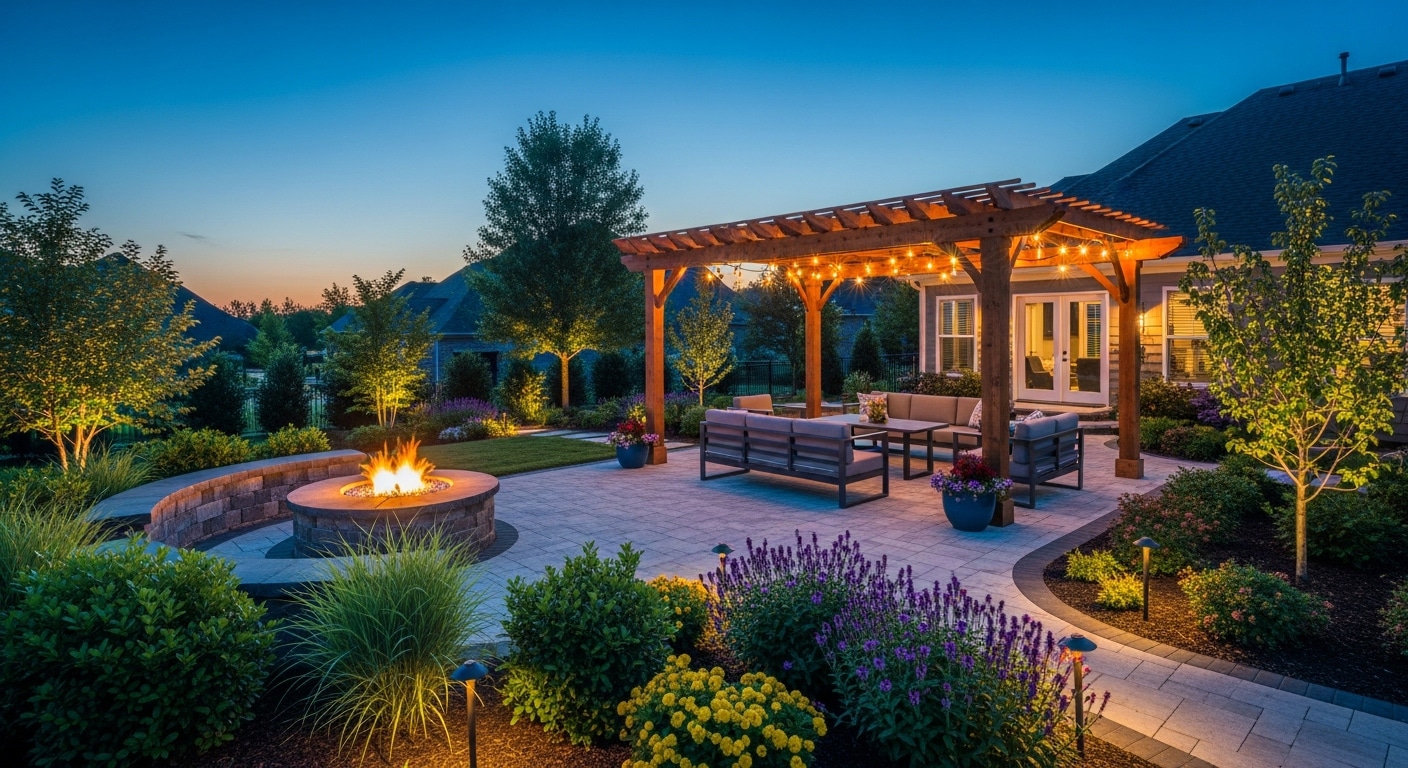
When Broken Arrow and Tulsa-area homeowners plan an outdoor fireplace, one of the first decisions is gas vs. wood-burning. Both deliver the warmth, ambiance, and gathering-point function that makes an outdoor fireplace such a compelling outdoor living feature — but they deliver it differently. Here’s our honest breakdown from years of designing and building outdoor fireplaces throughout northeast Oklahoma. Call VistaScapes at (918) 779-1317 to discuss the right fireplace configuration for your project.
Gas Outdoor Fireplaces — The Case For
- Instant ignition: Flip a switch or hit an app, and you have fire in seconds. No kindling, no waiting for logs to catch, no smoke in your eyes while you get it going
- Consistent flame: Gas delivers a reliable, controlled flame that stays consistent regardless of wind or humidity conditions
- No ash management: Zero cleanup after use — a significant advantage for frequent outdoor fireplace users
- No wood storage: Eliminating the need to store, season, and haul wood is a lifestyle simplification many Broken Arrow homeowners prefer
- Lower insurance impact: Some Oklahoma homeowners insurance policies treat gas fireplaces more favorably than wood-burning
- Smoke control: Gas fires produce minimal smoke — critical when your outdoor fireplace is under a covered structure or close to seating areas
Gas Outdoor Fireplaces — The Case Against
- No wood smoke aroma: For many Oklahomans, the smell of burning hardwood IS the outdoor fireplace experience — gas can’t replicate it
- Gas line required: Installation requires running a dedicated gas line to the fireplace location — adds to project cost and requires contractor coordination
- Ongoing fuel cost: Natural gas or propane expenses add up over years of use; wood-burning uses a renewable fuel you may source locally
- Less authentic feel: Gas log sets look realistic but the subtleties of actual wood combustion — crackling, ember glow, unpredictable flame movement — are hard to fully replicate
Wood-Burning Outdoor Fireplaces — The Case For
- Authentic experience: Real wood fire with smoke, crackle, and ember glow that gas genuinely cannot fully replicate
- No utility connection required: Wood-burning fireplaces don’t need gas lines — an advantage for properties where running gas to the fireplace location is expensive or difficult
- Oklahoma hardwood availability: Oklahoma’s abundant hardwood sources make quality firewood accessible and often affordable locally
- Cooking capability: Wood-burning fireplaces can be used for cooking — pizza, bread, cast iron — that gas log sets can’t accommodate
Wood-Burning Outdoor Fireplaces — The Case Against
- Smoke management: Oklahoma’s variable wind direction sends smoke unpredictably — toward guests, into covered structures, toward neighbors
- Open burn ordinances: Broken Arrow and some Tulsa-area communities have seasonal open burn restrictions that affect wood-burning fireplace use
- Startup time and effort: Building and maintaining a wood fire requires more effort than instant gas ignition
- Ash cleanup: Regular ash removal and firebox cleaning is required for wood-burning fireplaces
- Creosote buildup: Annual chimney inspection and cleaning is required for safe wood-burning fireplace operation
Our Recommendation for Most Oklahoma Homeowners
For the majority of Broken Arrow and Tulsa-area homeowners who want an outdoor fireplace for gathering and ambiance rather than cooking, gas is the practical winner. The convenience advantage is enormous — you actually use the fireplace more when ignition is instant. For homeowners who specifically value the wood fire experience or plan to cook in the fireplace, wood-burning is the authentic choice.
Call VistaScapes at (918) 779-1317 to discuss the right fireplace configuration for your outdoor living project. We build both gas and wood-burning outdoor fireplaces throughout Broken Arrow, Tulsa, and northeast Oklahoma.