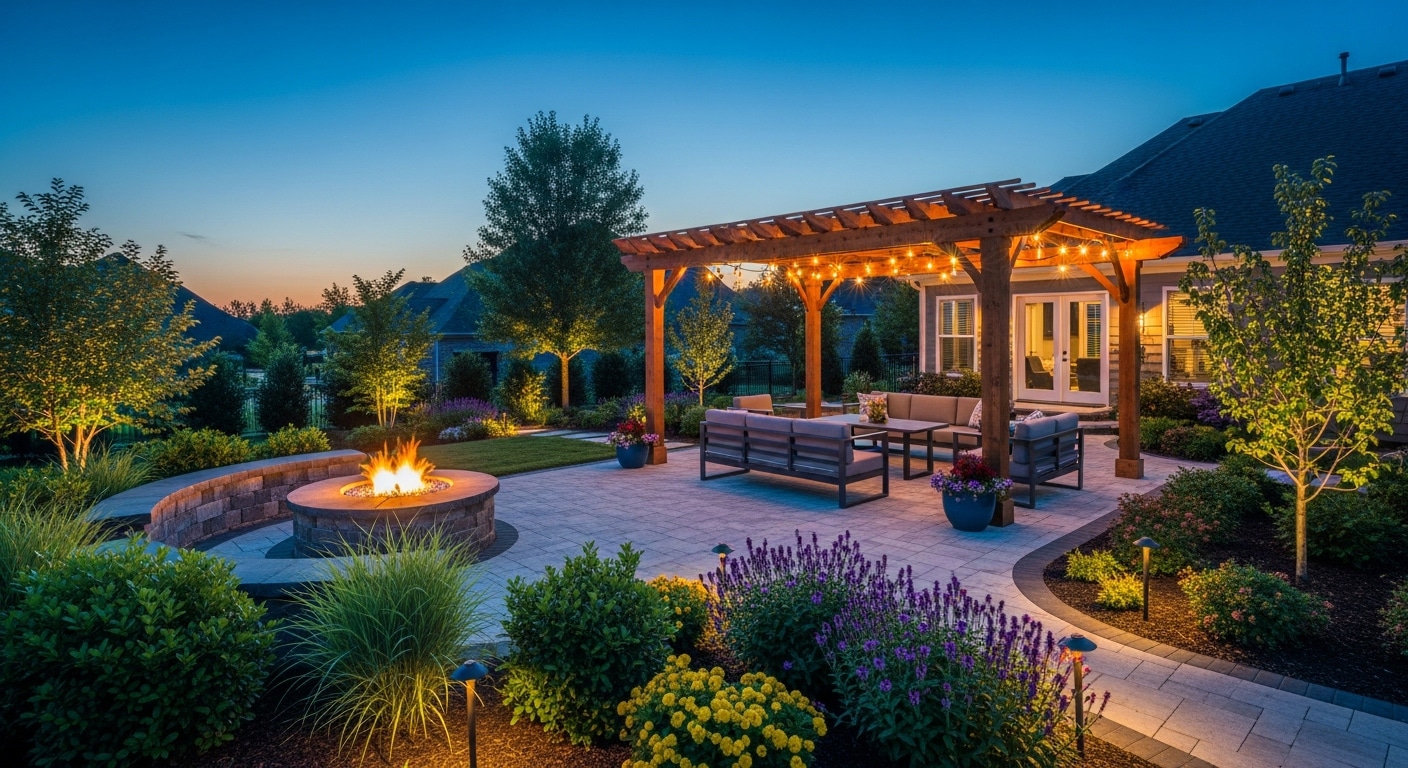
One of the first decisions Broken Arrow homeowners face when planning a fire pit is fuel type: wood-burning or gas (propane or natural gas). Both create beautiful fire features that anchor an outdoor living space — but they have meaningfully different characteristics that make one or the other the right choice depending on how you plan to use the space, how much maintenance you want to take on, and what kind of fire experience matters most to you. Here is an honest comparison.
Wood-Burning Fire Pits
What Wood-Burning Does Best
- Authentic fire experience — The crackling sound, the smell of burning wood, and the ritual of building and tending a real fire are things propane simply cannot replicate. For many people, this is the entire point of a fire pit.
- More radiant heat — A wood fire produces more intense radiant heat than most propane fire pit burners, making a wood-burning pit more effective for warming a cold Oklahoma evening in October or November.
- No utility costs — Wood is a one-time purchase per load. If you have access to cut firewood, your fuel cost can be very low.
- No gas line or tank required — No coordination with a licensed plumber, no tank installation, no monthly fuel monitoring.
Wood-Burning Drawbacks
- Smoke direction shifts with wind — guests rotate around the pit to avoid smoke
- Ash cleanup required after every use
- Wood storage and management required
- Cannot turn off instantly — embers linger for hours
- Subject to wood-burning bans during drought fire restriction periods in Broken Arrow
Gas (Propane or Natural Gas) Fire Pits
What Gas Does Best
- Instant on/off — Push-button ignition starts the fire in seconds. Turn it off when you go inside with no waiting.
- No smoke — Gas burns cleanly. Guests sit where they want around the pit without rotating away from smoke.
- No cleanup — No ash, no residue, nothing to clean between uses.
- Consistent flame — Adjustable flame height from a low ambient glow to a full-height feature fire.
- Allowed during fire restrictions — Most municipal fire restriction ordinances permit gas fire features during wood-burning bans.
Gas Drawbacks
- Less authentic fire experience for some homeowners
- Requires gas line or tank installation (and licensed plumber for the rough-in)
- Ongoing propane cost or natural gas utility charge
- Most propane burners produce less radiant heat than a comparable wood fire
Our Recommendation for Broken Arrow
For homeowners who entertain frequently and want the most hassle-free outdoor fire experience, gas is the clear choice. For homeowners who deeply value the authentic fire experience — the crackling, the smell, the ritual — and do not mind the maintenance, wood-burning delivers something gas cannot. We can also build a fire pit designed for either fuel type from the start, or include a propane conversion option in a wood-burning pit design so you have future flexibility.
Call or text VistaScapes at 918-779-1317 to discuss fire pit options for your Broken Arrow outdoor space. Free consultations available.