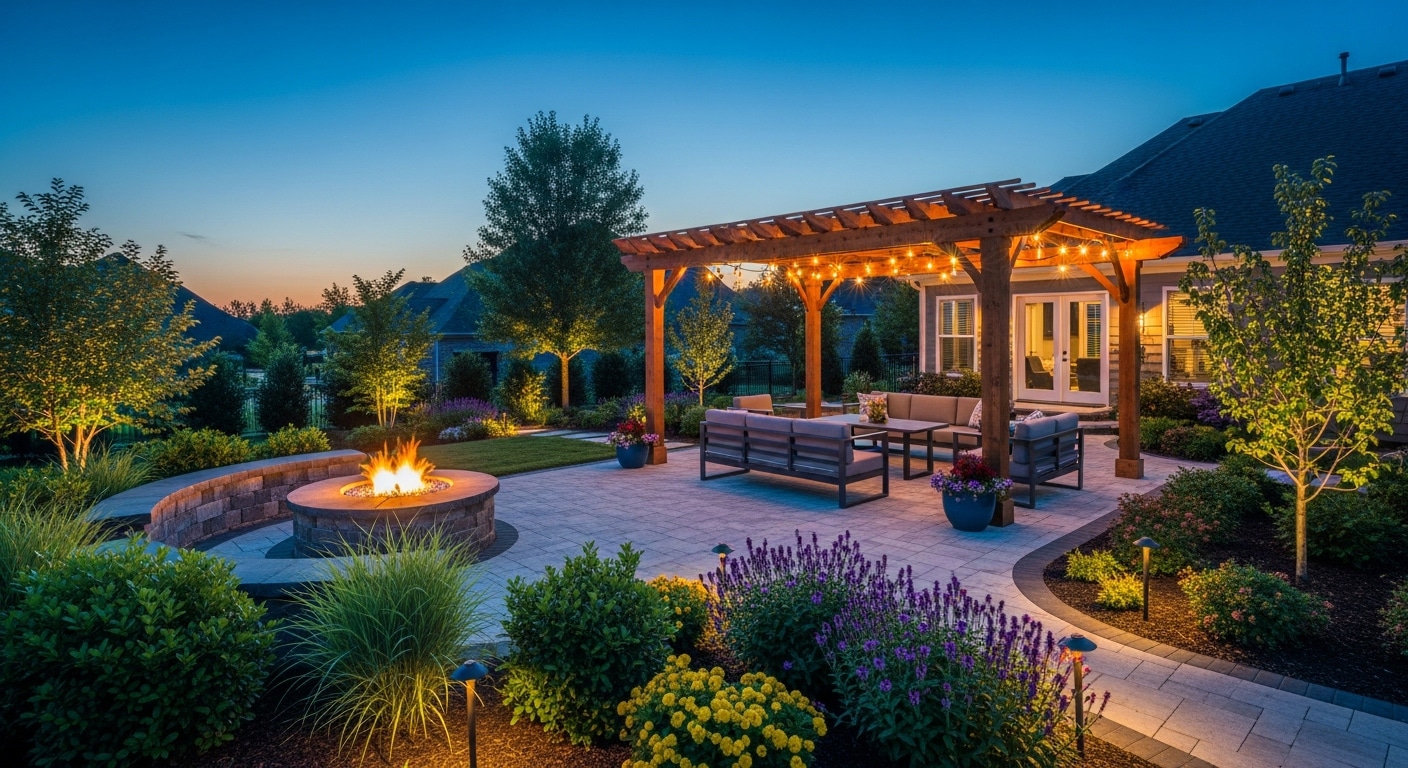
One of the most common questions we hear at VistaScapes Design & Build from Tulsa and Broken Arrow homeowners is: should I build a gas or wood-burning outdoor fireplace? Both have real merits. This guide breaks down the honest pros and cons of each so Oklahoma homeowners can make the right call for their outdoor living space. Call 918-779-1317 to discuss which option fits your project.
Wood-Burning Outdoor Fireplaces in Oklahoma
The Case FOR Wood-Burning
There is nothing quite like the experience of a real wood fire. The crackling sound, the smell of wood smoke, the organic behavior of a fire that you feed and tend — these are experiences that gas cannot fully replicate. Many Oklahoma homeowners grew up around wood fires and want that authentic experience in their backyard. For those homeowners, wood is the right answer, full stop.
Wood-burning fireplaces also produce significantly more heat than gas counterparts, which matters on cold Oklahoma winter nights. The radiant heat from a large wood fire warms people seated nearby more effectively than the controlled flame of a gas log set.
The Case AGAINST Wood-Burning
- You need a wood supply — storage, hauling, splitting, and drying takes real effort
- Wind changes can blow smoke into your seating area and into the house through open doors
- Ash cleanup is required after every use
- Lighting and maintaining a wood fire takes 10 to 20 minutes, versus 10 seconds for gas
- Oklahoma burn bans can make wood-burning fires illegal during dry or fire-risk periods
- Creosote buildup in the chimney requires annual inspection and occasional professional cleaning
Gas Outdoor Fireplaces in Oklahoma
The Case FOR Gas
- Instant on, instant off — the fire starts and stops with a switch or remote
- No wood storage, no ash cleanup, no smoke management
- Consistent, clean flame appearance every time
- Gas fire features are typically exempt from Oklahoma burn bans, providing year-round usability even during dry periods
- No creosote — gas fireplaces have much lower chimney maintenance requirements
- Can be integrated with smart home systems for remote control
The Case AGAINST Gas
- The experience is different — gas logs are attractive but do not produce the crackling sound or wood smoke aroma
- Gas line connection adds cost to the project ($500 to $2,000+ depending on run length)
- Less heat output than a large wood fire
- Requires gas service to the property (natural gas or propane tank)
The VistaScapes Recommendation for Oklahoma Homeowners
If you want convenience and use your fireplace frequently — especially for everyday evening use — gas is the practical choice for most Tulsa and Broken Arrow homeowners. If the campfire experience is important to you and you are willing to manage the wood supply and cleanup, wood is deeply rewarding. There is no wrong answer — it comes down to how you actually plan to use the fireplace.
A popular compromise: build a wood-burning masonry fireplace with a gas log lighter installed in the firebox. You get the authentic wood fire experience but eliminate the frustrating 20-minute lighting process — the gas lighter ignites the wood quickly every time. Call VistaScapes at 918-779-1317 to discuss which option is right for your Broken Arrow or Tulsa outdoor fireplace project.