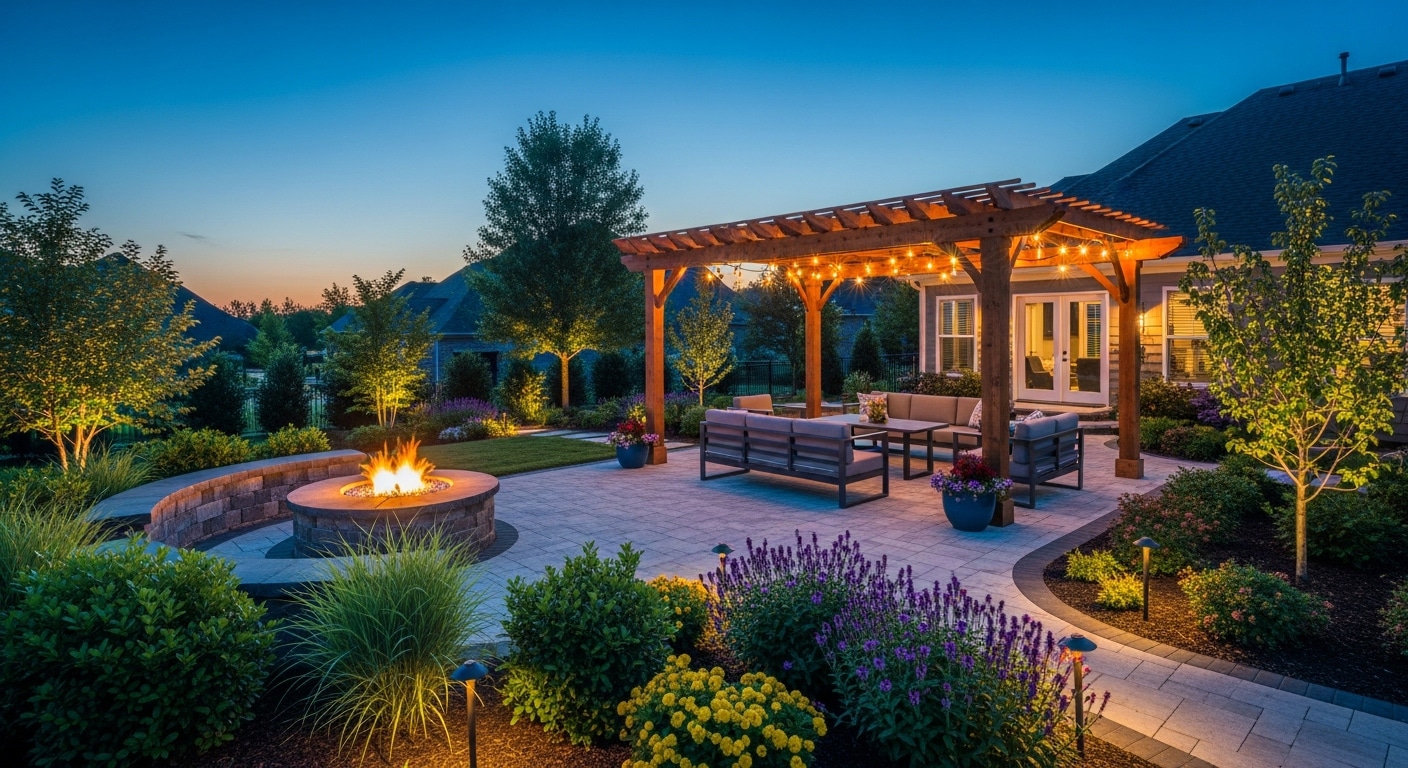
Paver Patio vs Concrete Patio in Oklahoma — Which Is Better for Your Backyard?
One of the most common questions Oklahoma homeowners ask when planning a new patio: pavers or concrete? Both are excellent options, and both work well in northeast Oklahoma’s climate — but they have real differences in cost, maintenance, repairability, and appearance. Here’s a straightforward comparison from contractors who install both every week.
The Core Difference
Concrete patios are poured as a single continuous slab. Paver patios are made of individual interlocking units — brick, concrete, or natural stone — set in a prepared sand and gravel base without mortar between the pieces. That fundamental difference creates most of the other differences between them.
Concrete Patio Pros and Cons for Oklahoma
Pros
- Lower initial cost — a basic concrete patio runs $8–$15 per square foot installed; stamped or decorative concrete runs $15–$25 per square foot
- Fast installation — most concrete patios are poured and done in 1–2 days (plus cure time)
- Solid, uniform surface — no gaps, no wobble; great for furniture and heavy outdoor equipment
- Low maintenance in the short term — once sealed, plain concrete needs very little care for the first few years
Cons
- Cracks in Oklahoma’s climate — Oklahoma’s freeze-thaw cycling and clay soil movement will crack concrete over time; control joints help but don’t prevent cracking entirely
- Difficult to repair — patching concrete cracks is visible and rarely looks good; a significantly cracked slab often requires full replacement
- Drainage challenges — a flat concrete slab can pool water; proper slope must be built in from the start
- Limited design options (plain) — plain broom-finish concrete is utilitarian in appearance; stamped concrete offers more options but at higher cost and with maintenance requirements
Paver Patio Pros and Cons for Oklahoma
Pros
- Handles Oklahoma’s climate better — individual pavers can flex with soil movement and freeze-thaw cycling without cracking; the system absorbs movement that would crack a solid slab
- Easily repaired — individual pavers that settle, crack, or stain can be pulled up, the base re-leveled, and the same paver reset; repairs are invisible
- Better drainage options — permeable paver systems allow water to pass through; even traditional pavers drain through the joints better than a solid slab
- Design versatility — dozens of paver shapes, colors, and patterns; herringbone, running bond, basketweave, fan patterns; can mix colors and borders
- Higher perceived value — paver patios consistently test as more appealing than concrete in real estate research; they photograph better and show better
Cons
- Higher initial cost — paver patios run $15–$30 per square foot installed depending on paver selection and pattern complexity
- Weeds in joints — polymeric sand helps prevent weed growth in paver joints, but some maintenance is required over the years
- Settling over time — pavers can settle in areas with significant soil movement; requires occasional re-leveling (which is straightforward and inexpensive)
Our Recommendation for Oklahoma Homeowners
For most Broken Arrow, Tulsa, and Owasso homeowners who plan to stay in their home long-term, pavers are the better investment. Oklahoma’s clay soils and active freeze-thaw cycling crack concrete slabs over time — it’s a question of when, not if. Pavers handle that movement gracefully, are easily repaired when needed, and look better throughout their lifespan.
Concrete makes more sense when budget is the primary constraint, the patio will be used heavily for vehicles or equipment, or you want a large plain surface area quickly.
Deciding between pavers and concrete for your Tulsa-area patio? Call VistaScapes Design & Build at 918-779-1317. We install both and can walk you through what makes the most sense for your specific project, budget, and backyard. Free on-site estimates throughout Broken Arrow, Tulsa, Owasso, Jenks, Bixby, and surrounding communities.