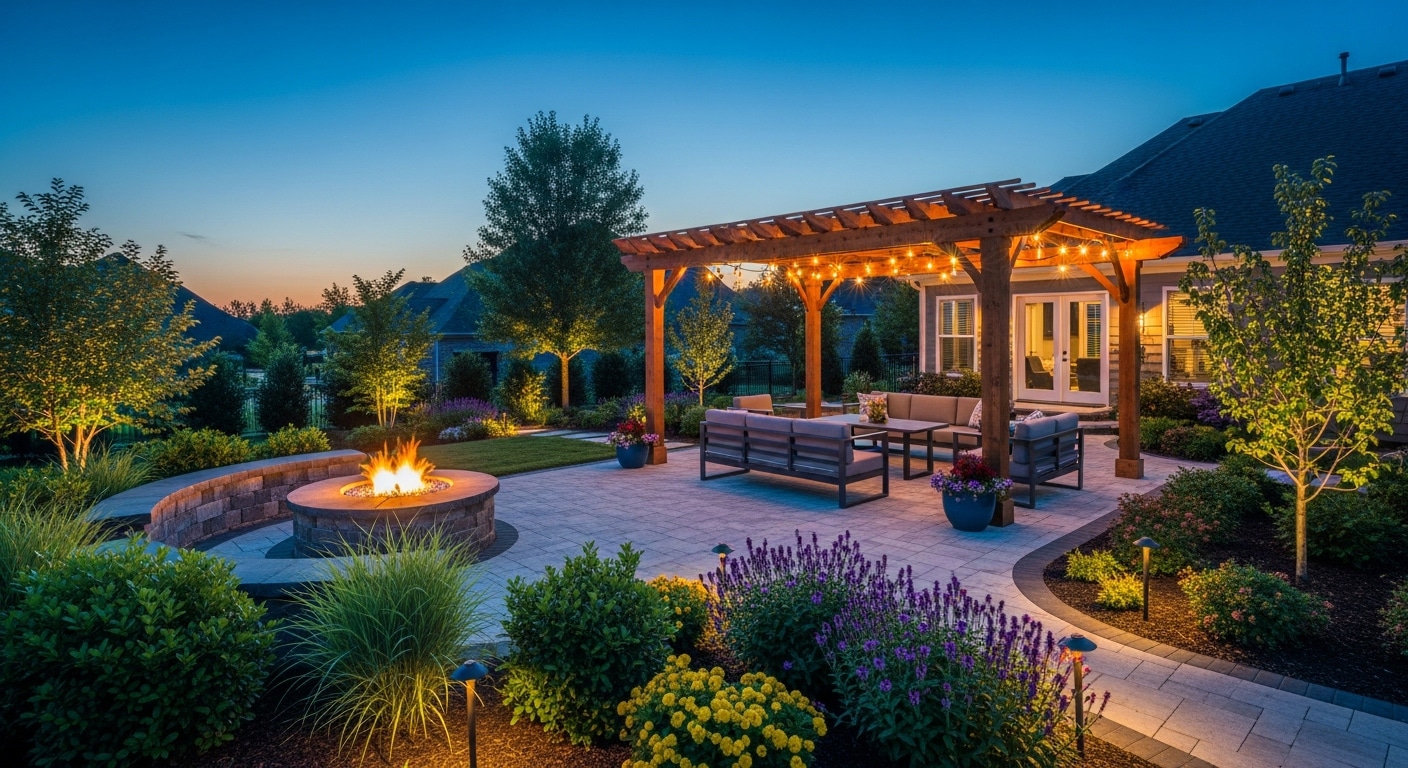
A fire pit without intentional seating design is just a hole in the ground. The seating layout is what determines whether your fire pit becomes the gathering point of your outdoor living space or a feature people admire from a distance but never fully enjoy. Oklahoma’s long outdoor season — comfortable evenings from March through November — means you will use this space constantly, and getting the seating right pays off every single time.
The Fundamental Rule: Distance from the Fire
Before thinking about shapes or materials, understand the distance equation. Too close and seating is uncomfortable — the heat is oppressive and smoke is constant. Too far and the intimacy and warmth disappear. For most residential fire pits in the 36- to 48-inch diameter range, seating placed 5 to 7 feet from the edge of the fire pit is the target zone. This keeps guests warm without roasting them and allows comfortable conversation without shouting across the circle.
In Oklahoma, where summer evenings can still be warm, the ability to push chairs back farther or have seating that is not fixed at the fire’s edge is a practical consideration. Pure built-in arrangements lock everyone in at the same distance regardless of weather.
Full Circle Layout
The classic configuration surrounds the fire pit with seating on all sides. Everyone faces the fire and everyone faces each other — it is inherently social and egalitarian. No seat is better than another, and conversation flows naturally around the circle.
For built-in execution, a continuous curved bench wall with a bluestone, limestone, or concrete cap defines the space cleanly and permanently. The bench height — typically 17 to 18 inches — matches standard chair seat height so guests are not perched awkwardly. Adding back support via a low wall or a combined planter-and-bench design significantly improves comfort for extended use.
A full circle works best on a dedicated circular or square patio hardscape zone. Size the patio so the seating circle sits fully on the hardscape with a clear walking perimeter — a minimum 2 feet — between the outermost seat and the patio edge.
Curved or Horseshoe Layout
A U-shaped or horseshoe configuration wraps seating around three sides of the fire pit, leaving one side open. This is functionally excellent — the open side allows easy access to tend the fire, add wood, and move around without stepping over seated guests. It also creates a natural “head” of the gathering where the host or a conversational focal point naturally sits at the open end looking into the curve.
For built-in bench seating, this shape integrates well with retaining walls, raised planter beds, or step-down terracing — common in northeast Oklahoma yards where grade changes are frequent. A horseshoe bench built into a retaining wall is a dual-purpose solution that handles grade changes while creating premier seating.
Mixed Built-In and Moveable Seating
The most flexible approach builds one or two permanent anchor pieces — typically a curved bench section or a pair of low masonry walls — and fills the remainder of the circle with quality outdoor chairs that can be moved freely. This gives you the aesthetic weight of built-in elements without locking every inch of seating into a fixed position.
In Oklahoma where the weather shifts significantly across seasons, this flexibility is valuable. On a mild 65-degree October evening, you want chairs pulled close. On a humid August night where you are still using the space but running the ceiling fan on a covered patio nearby, you want seating farther back or repositioned to catch the breeze.
Integrating the Fire Pit into a Larger Outdoor Room
The most successful fire pit areas in Broken Arrow and Tulsa outdoor living projects are not isolated features — they are connected to the broader patio plan. A fire pit 15 to 20 feet from an outdoor kitchen creates a natural progression: cook at the kitchen, eat at the dining table, then migrate to the fire pit for the end of the evening. The hardscape should flow between these zones without barriers or awkward transitions.
If your lot allows, a slight grade separation between the kitchen and dining area at one level and the fire pit seating at a slightly lower level creates a defined sense of place without walls or fences. The sunken fire pit look is a classic for a reason — it feels enclosed and intimate even in an open backyard.