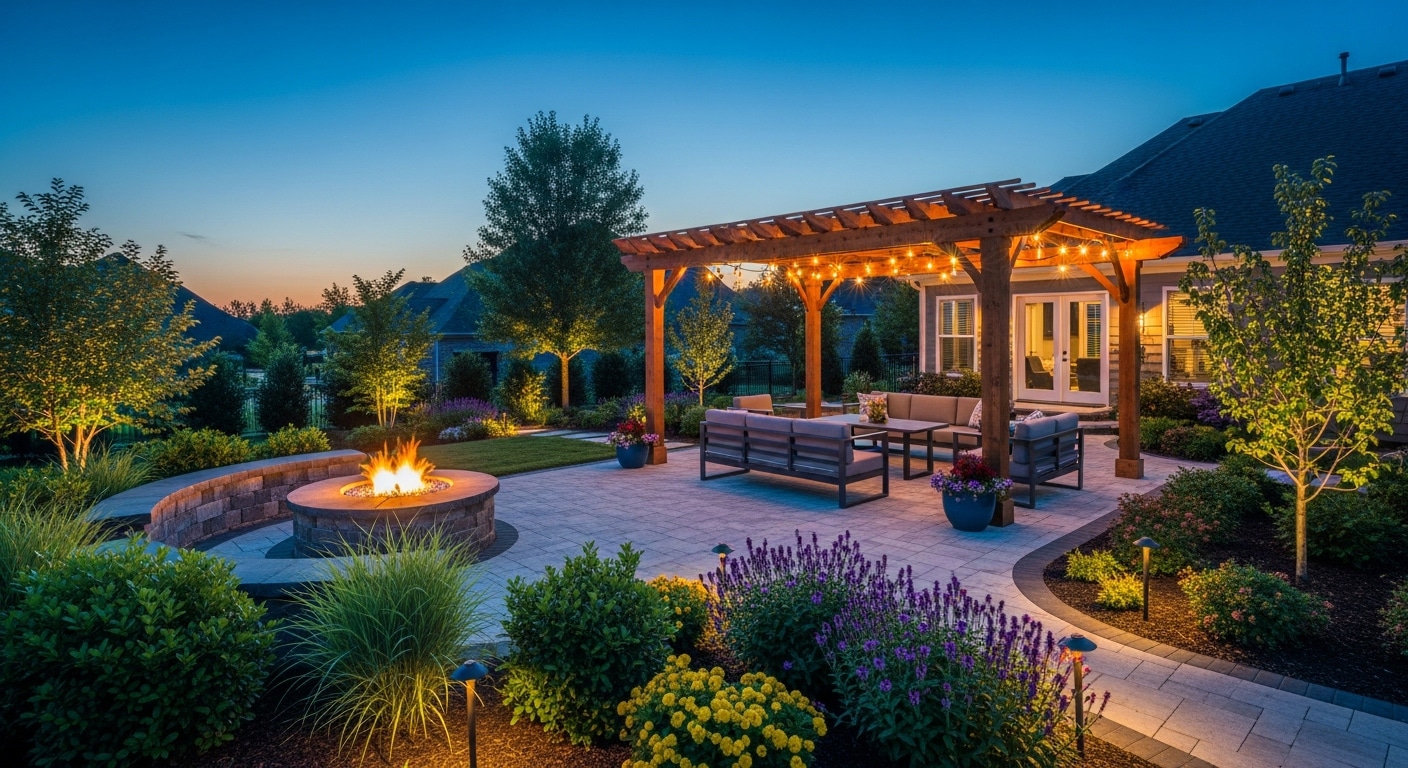
A common pattern in Broken Arrow and Tulsa homes: a homeowner completes an interior kitchen remodel — new cabinets, countertops, appliances — and then stands at the back door looking at the contrast between the renovated kitchen behind them and the empty, underutilized backyard in front of them. The indoor space is finished. The outdoor space is not even started. For many Oklahoma homeowners, this is the moment the outdoor living project gets real.
Using Your Interior Kitchen as the Design Anchor
The advantage of planning an outdoor living space after a completed interior kitchen remodel is that you have a reference point. The materials, colors, and design sensibility of your interior kitchen can anchor the outdoor space’s material palette in a way that makes both spaces feel intentional rather than coincidental. If your interior kitchen has white shaker cabinets, a quartz countertop, and brushed nickel hardware, bringing those same material families — or their outdoor-appropriate equivalents — into the outdoor kitchen creates a coherent experience that flows from inside to outside.
This does not mean the outdoor kitchen needs to match the interior perfectly. Outdoor materials are different from interior materials — outdoor cabinets are powder-coated steel or HDPE polymer, not painted wood; outdoor countertops are quartzite or porcelain, not engineered quartz that cannot handle freeze-thaw. But the tone, the finishes, and the proportions can echo each other intentionally.
Connecting Interior and Exterior Flow
The transition from the interior kitchen to the outdoor kitchen is where the two spaces either connect or collide. In Oklahoma homes with a sliding door or French door from the kitchen to the back patio, the door sill transition, the floor material change, and the threshold height all determine how fluidly the spaces connect. A flush threshold — no step — allows the outdoor space to feel like a natural extension of the interior. A raised threshold or a step down creates a more defined separation.
Grade permitting, designing the outdoor patio to sit at the same level as the interior floor (or within one inch) with a continuous visual sightline from the indoor kitchen to the outdoor kitchen creates the most seamless connection. The chef cooking indoors can see the outdoor grill; the guests outside can see into the house. This inside-outside flow is one of the defining features of well-designed Oklahoma homes.
Appliance Coordination
Homeowners who recently remodeled their interior kitchens sometimes ask whether outdoor appliances can match their indoor appliance suite. The answer is yes with some brands — several manufacturers that produce premium indoor ranges and dishwashers (Wolf, Thermador, Viking) also produce outdoor grill and kitchen equipment that shares design language, handle styles, and control aesthetics with their interior counterparts. For homeowners who want the unified look, this is achievable at the premium level. For homeowners who want the functionality without the brand matching, there is no functional reason the outdoor grill needs to come from the same manufacturer as the indoor range.
Lighting as the Connector
Lighting is often the most effective tool for connecting interior and exterior spaces in Oklahoma homes. Interior kitchen lighting that spills through the back door onto the patio, combined with exterior patio lighting that is visible from the interior, creates a visual connection at night that makes both spaces feel part of the same composition. Low-voltage landscape lighting along the path from door to outdoor kitchen, string lights overhead in the patio zone, and undercabinet task lighting in the outdoor kitchen all work together to define the space and extend usable hours into the Oklahoma evening.