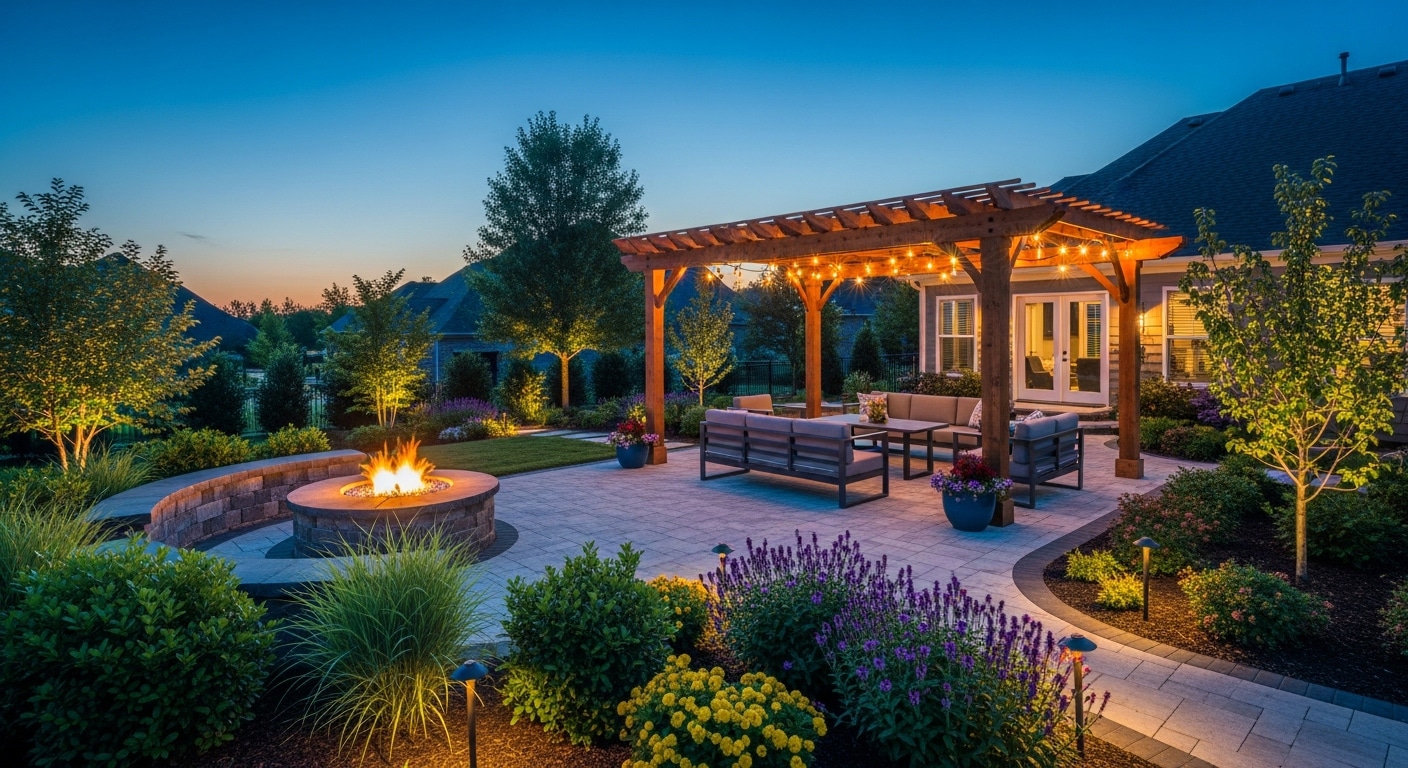
Broken Arrow’s east side — the neighborhoods and communities that run along the 101st Street corridor, east toward the Kenosha Avenue area and toward the Wagoner County line — represents one of the most active outdoor living markets in northeast Oklahoma. The lots are generous, many homes are in the 15- to 25-year range where the first major renovation cycle creates demand for outdoor upgrades, and the proximity to the broader Broken Arrow community amenities makes these neighborhoods attractive for long-term investment.
The Lot Advantage on Broken Arrow’s East Side
Homes in the 101st Street corridor and the Kenosha area were largely built in the 1995 to 2010 period when lot sizes were more generous than the compressed footprints of newer Broken Arrow subdivisions closer to the core. A 12,000 to 20,000 square foot lot — common in this area — allows the full expression of outdoor living design: a covered patio of 400 to 600 square feet, a full outdoor kitchen, a fire pit zone separated from the kitchen, and still enough lawn for kids and dogs to use the yard freely.
The scale of projects in this corridor reflects the available space. Broken Arrow east side projects regularly include 20×30 foot covered structures, full outdoor kitchens with 14 to 16 feet of counter run, built masonry fireplaces, and extended hardscape zones that connect the kitchen and fire areas with flowing paver or concrete paths.
HOA Situations on the East Side
Many east side Broken Arrow neighborhoods have HOAs from the original development era, but the enforcement intensity and the specific requirements vary considerably by subdivision. Some HOAs in this area have architectural review committees that actively review and approve outdoor living projects; others have governance documents that have lapsed in practical enforcement. Do not assume based on neighbors — verify the current status of your HOA’s architectural review process for your specific project before proceeding.
Neighborhoods platted after 2005 in this area generally have more active governance and more specific architectural requirements. Neighborhoods from the late 1990s may have older documents with less specific guidance on outdoor living structures. In either case, a review of your current CC&Rs and a conversation with your HOA management company before design begins takes 30 minutes and prevents expensive post-construction disputes.
Tree Canopy and Shade Planning
East side Broken Arrow neighborhoods from the 1995 to 2010 era have established tree canopies. Mature post oaks, cedar elms, and Bradford pears are common in the backyards and along fence lines of these neighborhoods. Existing shade trees are assets — they provide natural overhead cover that supplements or reduces the need for a covered structure — but their root systems require careful hardscape planning. The most common tree-related problem in this area is paver or concrete installations that were not designed to accommodate root growth, resulting in heaved surfaces within five to ten years.
A contractor working in this area should assess tree root zones before specifying hardscape locations and should use floating paver systems or properly detailed concrete slab designs that accommodate root movement in areas with established trees. This is not a reason to avoid hardscape near trees — it is a reason to design it correctly from the start.