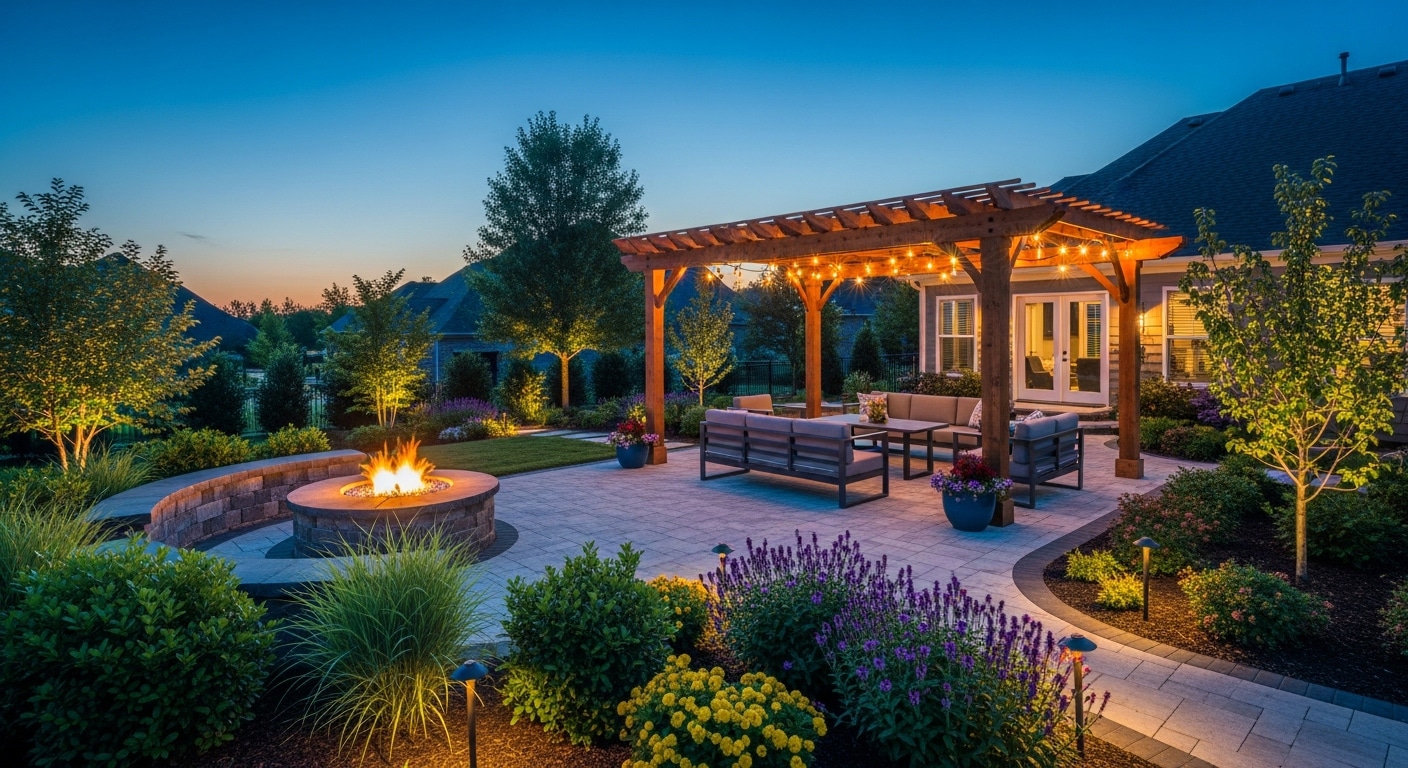
Oklahoma summers test outdoor living spaces in ways that most homeowners underestimate when they are planning in the winter or spring. A patio that looks comfortable in a catalog photograph can be genuinely unusable at 3 PM in July without the right design elements. The homeowners who use their outdoor living spaces all summer long — not just in April and October — have installed specific features that convert an exposed outdoor space into a place where 95-degree afternoons are not a reason to go inside.
Coverage is Non-Negotiable
Direct sun in Oklahoma July and August is not just uncomfortable — the UV intensity and radiant heat load are physically difficult to be under for more than a few minutes. A covered structure that eliminates direct overhead sun is the single most important design element for summer usability. An insulated patio cover performs better than an open pergola for summer heat because it blocks radiant heat transmission through the roof, not just direct sunlight. The temperature difference between sitting under an insulated patio cover and sitting under an open pergola slatted roof on a 98-degree day can be 10 to 15 degrees.
Ceiling Fans: Underused and Underspecified
Moving air in Oklahoma’s humid summer months changes the felt temperature significantly — a 95-degree day feels like 85 degrees with a breeze. A ceiling fan under a covered patio creates the functional equivalent of that breeze continuously. Most homeowners who add ceiling fans to their covered patios describe them as one of the most impactful additions to summer usability.
The specification matters. Use fans rated for wet or damp locations (not indoor ceiling fans). Size the fan appropriately for the covered area — a 52-inch fan is inadequate for a 20×20 foot covered patio; two 52-inch fans or a single 60-inch fan is appropriate. High-quality outdoor ceiling fans with variable speed remotes are a relatively modest cost addition to any covered patio project and pay for themselves in usability within the first summer.
Misting Systems
Misting systems — pressurized water nozzles that produce a fine mist that evaporates before reaching the surface — can reduce the ambient temperature of a covered patio by 10 to 20 degrees through evaporative cooling. They are most effective in Oklahoma’s drier summer periods (late June and August when humidity drops) and less effective during the peak humidity of early June and mid-July when the air is already saturated and evaporative cooling is reduced.
High-pressure misting systems (1,000 PSI) produce a finer mist that evaporates completely without wetting surfaces or people; low-pressure systems often produce visible water droplets that wet surfaces and feel unpleasant. For Oklahoma outdoor kitchens where getting wet while cooking is not acceptable, a high-pressure system is the right specification.
Thermal Mass and Hardscape Color
Dark hardscape absorbs and radiates heat; light hardscape reflects it. A dark gray concrete patio or dark charcoal pavers in full Oklahoma sun will be noticeably hotter underfoot — and hotter radiating upward — than the same patio in light buff or cream tones. In Oklahoma where the patio surface temperature on a sunny 95-degree day can exceed 130 degrees in dark materials, the reflective advantage of light hardscape is real and measurable. For outdoor kitchens and dining patios where people stand and sit, lighter paver or concrete tones in the Oklahoma climate are the practical choice.