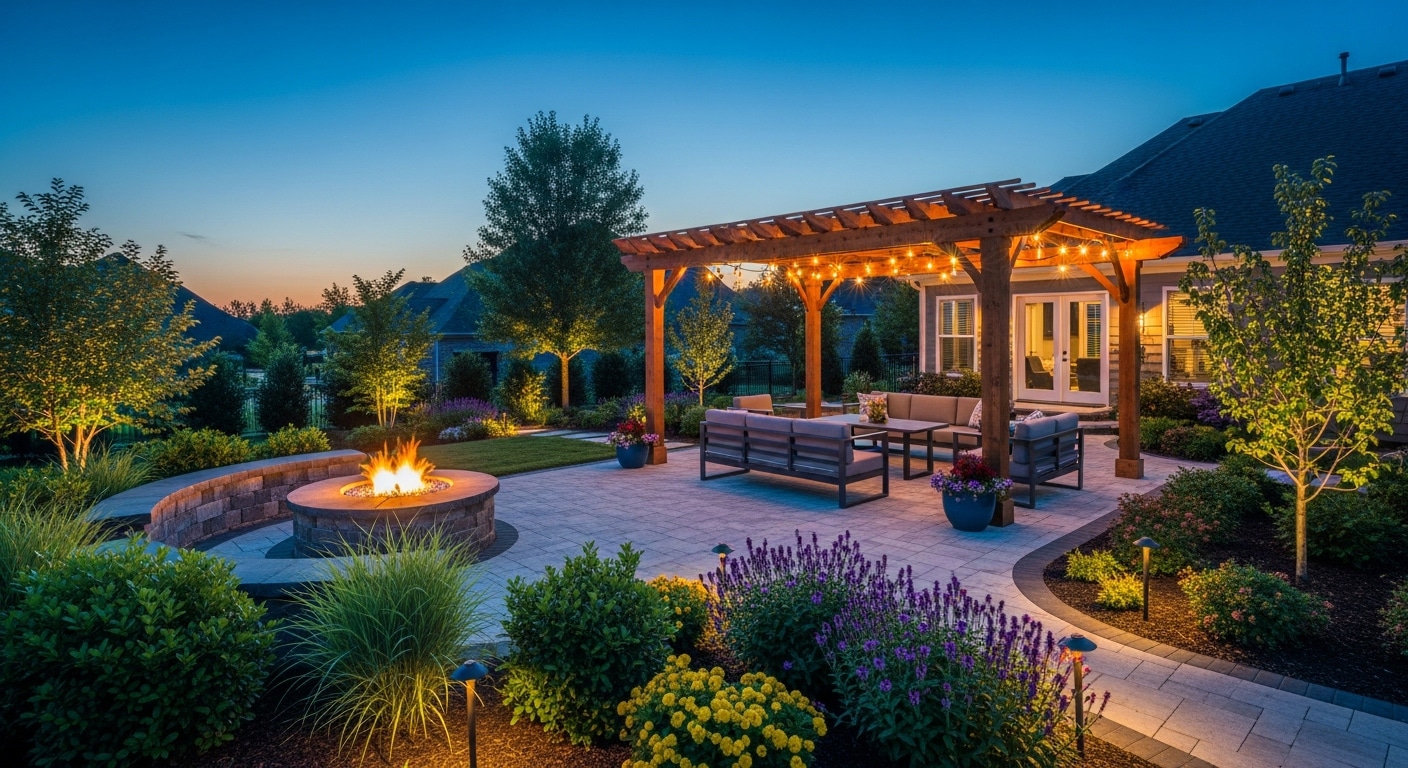
Sand Springs has grown significantly over the past decade as Tulsa metro development pushed west along the Arkansas River corridor. Homeowners here have access to a mix of older established neighborhoods and newer subdivisions, with lot sizes that tend to be more generous than comparable Tulsa properties. The outdoor living market in Sand Springs reflects the community’s character — practical, value-conscious, and built for longevity rather than show. This guide covers what Sand Springs homeowners are building, what local conditions affect project planning, and what to budget.
Sand Springs Property Types and Outdoor Living Fit
Sand Springs properties range from compact bungalows in older established neighborhoods near downtown to larger ranch-style homes on half-acre lots in developments further from the river. Older homes often have existing concrete patios or slabs that can be extended, stamped, or built upon. Newer homes on larger lots have more flexibility for standalone outdoor living structures. The community’s river proximity also means some properties have natural grade changes and views that can be leveraged for tiered outdoor living designs — a lower patio near the yard, an upper deck adjacent to the house, connected by hardscape steps.
Common Outdoor Living Projects in Sand Springs
Covered patio additions are the most common starting point — Sand Springs homeowners typically prioritize sheltered outdoor space that’s usable across Oklahoma’s varying seasons. Outdoor kitchens with gas grills, side burners, and refrigeration are common additions to larger lots. Concrete patio extensions — using stamped or colored concrete to give existing slabs a refresh or to extend them into the yard — are a popular mid-range investment. Fire pits with paver seating walls are a recurring project, particularly on properties with enough yard space to create a dedicated fire pit zone away from the main patio. Pergola additions over existing concrete pads give homeowners shade and structure without full slab work.
Soil Conditions in Sand Springs
Sand Springs sits in the Arkansas River floodplain and upland transition zone. Properties near the river may have alluvial soil with higher variability — sandy layers alternating with clay-rich deposits. Standard Oklahoma footing depths apply: 24-inch minimum for pergola posts in clay soil, deeper if the contractor encounters soft fill or disturbed soil. Properties on fill ground (common in some older Sand Springs neighborhoods where grade was modified during past development) may need deeper footings or engineered solutions. A good outdoor living contractor does a simple probe or visual excavation assessment before committing to standard footing depths.
Cost of Outdoor Living in Sand Springs
Outdoor living investment in Sand Springs tracks with the broader Tulsa metro market. A covered patio or pergola addition runs $12,000–$40,000 depending on size and materials. Outdoor kitchen packages start around $18,000 for a basic setup and reach $50,000 for full stations with premium appliances. Concrete patio extension with stamped or colored finish runs $6,000–$20,000 depending on square footage. Fire pit with seating wall runs $4,000–$10,000. A comprehensive outdoor living suite — covered structure, kitchen, and hardscaping — runs $45,000–$80,000 for a quality build on a Sand Springs property.
Getting a Contractor for Sand Springs
Established outdoor living contractors in the Tulsa metro serve Sand Springs. The city is 15–20 minutes from central Tulsa, and contractors who work across the metro are accustomed to the drive. VistaScapes serves Sand Springs for outdoor kitchens, fire features, covered structures, and concrete work. If you’re planning an outdoor living project in Sand Springs, we’d be glad to schedule a site visit and provide a detailed proposal.