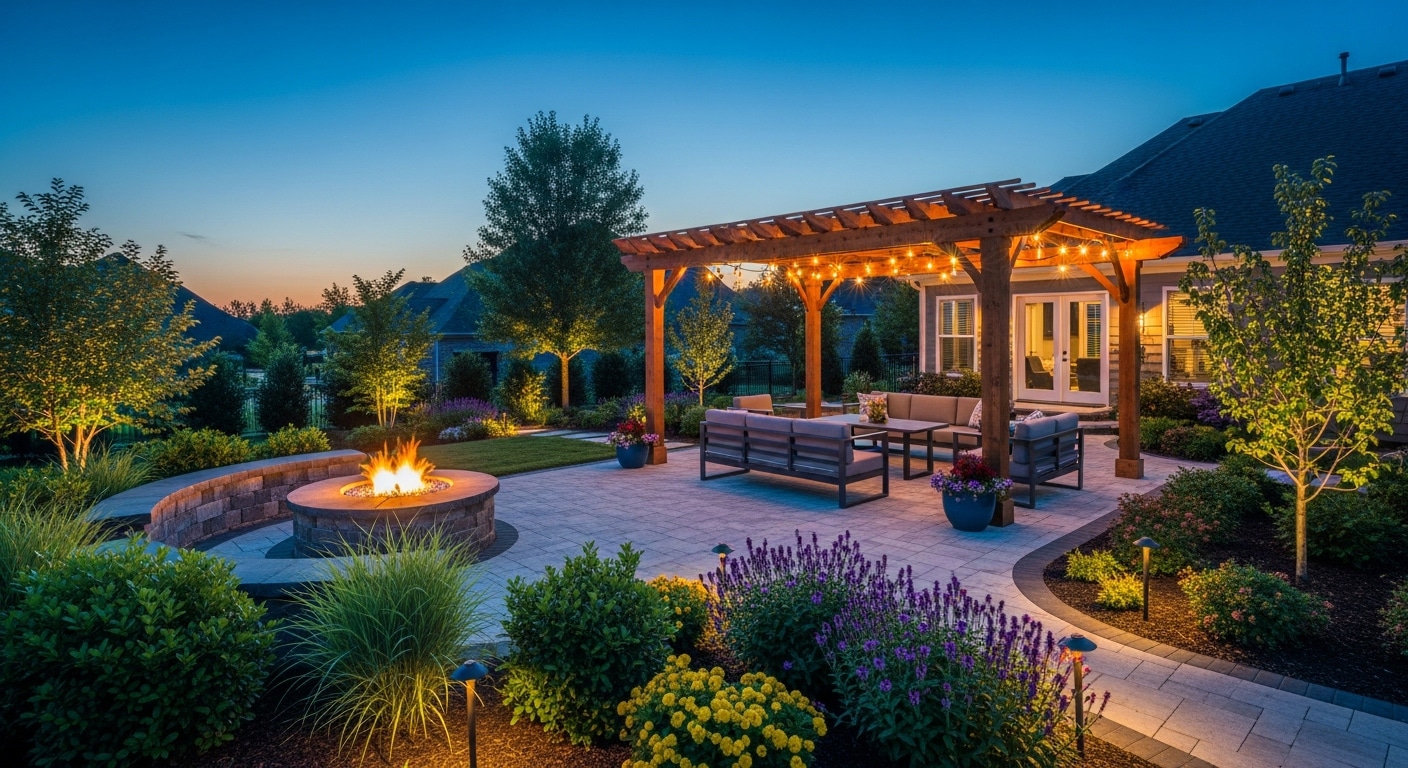
Natural Stone vs Concrete Pavers for Your Oklahoma Patio — A Real Comparison
Two of the most popular patio upgrades in the Tulsa area are natural stone and concrete pavers. Both look far better than plain poured concrete, both last for decades when installed right, and both come with distinct trade-offs that matter depending on your budget, design goals, and how much maintenance you’re willing to do.
Here’s an honest comparison from a contractor who builds both regularly in northeast Oklahoma.
What Is Natural Stone?
Natural stone for patios means quarried stone cut or broken into usable pieces — flagstone, limestone, sandstone, or bluestone. In Oklahoma, the most commonly used local stone is Oklahoma limestone, which has a warm tan/brown color and splits naturally into flat pieces ideal for patio use.
Natural stone is set two ways:
- Mortared: Stone pieces laid in a mortar bed over a concrete slab. Joints are filled with mortar. More formal appearance, easier to clean, but requires more significant repair if cracking or settling occurs.
- Dry-set: Stone laid in compacted gravel, with sand or decomposed granite between joints. More naturalistic look. Individual pieces can shift over time but are easy to reset.
What Are Concrete Pavers?
Concrete pavers are manufactured units — pressed concrete formed into uniform shapes, typically 2.375″ to 3.125″ thick. They’re set in a compacted gravel base with sand bedding and edging restraints. The joints between pavers are filled with polymeric sand that hardens and resists weeds and erosion.
Pavers come in hundreds of colors, textures, and patterns. Tumbled pavers have an aged look; smooth face pavers look contemporary; larger format pavers (24″x24″) look more like natural stone slabs.
Cost Comparison in the Tulsa/Broken Arrow Area
| Material | Installed Cost per Sq Ft |
|---|---|
| Oklahoma limestone (local flagstone) | $16–$24 |
| Imported flagstone (bluestone, sandstone) | $22–$38 |
| Concrete pavers (standard) | $12–$18 |
| Concrete pavers (large format/premium) | $18–$26 |
Local Oklahoma limestone is competitively priced with higher-end concrete pavers, which is one reason it remains popular for mid-to-high-end patios in this area.
Durability in Oklahoma’s Climate
Oklahoma’s freeze-thaw cycles, clay soil expansion, and summer UV exposure affect both materials:
Natural Stone
Dense stone species like limestone and bluestone handle freeze-thaw well. The bigger risk with mortared stone in Oklahoma is the mortar joints — they’re more rigid than the stone and can crack as soil shifts. Dry-set stone is more accommodating to movement because individual pieces can shift without catastrophic cracking.
Concrete Pavers
The interlocking paver system’s biggest advantage in Oklahoma is flexibility. Individual pavers move independently in the gravel base, absorbing soil movement that would crack a rigid slab. UV does cause color fading over 10–over a decade, but structural integrity stays intact. Sealed pavers fade less.
Maintenance Requirements
Natural Stone Maintenance
- Sealing every 3–5 years (penetrating sealer reduces porosity and staining)
- Joint repointing every 10–over a decade for mortared stone
- Occasional spot repair if a piece cracks
- Annual cleaning with appropriate stone cleaner (not acid)
Concrete Paver Maintenance
- Sealing every 3–4 years
- Polymeric sand replenishment in joints every 5–7 years
- Resetting individual sunken pavers as needed (usually easy DIY)
- Annual sweep and rinse
Both are manageable. Neither requires significant ongoing cost if you stay current on sealing.
Aesthetic Comparison
This comes down to personal preference, but here are general observations:
- Natural stone has color variation and surface texture that manufactured materials approximate but never fully match. It works beautifully in naturalistic landscape settings and with traditional architecture.
- Concrete pavers offer more uniformity and precision — better for geometric layouts, modern architecture, and large-scale installations where consistent sizing matters.
- Large-format concrete pavers in slate or limestone looks can get close to natural stone aesthetically, especially after some weathering.
The Bottom Line
For most Oklahoma homeowners choosing between natural stone and concrete pavers:
- If you want a naturalistic, unique look and are willing to pay a modest premium — choose local Oklahoma limestone or flagstone.
- If you want flexibility, easier individual unit replacement, and slightly lower cost — choose concrete pavers in a style that fits your home.
- Either way, invest in proper base preparation. A 4–6″ compacted gravel base with proper drainage is what makes either material last.
We build both regularly in Broken Arrow, Tulsa, and across northeast Oklahoma. Call VistaScapes at 918-779-1317 to discuss which material fits your project.