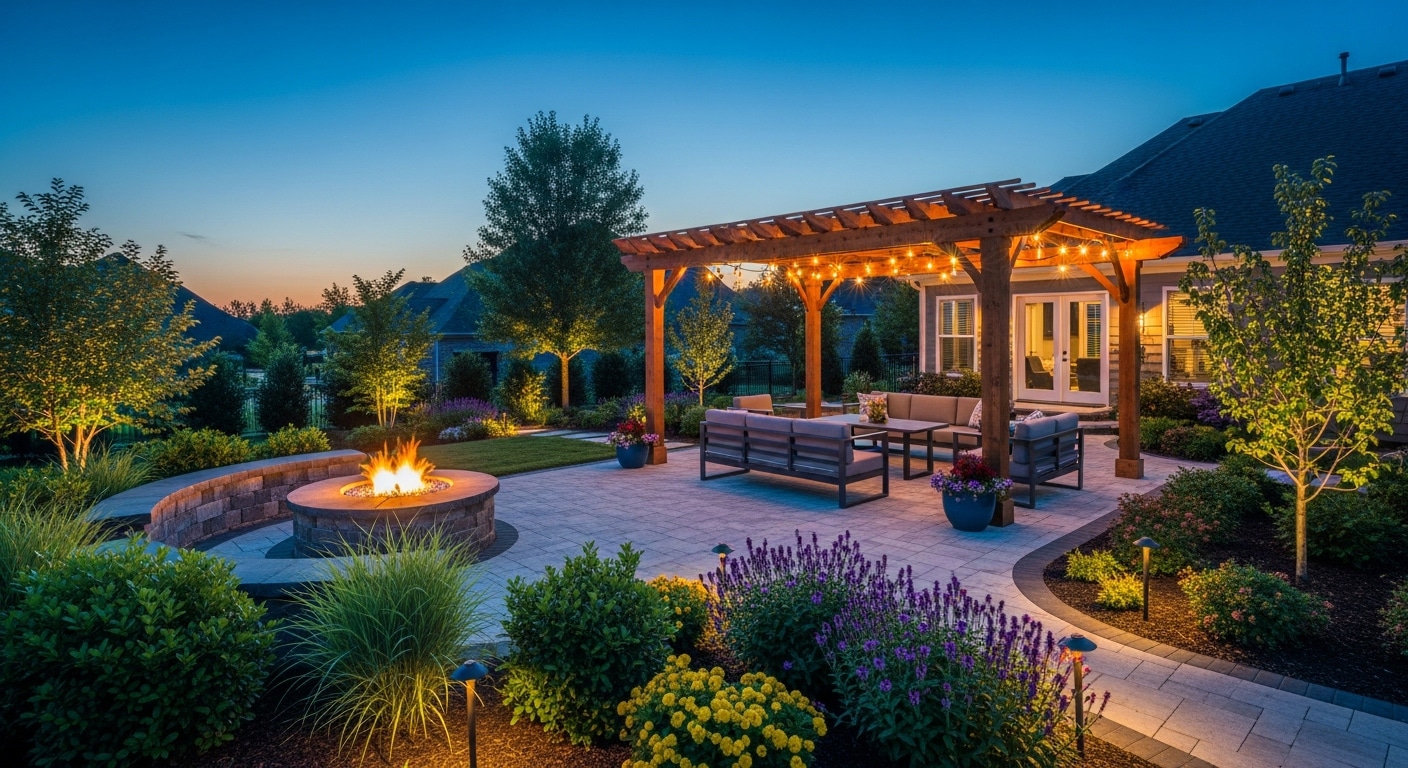
Oklahoma Outdoor Living Safety: Fire Features, Electrical, and Gas Best Practices
Outdoor living spaces in Oklahoma involve fire, gas, and electrical systems operating in a weather-exposed environment. When properly designed, installed, and maintained, these systems are safe and reliable. When shortcuts are taken or maintenance is neglected, they become genuine hazards. VistaScapes Design builds outdoor living spaces with safety integrated from the design phase — here’s what every Broken Arrow homeowner needs to know.
Fire Feature Safety
Placement and Setbacks
Fire pit and outdoor fireplace placement is governed by safety physics — not just aesthetics:
- Minimum 10 feet from structures: Houses, fences, sheds, pergolas, and overhangs must be at least 10 feet from open flame fire features
- Clear of overhead obstructions: No tree branches, patio covers, or overhanging rooflines within 15 feet directly above an open fire
- Level surface: Fire features must be installed on a level, non-combustible surface — not on wooden decks without appropriate fire-safe materials beneath
- Wind consideration: Position fire features so prevailing southwest winds don’t blow embers toward structures or seating areas
Spark Arrestors on Wood-Burning Fireplaces
Oklahoma’s wildfire risk requires spark control. A UL-listed spark arrestor — a mesh cap installed over the chimney flue — prevents burning embers from escaping and igniting surrounding combustibles. This is not optional equipment; it’s an essential safety feature that every wood-burning outdoor fireplace must have.
Never Burn in Prohibited Conditions
- Never burn during burn bans — check with Broken Arrow city or Tulsa County for current restrictions
- Never burn when winds exceed 15 mph — ember travel increases dramatically
- Never burn in drought conditions without extreme caution
- Never leave a fire unattended, even briefly
- Always have water or a fire extinguisher within immediate reach
Proper Extinguishing
Never leave a fire pit or outdoor fireplace until the fire is completely extinguished — not just low. Coals retain heat for hours. For fire pits, douse with water and stir until no heat remains. For outdoor fireplaces, allow to burn down completely and close the damper once ash is cool.
Gas Appliance Safety
Installation Standards
Gas supply lines to outdoor kitchens and fire features must be installed by a licensed plumber or gas fitter in Oklahoma. This is not a DIY task. The supply line must be properly sized for the appliance BTU demands, installed with approved fittings, and pressure-tested before use.
Annual Safety Inspection
- Test all gas connections annually with soapy water — bubbles indicate a leak
- Inspect flexible gas supply hoses for cracking, kinking, or abrasion — replace any hose showing deterioration
- Check gas shutoff valve operation — it should turn smoothly to full closed position
- Verify gas appliance ignition systems are functioning correctly before each season
If You Smell Gas
- Do not operate any switches, appliances, or anything that could create a spark
- Evacuate everyone from the area immediately
- Do not re-enter
- Shut off gas at the main supply valve if safely accessible without entering the affected area
- Call your gas utility (ONE Gas: 1-800-250-7281 for Oklahoma customers) from a safe distance
- Do not return until cleared by utility or fire personnel
- Have the system professionally inspected before any resumption of use
Electrical Safety for Outdoor Spaces
GFCI Protection
Ground Fault Circuit Interrupter (GFCI) protection is required by the National Electrical Code for all outdoor receptacles and is essential for outdoor kitchen electrical. GFCI outlets detect ground faults and cut power in milliseconds — preventing electrocution in moisture-exposed environments. Every outdoor outlet must be GFCI-protected.
Wet-Rated Fixtures
All electrical fixtures installed in areas directly exposed to rain must be rated “wet location.” Fixtures in covered but open-air spaces must be rated “damp location.” Never install interior-rated fixtures in outdoor applications — they will fail and create shock hazards.
Outlet Placement
- Outdoor outlets should be positioned where cords won’t cross traffic areas or create trip hazards
- Never use extension cords as permanent wiring in outdoor spaces
- Outlet covers must be maintained in good condition — replace any damaged or missing covers immediately
Working Near Electrical Systems
Never dig in your outdoor living area without first calling 811 (Oklahoma One Call) to have underground utilities marked. Oklahoma requires this notification before any excavation. Striking an underground electrical line is a life-threatening hazard.
Structural Safety
Pergola and Structure Inspection
- Inspect post bases annually — especially wood posts at ground contact — for rot
- Check all connection hardware for rust and loosening
- Verify string lights and hanging fixtures are properly secured — Oklahoma’s wind can make loose fixtures dangerous
Retaining Wall Monitoring
- Inspect retaining walls annually for bulging, tilting, or crack development
- Address any structural concerns immediately — a failing retaining wall can cause significant property damage
Building Code Compliance
Permitted construction by licensed contractors is the best safety protection available. Permitted projects are inspected by licensed building officials to verify code compliance. Unpermitted work bypasses this protection — and in Oklahoma, unpermitted structures can create liability and insurance issues.
VistaScapes Design handles all required permits for projects we build. We never recommend skipping permits to cut corners or speed timelines.
Questions About Your Outdoor Living Space?
If you have concerns about the safety of an existing outdoor living space — gas connections, electrical systems, structural components, or fire features — call VistaScapes Design at 918-779-1317 for a safety evaluation. We serve Broken Arrow, Tulsa, and all northeast Oklahoma.