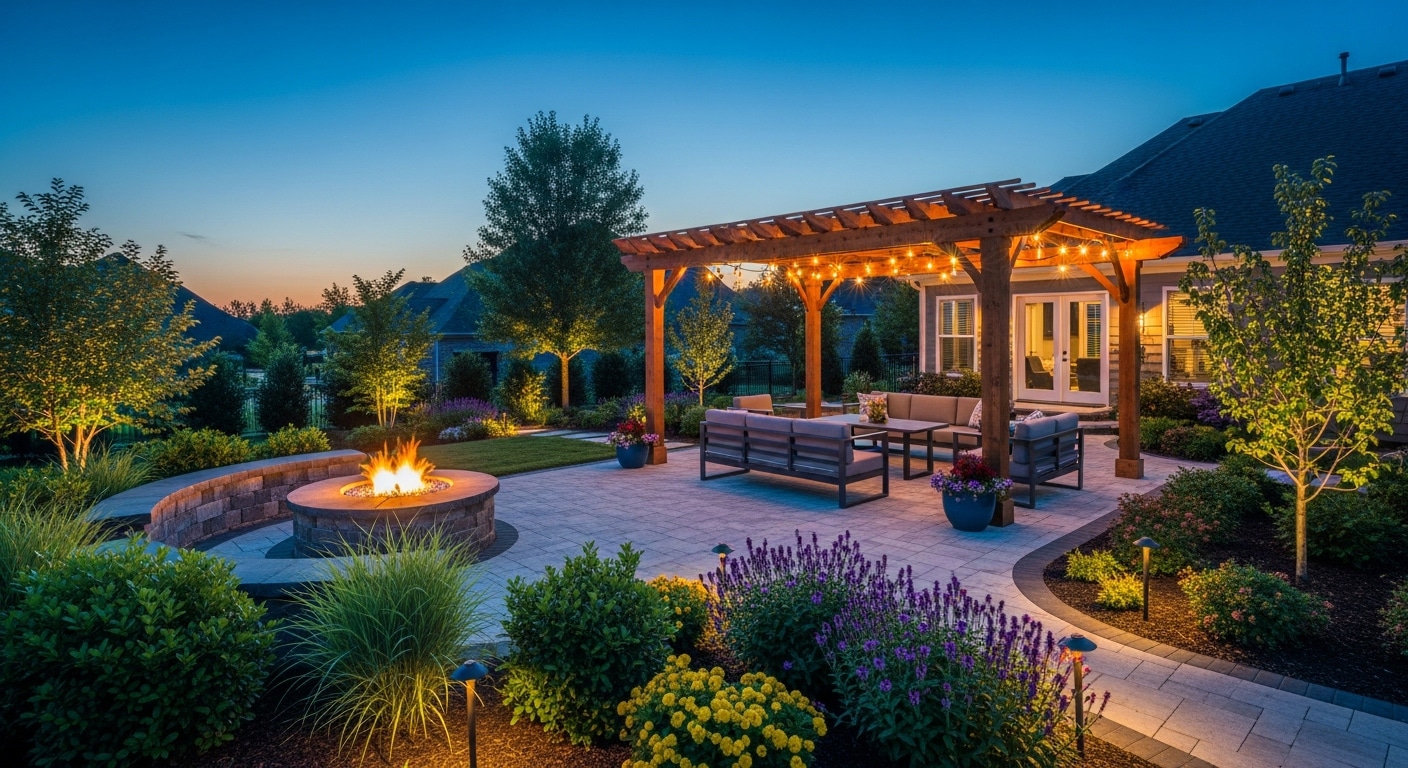
Broken Arrow Outdoor Living — Family Spaces That Kids Actually Use
In families with kids, the backyard is shared by two different sets of users with very different needs — adults who want to cook, relax, and entertain; and kids who want to run, play, and have adventures. The best outdoor living spaces in Broken Arrow serve both, and it’s not as complicated as it sounds. Here’s how VistaScapes designs family-first outdoor spaces.
Design for How Kids Actually Use Space
Kids don’t use outdoor space the way adults do. They run. They fall. They drag furniture. They play catch over the patio furniture. They eat popsicles on the concrete. A family outdoor space needs to survive all of this with minimal drama.
Key principles for family outdoor design:
- Size matters: Kids need room to move. A 200 sq ft patio that’s adequate for two adults becomes cramped the moment two kids try to ride bikes or chase each other through it. Family patios should be generous — 400 sq ft minimum, 600+ for active families.
- Level surfaces: No steps in the middle of the patio. No grade changes that create trip hazards in a play zone. A smooth, level concrete surface is what kids need.
- Durable materials: Kids are hard on everything. Concrete is kid-proof. It survives bikes, scooters, chalk, dropped food, running hoses, and the occasional thrown toy.
- Sightlines from the kitchen: Design the patio so adults cooking at the outdoor kitchen or sitting in the seating area can see the entire outdoor space. No hidden corners where kids are out of view.
Fire Features and Kids — Safety-First Design
Fire features and young children coexist safely when properly designed:
- Raised fire pit edges: A masonry fire pit with a 20–24 inch raised edge creates a clear physical and visual barrier. Kids understand “don’t lean on the wall around the fire.”
- Placement strategy: Put the fire feature on the opposite side of the patio from the main play zone. Natural traffic flows should route kids around the fire, not through it.
- Seating walls around the fire: Built-in seating walls create a defined boundary around the fire feature. When adults are sitting in the fire seating area, they’re between the fire and the play area — a natural supervision position.
- Natural gas vs. wood: A natural gas fire feature that can be turned completely off when not in use is safer around kids than a wood-burning fire that needs to fully extinguish. Both are manageable; gas is more controllable.
The Outdoor Kitchen: Family Hub
Families who have outdoor kitchens consistently report spending dramatically more time in the backyard. When dinner prep happens outside, everyone gravitates outside — kids play while parents cook, and the transition from cooking to eating to relaxing all happens in one space without anyone going inside.
Family outdoor kitchen features that make a difference:
- Large cooking surface: Feeding a family plus whatever friends showed up requires capacity
- Built-in refrigerator: Cold drinks always available without trips inside
- Counter prep space: Room to prep sides while the grill is running
- Position facing the patio: The cook should face outward, watching kids, not facing a wall
Creating Transition Zones Between Patio and Lawn
Families need both hard surface (patio) and soft surface (lawn) in the backyard — kids play differently on each. The transition between patio and lawn should be safe and smooth:
- Grade the patio to lawn transition with a gentle slope, not a sharp edge or step
- Consider a concrete border or edging that defines the patio edge without creating a trip hazard
- Leave adequate lawn area for running, ball games, and play equipment
Build Your Family’s Outdoor Space
VistaScapes designs and builds outdoor living spaces in Broken Arrow that families genuinely use — safely, durably, and with the kind of quality that lasts through the years your kids are home. Call 918-779-1317 to schedule your free consultation. Serving all of northeast Oklahoma.