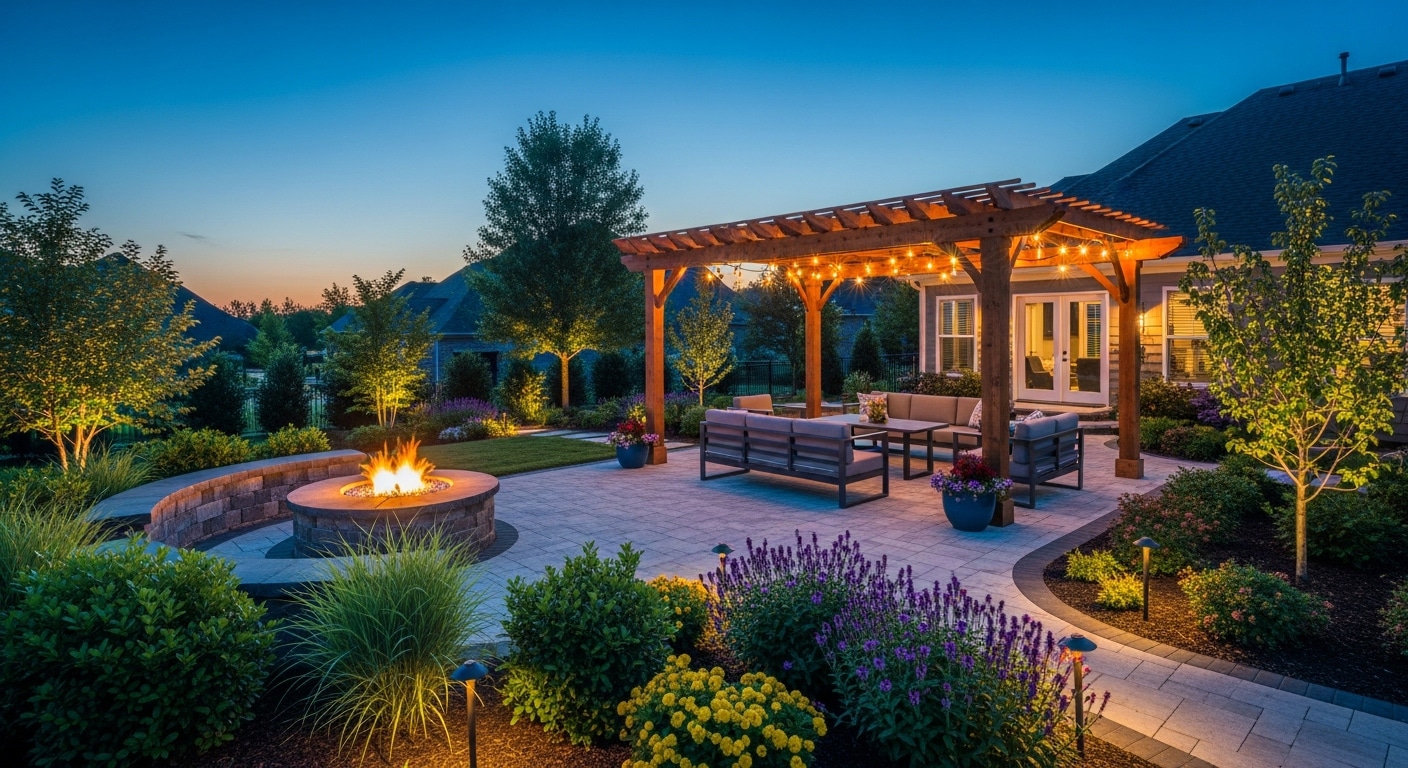
Broken Arrow is built on Verdigris clay — one of the most challenging soil types in North America for outdoor construction. Understanding why this matters and what proper construction looks like is the difference between a project that lasts 30 years and one that fails in 5. Here’s what every Broken Arrow homeowner considering outdoor living should know.
What Makes Verdigris Clay Different
Verdigris clay is a highly expansive montmorillonite clay soil. It expands by 10–15% in volume when saturated with water, and contracts by a similar amount when dry. This isn’t subtle movement — a 6-inch layer of clay can expand by 0.6–0.9 inches vertically in wet conditions. Over 12 inches of clay profile, vertical movement of 1.5 inches or more is possible.
Oklahoma’s seasonal weather creates perfect conditions for this movement: dry summers (significant shrinkage), wet springs (significant expansion), and freeze-thaw in winter (additional volume change). This cycle, repeated year after year, works against any structure built on or into native clay without proper mitigation.
How Clay Affects Concrete Patios
Concrete poured directly on native clay without a compacted aggregate base is one of the most common construction failures in Broken Arrow. The clay moves, the concrete follows, and the result is a heaved, cracked slab within 3–7 years — sometimes less.
The solution: excavate native clay 4–6 inches below finished slab grade and replace it with compacted crushed limestone or recycled concrete base material. This aggregate base compacts to near-zero movement and provides a stable platform that isolates the slab from clay movement below. Without this step, no amount of rebar or joint cutting will prevent eventual slab failure on Broken Arrow’s clay.
How Clay Affects Pergola and Structure Footings
Standard 12-inch-deep deck footings that might be adequate in stable soil conditions are not adequate in Broken Arrow’s clay. Clay near the surface experiences the most extreme seasonal moisture variation — this is the zone where expansion and contraction is greatest.
Pergola and covered patio footings in Broken Arrow should be:
- Drilled to at least 18–24 inches depth
- Below the frost line (12 inches in Broken Arrow)
- Below the zone of seasonal clay moisture variation (which extends deeper than the frost line in much of Broken Arrow)
- Isolated from the slab if a slab is present — the footing shouldn’t be poured monolithically with the slab, as clay movement will crack the connection
How Clay Affects Masonry Structures
Retaining walls, fireplace bases, and outdoor kitchen foundations built on native clay without proper footings will shift, lean, or crack as clay moves beneath them. Masonry structures require footings below the active clay zone — not just resting on the clay surface. A fireplace built on a properly reinforced footing that extends below the active soil zone will remain plumb and stable; one built directly on native clay may visibly lean within 5–10 years.
Drainage — The Amplifier of Clay Problems
Water access is what activates clay expansion. A properly graded site that sheds surface water away from all structures significantly reduces clay movement because the soil under and around structures stays at more consistent moisture levels. Ponded water against a concrete slab, retaining wall, or structure foundation is the most direct path to clay-related failure.
We grade every project for positive drainage away from structures (minimum 1/4 inch per foot for 10 feet), and we install French drains where site conditions trap water.
Built for Broken Arrow’s Soil — Not Despite It
Every project VistaScapes builds accounts for Broken Arrow’s clay soil conditions: compacted aggregate base for concrete, proper footing depth for structures, and positive drainage throughout. This is not an optional add-on — it’s what makes the difference between a project you’ll enjoy for 30 years and one you’ll be calling a contractor back about in 5. Call 918-779-1317 for a free consultation.