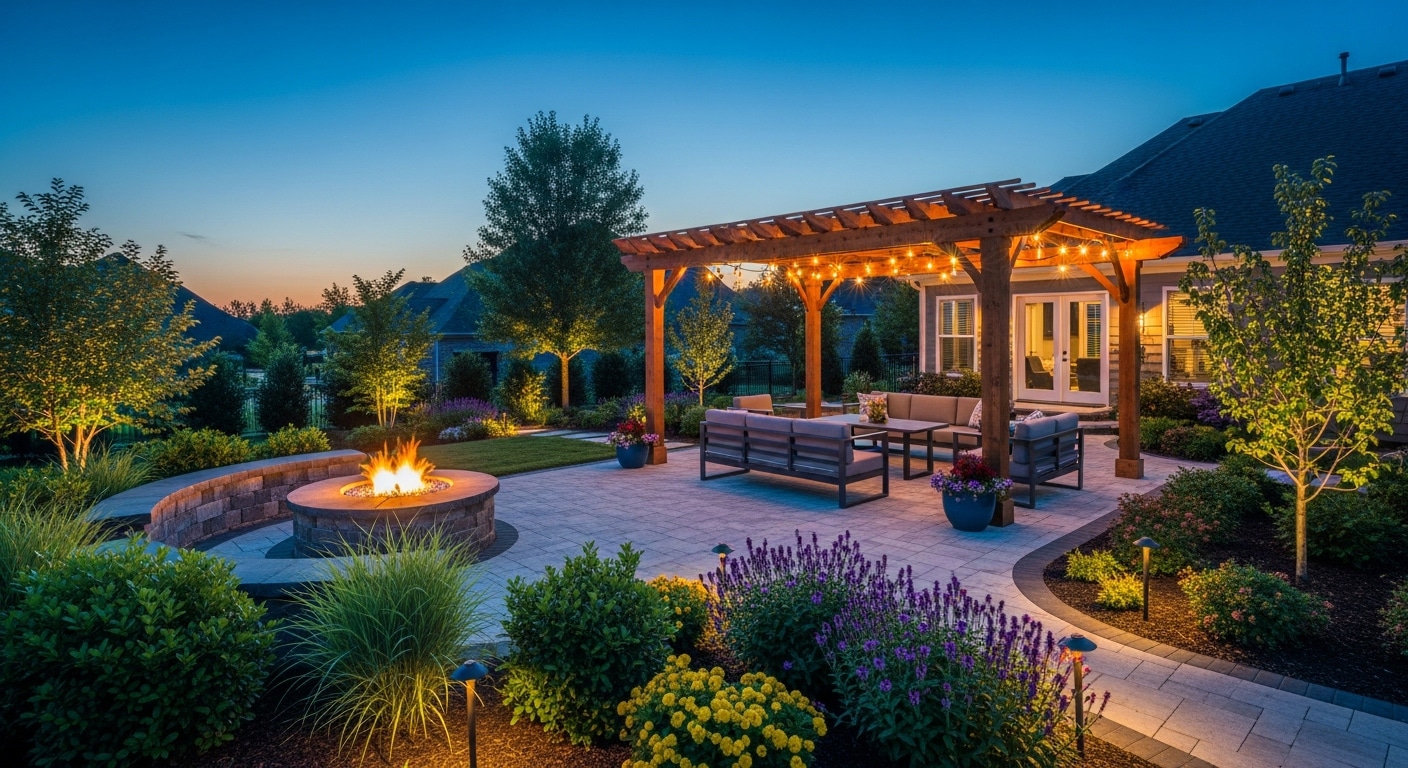
Concrete Color Options for Patios in Broken Arrow — Integral Color, Stain & Dye
Plain gray concrete is a perfectly practical patio material — durable, low-maintenance, and versatile. But Broken Arrow homeowners increasingly choose colored concrete to create a patio surface that feels intentional and coordinated with the overall outdoor living design. The options range from subtle warm tones to dramatic stained effects.
At VistaScapes & Design, we guide homeowners through the concrete color decision for patios throughout Broken Arrow and the Tulsa metro. Here’s what you need to know about each coloring method and how they perform in Oklahoma’s climate.
Integral Color — Color Throughout the Slab
How It Works
Integral color uses iron oxide or synthetic pigment mixed directly into the concrete at the batch plant or on-site before the pour. The color becomes part of the concrete mix, penetrating the full depth of the slab rather than just the surface layer.
Why It’s the Most Durable Option
Because the color is throughout the slab, chips, cracks, and surface wear don’t reveal a dramatically different color beneath. A small crack in an integrally colored concrete patio shows color — not gray concrete — at the break point. For outdoor patios that will see regular use in Oklahoma’s climate, this is a significant durability advantage.
Available Colors
Integral color comes in a wide range of earth tones and neutrals. The most popular in Broken Arrow and the Tulsa area:
- Sandstone / buff: Warm golden-tan tone that reads as natural and inviting — very popular in traditional and ranch-style home settings
- Terra cotta: Warm orange-red tone — works well with Oklahoma brick and natural stone
- Adobe / desert sand: Muted warm tone with sandy character — pairs well with Southwest and transitional architectural styles
- Charcoal / slate gray: Cool dark tone — popular in contemporary and modern farmhouse designs, very versatile
- Ash gray: Lighter warm gray — the most natural concrete-looking toned option, less dramatic than charcoal
Important Notes on Integral Color
- Color results vary with water-cement ratio — wetter mixes lighten the color, drier mixes deepen it
- Direct sun will lighten integral color over time — accept that concrete weathers; sealing slows this process
- Curing method affects final color — covered curing allows more even color development
- Control joints in colored concrete should be planned with the color in mind — saw-cut joints often look best in colored work
Acid Staining — Reactive, Variegated Effects
How It Works
Acid stain uses dilute hydrochloric acid combined with metallic salts that chemically react with the calcium hydroxide in cured concrete. The reaction creates permanent color that varies naturally across the surface — no two acid-stained surfaces look the same. The variegated, mottled pattern is the signature of acid staining and its primary appeal.
The Look
Acid stain produces an organic, aged, natural-stone-like effect. The color variation mimics the look of travertine, weathered stone, or antique marble. Homeowners who want a distinctive, artisan look — rather than uniform color — often choose acid staining.
Available Colors
Acid stain colors are limited by the chemistry — the palette runs to earth tones:
- Walnut and coffee browns
- Terra cotta and copper tones
- Light and medium tans
- Sage green (results vary)
- Black and charcoal (more reactive, deeper tones)
Application Process
Acid staining is applied to cured concrete (typically 28+ days after pour). The surface is cleaned and prepared, the acid stain is applied and allowed to react, the reaction is neutralized and rinsed, and the surface is sealed after drying. The sealer is what protects the stained surface — it requires reapplication every 3-5 years in Oklahoma conditions.
Considerations for Broken Arrow Patios
- Results are somewhat unpredictable — concrete inconsistencies and previous surface treatments affect the final result
- Not appropriate over old concrete with significant surface contamination or repairs
- Sealer maintenance is essential — neglected acid-stained surfaces deteriorate faster than natural concrete
Concrete Dyes — Bright, Vibrant Color Options
How It Works
Concrete dyes use small organic or synthetic dye particles that penetrate into the surface pores of cured concrete. They produce more vibrant, saturated colors than acid staining and can be applied in multiple layers for color variation and depth effects.
The Look
Concrete dyes offer colors that acid staining cannot produce — blues, reds, greens, and intense earth tones with higher vibrancy. They can also produce marbled, layered, and artistic effects when applied by skilled applicators.
UV Stability Consideration
Water-based concrete dyes offer moderate UV stability. Solvent-based dyes have better UV resistance but may fade over time under Oklahoma’s direct sun exposure. For outdoor patios in Broken Arrow, dye color systems require quality UV-stable sealers and periodic resealing to maintain appearance over time.
Stamped Concrete Color — Release Agent and Base Color Combinations
Stamped concrete typically uses integral color in the base mix combined with a release agent — a powder or liquid applied to the stamping tool surface — that creates a secondary highlight color in the recesses of the pattern. This two-color system is what gives stamped concrete its three-dimensional, stone-like appearance.
Popular color combinations in Broken Arrow stamped concrete:
- Buff base + brown release (natural limestone look)
- Charcoal base + black release (slate or bluestone look)
- Sandstone base + terracotta release (Southwestern tile look)
- Adobe base + dark brown release (old brick look)
Sealing — Critical for All Colored Concrete in Broken Arrow
Regardless of which coloring method is used, all outdoor colored concrete in Broken Arrow should be sealed with a quality penetrating or film-forming sealer:
- Penetrating sealers (silane/siloxane): Soak into the concrete pores, repel water and chlorides, don’t change surface appearance or sheen — very low maintenance, reapply every 5-7 years
- Acrylic sealers: Form a surface film that provides good protection and can enhance color vibrancy; requires reapplication every 2-4 years in Oklahoma sun exposure
- Polyurethane and epoxy sealers: Most durable film sealers for high-traffic areas; higher initial cost, longest recoat interval
Choosing the Right Color System for Your Broken Arrow Patio
VistaScapes provides color samples, shows project photos, and walks clients through the decision during the design consultation. The right color depends on your home’s architectural style, the stone and masonry materials used in other outdoor living elements, and your personal aesthetic preferences.
Call VistaScapes & Design at 918-779-1317 to schedule a consultation and see color options that have worked well on Broken Arrow patios similar to yours.