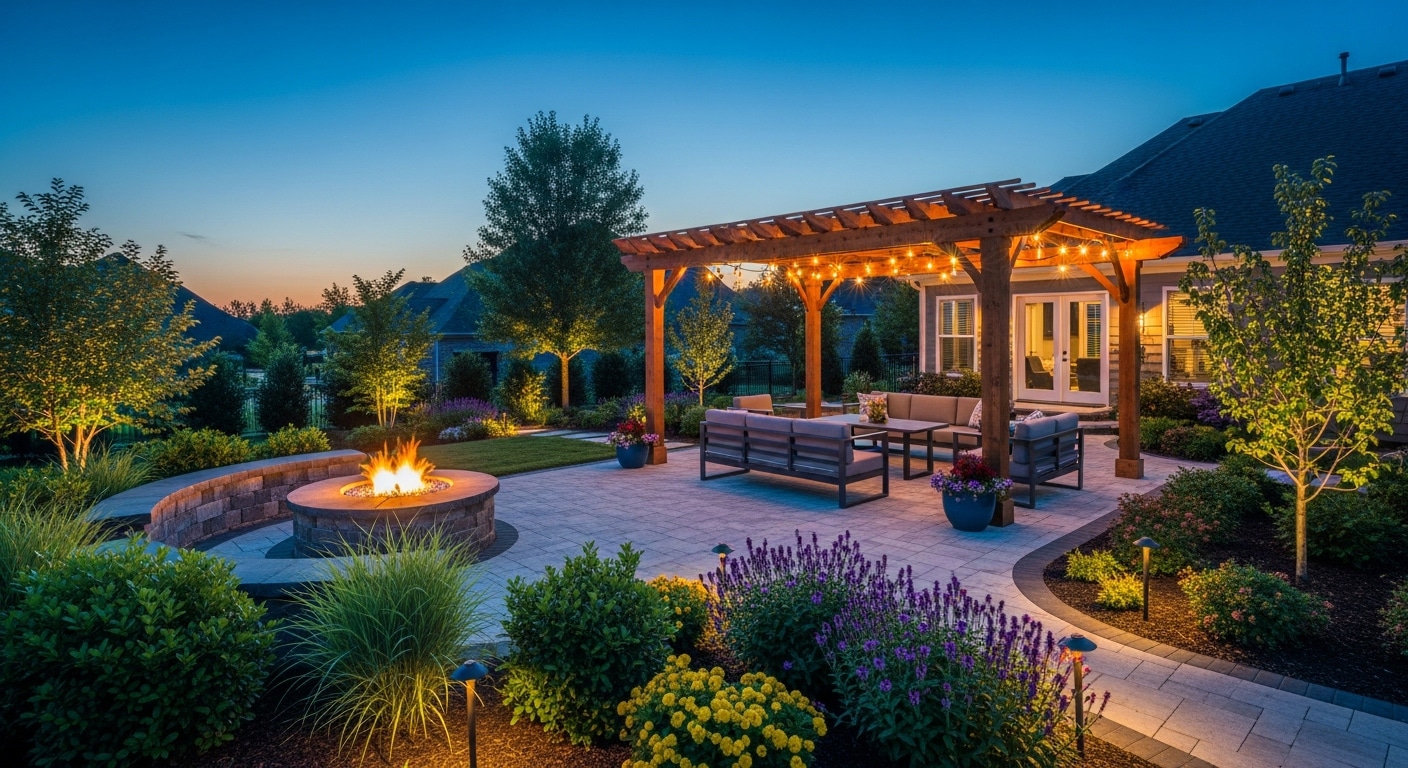
Insulated roof panels are an alternative to conventional framed and sheathed covered patio roof systems for Broken Arrow homeowners who want a finished ceiling appearance without a separate drywall or tongue-and-groove ceiling installation. An insulated structural panel — sometimes called a SIP (structural insulated panel) or a foam-core insulated panel — combines the roof structure, insulation, and finished ceiling surface in a single product that installs directly onto the covered patio’s beam or rafter framing. Insulated panels eliminate the separate framing, insulation, and ceiling installation steps of a conventional covered patio roof build and produce a clean, finished ceiling appearance at the underside without additional work. VistaScapes & Design specifies insulated roof panels for Broken Arrow covered patio projects where the homeowner wants a finished ceiling and thermal performance without a multi-trade installation sequence.
Panel Types and Thermal Performance
Insulated roof panel types and thermal performance for Broken Arrow covered patios: aluminum-clad foam-core panels — the most common insulated covered patio panel product in the Broken Arrow residential market is a foam-core sandwich panel with a painted aluminum top face (structural and weatherproof) and an aluminum bottom face (finished ceiling) enclosing a rigid polyisocyanurate or expanded polystyrene foam core; these panels are manufactured by companies including Stratco, Equinox, and regional panel fabricators serving the Oklahoma market; the aluminum faces provide a maintenance-free, weather-resistant exterior surface and a clean, contemporary ceiling appearance on the interior side; foam-core panel R-values typically range from R-9 to R-32 depending on the panel thickness (2 inches to 6 inches); a thicker panel provides better thermal performance but also increases the panel’s depth and the visual mass of the covered patio’s roof system; for Broken Arrow’s climate, a 4-inch panel (approximately R-19 to R-25) provides meaningful comfort improvement over an uninsulated roof while keeping the panel profile relatively slim. Structural insulated panels (SIPs) — a structural insulated panel (SIP) differs from a simple foam-core panel in that it is engineered to span between beams as a structural element, not just as infill between existing rafters; SIP covered patio panels are available in sizes up to 8 feet wide by 24 feet long and can span the full depth of a covered patio without intermediate rafter support; eliminating intermediate rafters simplifies the beam framing and creates a clean, unobstructed ceiling plane without visible rafter lines; SIPs require precise engineering to confirm span capacity for the covered patio’s dead load (panel weight), live load (snow and wind), and point loads from any ceiling-mounted fans or light fixtures. T&G wood panels with integral insulation — a tongue-and-groove wood ceiling panel with integral rigid foam insulation behind the wood face creates the warm, natural ceiling aesthetic of a wood T&G ceiling with improved thermal performance; these panels are available in pine, cedar, and composite wood face options; they are installed over the covered patio’s rafter framing and provide insulation at the ceiling plane without requiring a separate blown-in or batt insulation installation above.
Installation and Finish Considerations
Installation and finish considerations for insulated covered patio roof panels in Broken Arrow: electrical rough-in — light fixtures and ceiling fans installed in an insulated panel ceiling require conduit or wiring channels routed through the panel before installation; most insulated panel manufacturers offer factory-cut wire chases in standard fixture locations, or the wire chase can be field-cut using a hot knife or router before the panel is lifted into position; planning fixture locations before panel delivery and ordering wire chases in the correct positions is essential — retrofitting wiring through installed foam-core panels is labor-intensive; a licensed electrician should be involved in the panel wire chase planning to confirm conduit routing and box locations. Panel connection and seam treatment — insulated panels connect at their long edges with a tongue-and-groove joint or a spline connection; the joint between adjacent panels must be sealed to prevent air infiltration; most manufacturers provide a factory-finished spline insert or a foam tape seal at the panel joint; the visible joint line at the ceiling becomes a design element — some homeowners choose to add a wood or aluminum trim strip over the panel joints for a more finished appearance. Ceiling color and texture — aluminum-face insulated panels are available in a factory-painted finish in standard colors (white, beige, gray, bronze) or can be field-painted after installation; the aluminum face produces a smooth, flat ceiling texture that reads as clean and contemporary; homeowners who prefer a more traditional ceiling appearance may prefer the T&G wood panel option or may choose to apply a spray-on texture to the aluminum face after installation to add visual warmth. Soffit and fascia integration — the insulated panel’s edge at the covered patio’s perimeter must be covered by a fascia and soffit system that conceals the panel edge, provides a drip edge for roof runoff, and integrates with the gutter system; VistaScapes & Design specifies the fascia and soffit details for every insulated panel covered patio project in Broken Arrow to ensure a finished, weather-tight perimeter edge. VistaScapes & Design provides insulated roof panel specifications and R-value options in the Broken Arrow covered patio proposal for homeowners who want a finished ceiling with thermal performance in a single installation.
Call VistaScapes & Design at (918) 779-1317 for a free covered patio consultation in Broken Arrow. We’ll discuss insulated panel options, R-value selection, and ceiling finish for your covered patio project.