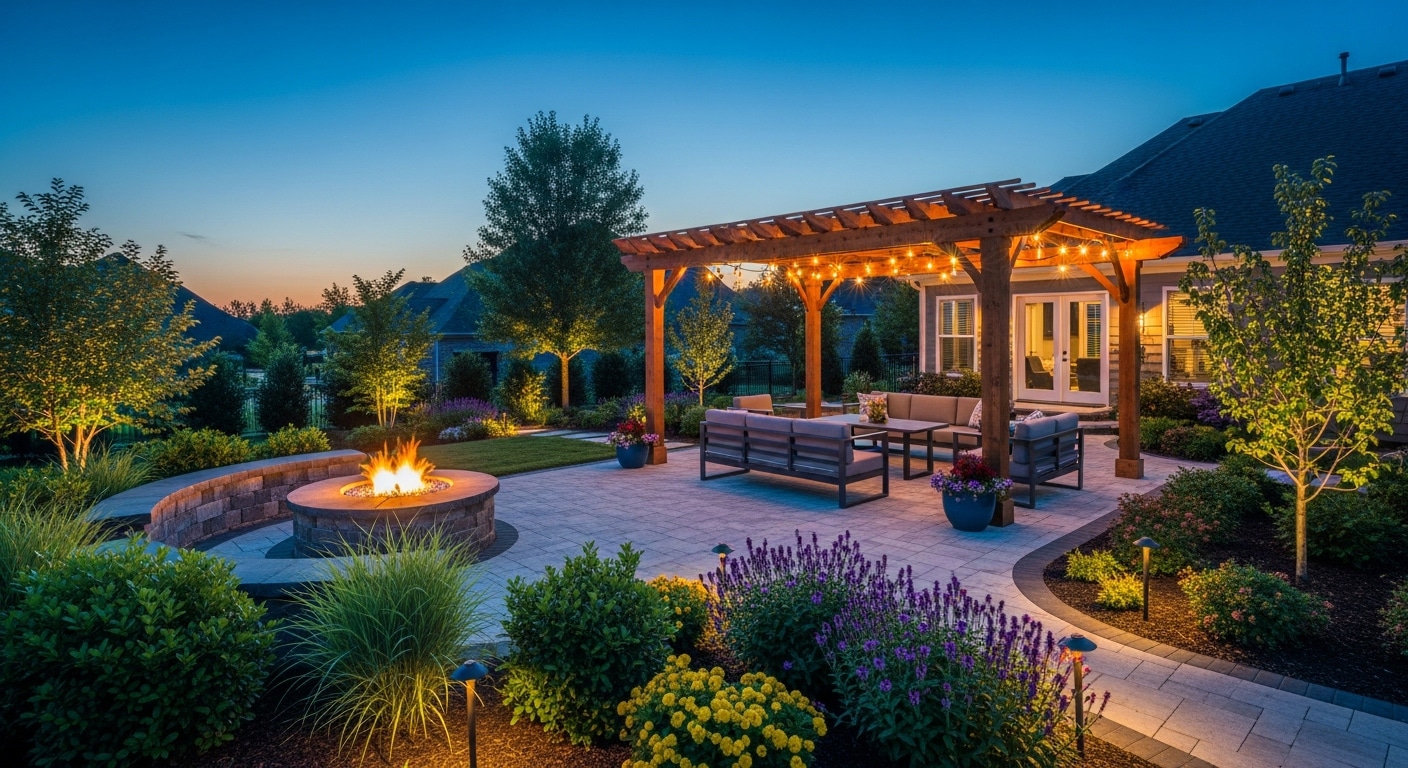
Broken Arrow Fire Pit Ideas: In-Ground, Raised, and Built-In Designs for Oklahoma Backyards
A fire pit is one of the most emotionally compelling outdoor living features you can add to a Broken Arrow backyard. It creates a natural gathering point, extends outdoor use into fall and cool spring evenings, and delivers the primal comfort of fire in the outdoor setting. VistaScapes Design builds fire pits of every type — here’s a look at the options and how to choose the right design for your space.
Fire Pit Type 1: In-Ground Fire Pits
In-ground fire pits are excavated into the ground with a concrete base and ring walls that extend slightly above grade. This classic configuration has a naturalistic quality — the fire appears to emerge from the ground, surrounded by a low ring of stone or concrete.
Design Details
- Circular or square in plan, typically 36–48 inches in diameter
- Concrete base with drainage provisions for rainwater
- Masonry ring walls (concrete block, natural stone, or fire brick) extending 8–12 inches above grade
- Cap stone in natural stone or concrete for a finished edge
- Optional: steel fire ring insert to protect masonry from direct flame contact
Best Settings
In-ground fire pits suit naturalistic, informal outdoor living designs — properties with organic landscape beds, boulder retaining walls, and a relaxed aesthetic. They work especially well on rural or semi-rural Broken Arrow properties where a low-profile, ground-level feature fits the surroundings.
Practical Considerations
- Drainage is critical — the fire pit bowl must drain after rain; a plugged drain is a recurring headache
- Leveled site is important — an in-ground fire pit on an unlevel site is awkward
- Ash removal is easier than raised designs — a clean-out in the base simplifies this
Cost Range
$2,500–$5,000 depending on size, stone type, and surrounding hardscape context.
Fire Pit Type 2: Raised Fire Pits
Raised fire pits sit on a concrete footing or slab foundation and extend 18–30 inches above the surrounding patio surface. The elevation makes the fire more visible from across the space, creates a natural focal point, and allows adjacent seating walls to be integrated at comfortable sitting height.
Design Details
- Reinforced concrete footing below grade level
- CMU block core rising to finished height
- Exterior veneer in natural stone, brick, manufactured stone, or stucco
- Cap stone in natural stone, concrete, or tile at sitting height if seating is integrated
- Interior fire ring, fire brick lining, or steel insert for longevity
Best Settings
Raised fire pits are the most versatile option in Broken Arrow — they work in suburban, semi-rural, and upscale residential settings. The elevated design reads as more architecturally intentional than an in-ground pit, complementing patios with pergolas, outdoor kitchens, and designed landscape elements.
Integrated Seating Wall Option
The most popular raised fire pit configuration in Broken Arrow adds a seating wall around all or part of the fire pit — a low masonry wall at 18 inches height that surrounds the fire feature and provides built-in seating for 6–12 people depending on size. This eliminates the need to haul chairs to the fire pit and creates a permanent gathering zone around the fire.
Cost Range
$4,000–$8,000 for a raised fire pit; $6,000–$15,000 with integrated seating wall and built-in stone veneer.
Fire Pit Type 3: Gas Fire Features
Gas fire features replace wood fires with a natural gas or propane burner, producing a clean, smoke-free flame in any configuration — from traditional round fire pit designs to linear fire troughs and water-adjacent fire features.
Types of Gas Fire Features
- Gas fire pit: Raised or in-ground design with a gas burner and lava rock, fire glass, or decorative media covering the burner assembly
- Linear fire trough: Elongated rectangular fire feature for contemporary designs — flame runs the length of the trough
- Fire and water combination: Gas burner integrated with a water feature for dramatic visual combination
- Tabletop fire feature: Lower, horizontal fire feature integrated into an outdoor dining table or lounge seating
Advantages of Gas
- No smoke, no ash, no wood storage
- Instant on/off with a valve or electronic ignition
- Adjustable flame height
- Can be used during burn ban periods (check local ordinances — gas fire features often exempt)
- Consistent performance — no wind-dependent or wet-wood frustrations
Considerations
- Gas supply requires a licensed plumber to install the supply line
- Operating cost — gas runs continuously during use
- The aesthetic is different from wood fire — no crackle, no campfire ambiance
Cost Range
Add $2,000–$5,000 to the base fire pit cost for gas conversion. Custom linear gas fire features run $6,000–$15,000+.
Fire Pit Safety in Broken Arrow
Any fire feature in Broken Arrow requires attention to safety basics:
- Minimum 10 feet from any structure, fence, or overhead obstruction
- Non-combustible surface beneath and surrounding the fire pit
- Water or fire extinguisher immediately accessible
- Check local burn bans before lighting any wood-burning fire feature
- Spark arrestor on enclosed fire pit designs that direct smoke upward
- Never leave burning fires unattended
Schedule Your Free Fire Pit Consultation
Ready to add a fire feature to your Broken Arrow outdoor space? Call VistaScapes Design at 918-779-1317 for a free on-site consultation. We’ll help you choose the right fire pit type, design, and materials for your specific space and aesthetic goals. We serve Broken Arrow, Tulsa, and all northeast Oklahoma.