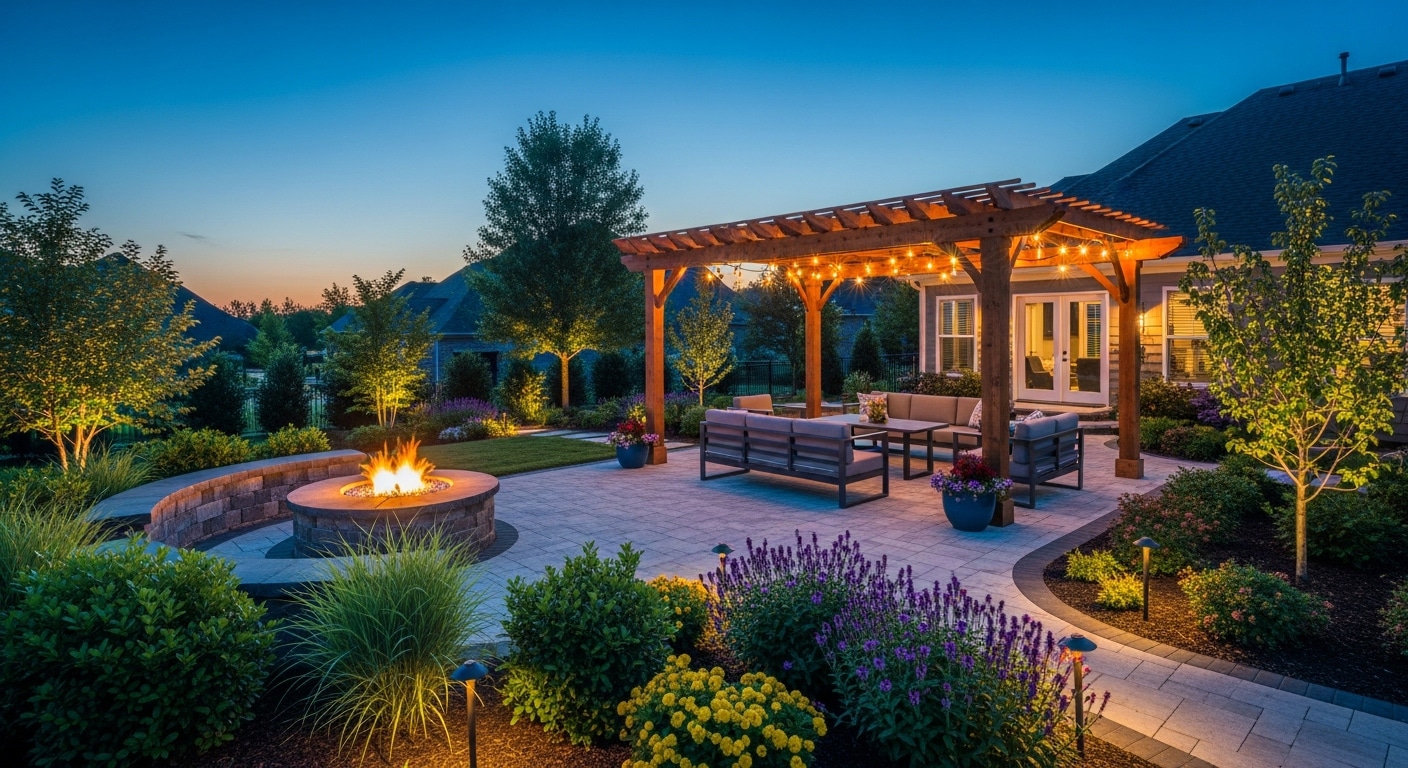
Attaching a covered patio roof to the existing roofline of a Broken Arrow home is one of the most consequential structural and aesthetic decisions in a covered patio project. The connection between the new covered patio structure and the home’s existing roofline determines the patio roof’s weather resistance, its visual integration with the home’s architecture, and the long-term performance of the wall assembly at the attachment point. A poorly executed roofline tie-in is one of the most common sources of water infiltration problems in Broken Arrow covered patio additions, and the consequences — interior moisture damage, mold growth, rotted framing — are expensive to remediate. VistaScapes & Design designs roofline tie-in details on every Broken Arrow covered patio project to ensure the attachment is weather-tight and architecturally consistent with the home.
Ledger Board Attachment and Flashing
Ledger board attachment and flashing for Broken Arrow covered patio roofline tie-ins: the ledger board is the horizontal structural member that connects the covered patio’s roof framing to the home’s existing wall or rim joist; the ledger carries the roof load from the rafters into the home’s structural framing, and the ledger attachment method must be capable of resisting both vertical gravity loads and horizontal wind uplift loads; the ledger is typically a 2×8 or 2×10 pressure-treated lumber member bolted through the home’s exterior cladding into the rim joist or band joist of the home’s floor framing system; lag screws (1/2-inch diameter, 4-inch minimum penetration into framing) or through-bolts are used at 16-inch on-center spacing to transfer loads from the ledger into the home’s structure. Ledger flashing — the critical detail at every covered patio attachment is the flashing that keeps water from infiltrating at the ledger-to-wall joint; water infiltrates through the gap between the ledger board and the home’s exterior cladding if the flashing is inadequate; proper ledger flashing uses a combination of self-adhesive flashing tape applied to the wall sheathing before the ledger is installed, and a formed metal z-flashing or standoff flashing that creates a drainage plane behind the ledger allowing any water that does infiltrate to drain out at the bottom rather than into the wall cavity; improperly flashed ledgers trap water against the home’s wall sheathing, which deteriorates the sheathing and creates conditions for structural wood decay in the rim joist and wall framing; the City of Broken Arrow building department requires flashing details to be shown on covered patio permit drawings and inspects the ledger flashing during the framing inspection before the wall is closed. Ledger installation into masonry or stucco walls — a covered patio ledger installed against a masonry or stucco-clad wall requires a different approach than a ledger attached to wood-framed walls; lag bolts into masonry require tapcon or wedge anchors with adequate embedment into the masonry unit; standoff hardware (Simpson Strong-Tie LCB post bases or equivalent) can be used to create the required drainage gap between the ledger and the masonry wall face when masonry or stucco cladding does not permit the standard flashing tape approach.
Roofline Integration and Pitch Matching
Roofline integration and pitch matching for Broken Arrow covered patio additions: matching the covered patio’s roof pitch to the home’s existing roof pitch — a covered patio roof that matches the home’s existing roof pitch (measured in rise-over-run, typically 4:12 to 6:12 for most Broken Arrow residential roofs) produces the most architecturally integrated appearance; when the covered patio’s roof pitches match the home’s roof, the transition from the home’s fascia to the covered patio’s fascia appears continuous and intentional; a covered patio with a mismatched pitch — typically lower than the home’s roof to maximize headroom — can look like an afterthought addition that didn’t take the home’s architecture into account; VistaScapes & Design evaluates the home’s existing roof pitch and designs the covered patio roof to match or complement it as part of the project design process. Step-down attachment — in many Broken Arrow homes, the covered patio attaches at the first-floor wall below the main roof’s eave; the covered patio’s roof must tie into the home’s wall below the main roof’s fascia; this step-down attachment requires flashing at the main roof’s eave to prevent water from running off the main roof’s drip edge and behind the covered patio’s roof decking; a continuous kick-out flashing at the main roof’s eave over the covered patio’s roof diversion point redirects runoff from the main roof onto the covered patio’s roof surface rather than behind it. Penetrating the existing roofline — in some Broken Arrow covered patio designs, the covered patio’s roof pitch is high enough that the new roof must connect to the home’s existing sloped roof plane rather than attaching below the eave; this requires a valley or cricket connection between the covered patio’s roof and the home’s existing roof; the valley connection is a more complex framing and waterproofing detail that requires step flashing, a valley liner, and proper shingle integration; VistaScapes & Design coordinates these attachment details with the roofing subcontractor to ensure a water-tight connection at the home’s existing roof. Fascia height matching — the covered patio’s fascia board should align with the home’s existing fascia height for a continuous eave line where possible; when the covered patio’s rafter depth differs from the home’s rafter depth, a sloped or raked cut on the covered patio’s fascia board can achieve the appearance of alignment even when the framing depths are different. VistaScapes & Design provides roofline tie-in drawings as part of every Broken Arrow covered patio proposal so the homeowner can see the attachment details before construction begins.
Call VistaScapes & Design at (918) 779-1317 for a free covered patio consultation in Broken Arrow. We’ll evaluate your home’s roofline and design a covered patio attachment that integrates seamlessly with your home’s architecture.