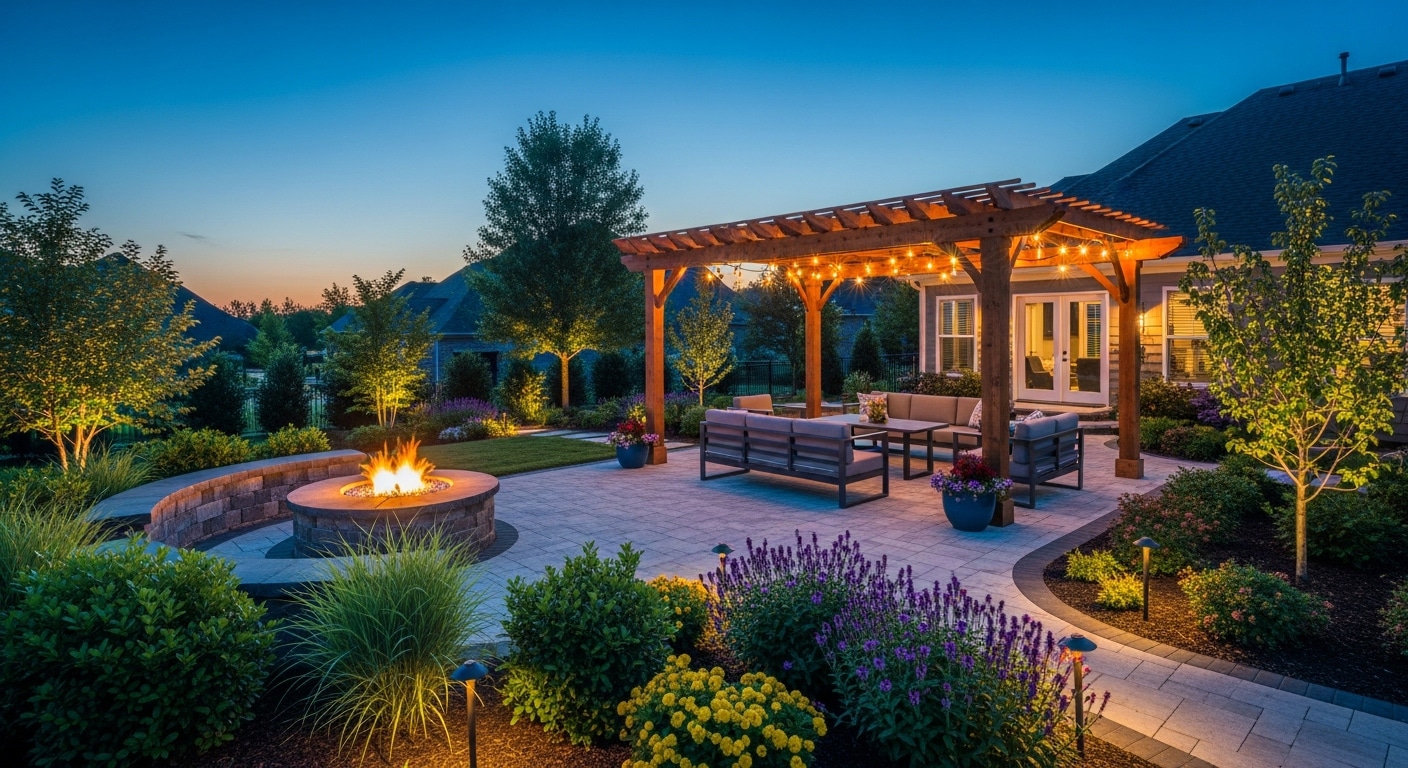
The stone veneer applied to a Broken Arrow masonry outdoor kitchen base is the visible face of the outdoor kitchen’s masonry structure — it defines the kitchen’s visual character, provides weather protection for the CMU block substrate, and must bond securely to the CMU base through years of Oklahoma’s freeze-thaw cycling, UV exposure, and thermal expansion-contraction. The installation process for stone veneer on a masonry outdoor kitchen base requires the same Type S mortar system and installation standards as the CMU block laying, with additional substrate preparation steps that are critical for long-term veneer bond in outdoor exposure conditions. VistaScapes & Design applies all stone veneer to outdoor kitchen CMU bases using the MVMA (Masonry Veneer Manufacturers Association) and LATICRETE installation guidelines for exterior masonry veneer.
Substrate Preparation and Scratch Coat
Substrate preparation for stone veneer installation on Broken Arrow outdoor kitchen CMU bases: the CMU block substrate must be clean, structurally sound, and free of form oil, curing compounds, dust, and loose mortar before veneer installation; CMU block surfaces that have been exposed to rain before veneer installation may develop efflorescence (white salt deposits) on the block face that must be cleaned with a muriatic acid wash before veneer mortar is applied; the CMU block face should be mechanically scarified (wire brushed) to remove any surface contamination and open the pores for bond adhesion. Scratch coat application: on a CMU block substrate, a 1/4-inch to 3/8-inch scratch coat of Portland cement mortar (ASTM C270 Type S mortar mixed to a stiff, low-slump consistency) is applied to the CMU face and scratched with a notched trowel or metal lath scratcher to create a mechanical key for the veneer mortar; the scratch coat must cure for a minimum of 24 hours in summer conditions before veneer installation begins; the scratch coat provides a uniform, absorptive surface for the veneer mortar and bridges minor surface irregularities in the CMU face; for large-format natural stone veneer (stones over 15 pounds per square foot or individual pieces over 36 inches in length or height), a metal lath layer (galvanized expanded metal lath, 2.5 lb/sq ft) fastened to the CMU block with masonry screws provides additional mechanical reinforcement for the veneer mortar bond. Back-buttering the stone veneer: each stone veneer piece must be back-buttered — a layer of Type S mortar applied to the back face of the stone before pressing it to the prepared substrate — to achieve full mortar coverage between the stone back and the substrate; back-buttering is non-negotiable for outdoor stone veneer applications in Broken Arrow because inadequate mortar contact allows water to enter the stone-to-substrate interface and cause freeze-thaw delamination; the required mortar coverage for exterior stone veneer per the TCNA (Tile Council of North America) outdoor application standards is 80% minimum contact on the back of each stone piece; VistaScapes & Design verifies adequate mortar contact by pulling a test stone after pressing and checking the mortar transfer pattern on the stone’s back face. Joint filling and pointing: the mortar joints between stone veneer pieces should be filled with Type S mortar to a depth flush with or slightly recessed behind the stone face; recessed joints (raked back 1/4 to 1/2 inch) provide shadow depth that enhances the natural stone appearance; flush joints are appropriate for a cleaner contemporary aesthetic; the joint mortar should be tooled to compact the surface and improve weather resistance after reaching initial set. Expansion joints: for outdoor kitchen veneer runs longer than 10 feet, a soft joint (a caulked joint filled with a flexible sealant rather than mortar) should be incorporated at the veneer’s corners and at a mid-span location to accommodate the masonry’s thermal expansion and contraction; a masonry veneer run without expansion joints in Oklahoma’s temperature range (from 10°F to 110°F ambient) will develop vertical cracking in the mortar joints within 3 to 5 years as the cumulative thermal movement exceeds the mortar joint’s capacity.
Manufactured Stone Veneer Specifics
Manufactured stone veneer installation for Broken Arrow outdoor kitchens: manufactured stone veneer (MSV — cast concrete products designed to replicate the appearance of natural stone) is installed with the same Type S mortar system as natural stone but with some product-specific requirements: MSV products should be evaluated for freeze-thaw resistance before specification in Broken Arrow’s climate; quality MSV brands (Eldorado Stone, Cultured Stone by Boral, Coronado Stone, MSV manufactured by the local supplier’s brand) carry freeze-thaw durability data in their product technical sheets — verify that the product is rated for ASTM C67 freeze-thaw cycling before specification; MSV products that do not carry freeze-thaw data should not be used for outdoor kitchen applications in Broken Arrow. MSV installation starts at the foundation (the base of the CMU kitchen base at the patio slab level) and works upward course by course; the bottom course of MSV must be set on a metal lath starter strip that holds the MSV’s bottom edge level and off the patio slab surface — MSV in direct contact with the concrete slab will absorb moisture from the slab and develop efflorescence and deterioration at the base of the outdoor kitchen. Corner pieces: MSV corner pieces (formed corner units that wrap around the outdoor kitchen base’s vertical corners) must be installed first on each corner, then the flat field veneer is installed to meet the corner at each course; installing flat MSV without corner pieces on the outdoor kitchen’s corners produces a visually weak, mortared corner edge that cracks readily under thermal cycling. VistaScapes & Design applies all manufactured stone veneer to Broken Arrow outdoor kitchen CMU bases using the MVMA installation guidelines and the MSV manufacturer’s specific installation requirements.
Call VistaScapes & Design at (918) 779-1317 for a free outdoor kitchen consultation in Broken Arrow. We install all stone veneer to the full-coverage mortar and Type S mortar standards that ensure long-term bond in Oklahoma’s outdoor conditions.