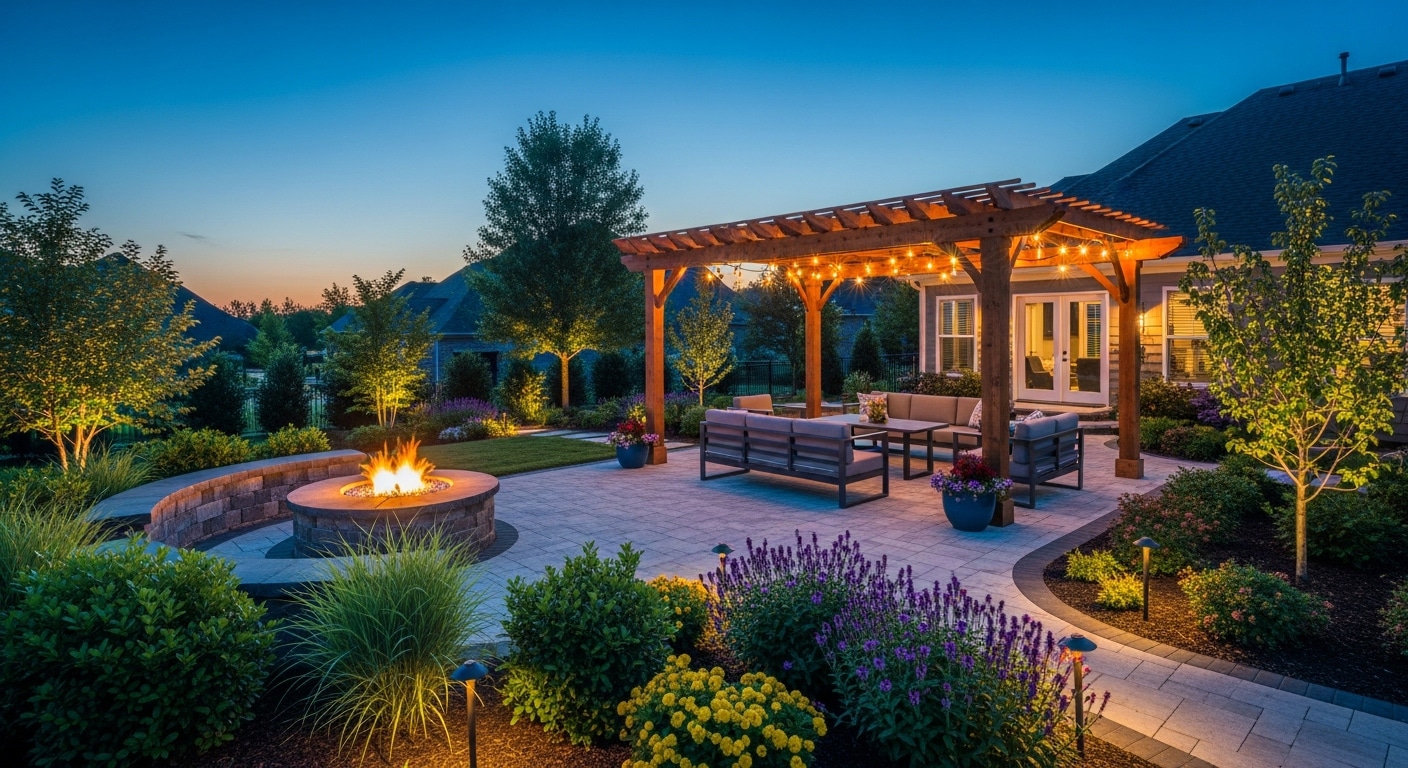
Choosing between a poured concrete slab and an interlocking paver surface for a Broken Arrow covered patio and outdoor kitchen base is one of the foundational decisions in the project planning process — both options are widely used in the Broken Arrow market, both are capable of supporting a masonry outdoor kitchen, and both have distinct advantages and limitations that make one option more appropriate than the other for a given homeowner’s priorities and lot conditions. VistaScapes & Design installs both concrete slab and paver surfaces for Broken Arrow outdoor kitchen projects and discusses the comparison at every project consultation.
Poured Concrete Slab
Poured concrete slab for Broken Arrow outdoor kitchen and covered patio projects: structural suitability — a reinforced poured concrete slab is the structural base required for a masonry outdoor kitchen; the masonry CMU base is anchored to the concrete slab with rebar dowels embedded in the slab at the kitchen’s footprint; the outdoor kitchen’s weight (a fully equipped masonry outdoor kitchen with stone countertops can weigh 3,000 to 8,000 pounds) requires a slab of adequate thickness and reinforcement that is engineered as a unified structural element; poured concrete is the standard and preferred structural base for Broken Arrow masonry outdoor kitchen projects. Slab thickness and reinforcement: a standard residential patio slab in Broken Arrow is poured at 4 inches thick over a 4-inch compacted gravel base with a 6×6 welded wire mesh or #3 rebar on 18-inch centers; a slab supporting a masonry outdoor kitchen should be poured at 4 to 6 inches thick with #3 or #4 rebar on 16 to 18-inch centers and with thickened footings (12 inches thick, 12 inches wide) at the outdoor kitchen’s masonry base perimeter; the thickened footings distribute the masonry kitchen’s point loads into the soil below without differential settlement. Finish options for poured concrete: a poured concrete slab for a Broken Arrow covered patio can be finished in broom finish (standard non-slip texture), exposed aggregate (aggregate seeded into the surface before final finishing, then exposed by washing off the surface paste), salt finish (a salt-broadcast texture that creates a dimpled surface pattern), or stamped concrete (a pattern pressed into the surface to simulate stone, slate, brick, or tile); stamped and exposed aggregate finishes add $2 to $6 per square foot to the slab cost and create a more visually interesting surface than a plain broom finish. Concrete longevity in Oklahoma: poured concrete in Broken Arrow’s expansive clay soil environment is subject to slab movement from soil moisture cycling; proper subgrade preparation (gravel base over compacted fill), adequate slab thickness, and control joint placement at appropriate intervals prevent cracking or minimize crack width and location; concrete slab cracks in Broken Arrow outdoor patios are common and can be addressed with crack injection or surface patching.
Interlocking Concrete Pavers
Interlocking concrete paver surface for Broken Arrow outdoor kitchen and covered patio projects: paver suitability for outdoor kitchens — interlocking concrete pavers are appropriate as the decorative surface of a covered patio where the masonry outdoor kitchen is supported by a separate reinforced concrete pad; the common approach for paver patios with masonry outdoor kitchens in Broken Arrow is to pour a reinforced concrete pad at the outdoor kitchen’s footprint and then install the paver surface on a compacted aggregate base around the kitchen pad; this approach provides the structural concrete support required under the masonry kitchen while delivering the aesthetic flexibility of a paver surface for the seating and entertaining area surrounding the kitchen. Paver installation system: interlocking concrete pavers are installed over a 6-inch to 8-inch compacted aggregate base (crushed limestone or compacted granite) with a 1-inch bedding layer of coarse sand screeded to the finished grade; pavers are set in the desired pattern (running bond, herringbone, basketweave, or random stone pattern), joints are swept with polymeric sand (a sand-polymer mixture that hardens when wetted and prevents weed growth and joint erosion), and the surface is compacted with a plate compactor. Paver advantages in Oklahoma: pavers accommodate soil movement better than poured concrete — individual paver units can flex slightly relative to each other without cracking, and a paver surface that settles from soil movement can be relaid by lifting the affected pavers, adding or removing sand bedding, and resetting the surface; paver replacement is possible if individual units are damaged, stained, or cracked; paver surfaces also provide a premium aesthetic with a wide range of colors, sizes, and patterns that poured concrete cannot replicate without stamping. Paver limitations: paver installation cost is typically 20 to 40 percent higher than a comparable poured concrete slab; polymeric joint sand must be refreshed every 5 to 10 years as the polymer degrades; weeds and moss can establish in paver joints if maintenance is deferred; in expansive clay soil areas of Broken Arrow, paver surfaces require periodic releveling as soil moisture cycling produces differential settlement. VistaScapes & Design installs both poured concrete and paver surfaces for Broken Arrow outdoor kitchen projects and recommends the appropriate surface system based on the homeowner’s aesthetic priorities, maintenance preferences, and budget.
Call VistaScapes & Design at (918) 779-1317 for a free patio consultation in Broken Arrow. We’ll review concrete slab and paver options for your outdoor kitchen and covered patio and recommend the surface that fits your project goals.