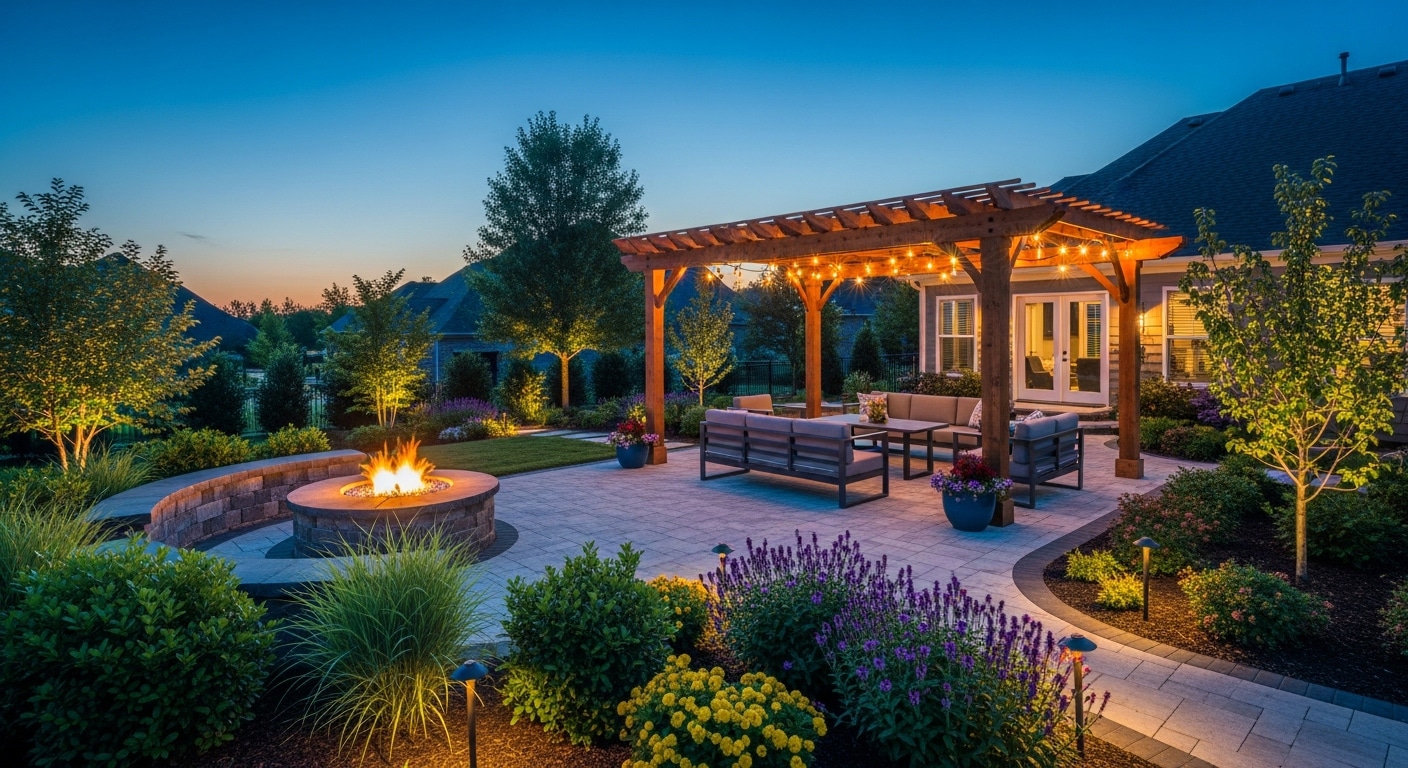
The cedar versus aluminum pergola debate comes up in virtually every outdoor living consultation in Broken Arrow and Tulsa. Both materials are installed extensively in northeast Oklahoma, and both can look excellent at installation. The difference shows over time — specifically at the five-year and ten-year marks when real-world maintenance patterns and Oklahoma climate exposure have had time to work. Here is an honest account of what each material looks like after years of Oklahoma use.
Cedar at Five Years in Oklahoma
A cedar pergola that was properly stained or sealed at installation and maintained on a two-to-three year schedule looks excellent at five years. The wood has weathered gracefully, the stain has mellowed, and the natural texture of the cedar grain has deepened. Most homeowners who maintain their cedar pergola correctly are extremely satisfied at this point — the warmth and authenticity of wood in an outdoor space is real, and it is difficult for aluminum to replicate.
A cedar pergola that was not maintained — stain left to fail without reapplication — looks very different at five years. The wood has grayed unevenly, UV damage has raised the grain, and soft areas near post bases or beam ends that were exposed to moisture have begun to deteriorate. Oklahoma’s combination of UV intensity and moisture cycling is hard on unmaintained cedar. The five-year outcome is entirely maintenance-dependent.
Aluminum at Five Years in Oklahoma
An aluminum pergola at five years looks essentially identical to how it looked at installation. The powder coat finish is intact, the structural members have not moved or swelled or cracked, and the maintenance performed has been limited to occasional cleaning. Aluminum does not weather in any meaningful sense — it does not change. For homeowners who want zero maintenance commitment, this is the value proposition.
The limitation is aesthetic — aluminum looks like aluminum, regardless of how well the finish is executed. The crisp, manufactured appearance that reads as contemporary at installation still reads as contemporary at five years. It does not develop the natural character that wood does over time. Whether that is an advantage or a disadvantage depends entirely on your design preferences.
Cedar at Ten Years in Oklahoma
At ten years, cedar pergolas that have been consistently maintained show their quality. The wood has developed genuine character, the structure has proven its stability, and homeowners who built with quality cedar and premium hardware report no structural concerns. Those who maintained inconsistently at this point face a more significant refinishing project — stripping and restaining rather than simply refreshing — or in some cases, replacement of members that have deteriorated beyond cosmetic treatment.
Oklahoma post bases are the most common failure point in cedar pergolas at the ten-year mark. Post bases that were in contact with moisture — from pooled water, soil contact, or inadequate base clearance — show wood deterioration that may require post replacement. This is a maintenance failure rather than a material failure, but it is predictable and preventable with proper installation and annual inspection.
Aluminum at Ten Years in Oklahoma
Aluminum pergolas at ten years in Oklahoma continue to look as they did at installation. Powder coat finishes have UV protection built in that exceeds the UV resistance of most wood stains, and aluminum structure does not absorb moisture or experience the thermal expansion and contraction that wood does through Oklahoma’s seasonal range. There is essentially nothing to report at ten years for a well-installed aluminum structure.
The ten-year comparison comes down to values: if natural material, warmth, and the willingness to maintain are your orientation, cedar is still right. If zero maintenance and the same appearance indefinitely is the goal, aluminum delivers it better than any wood species.