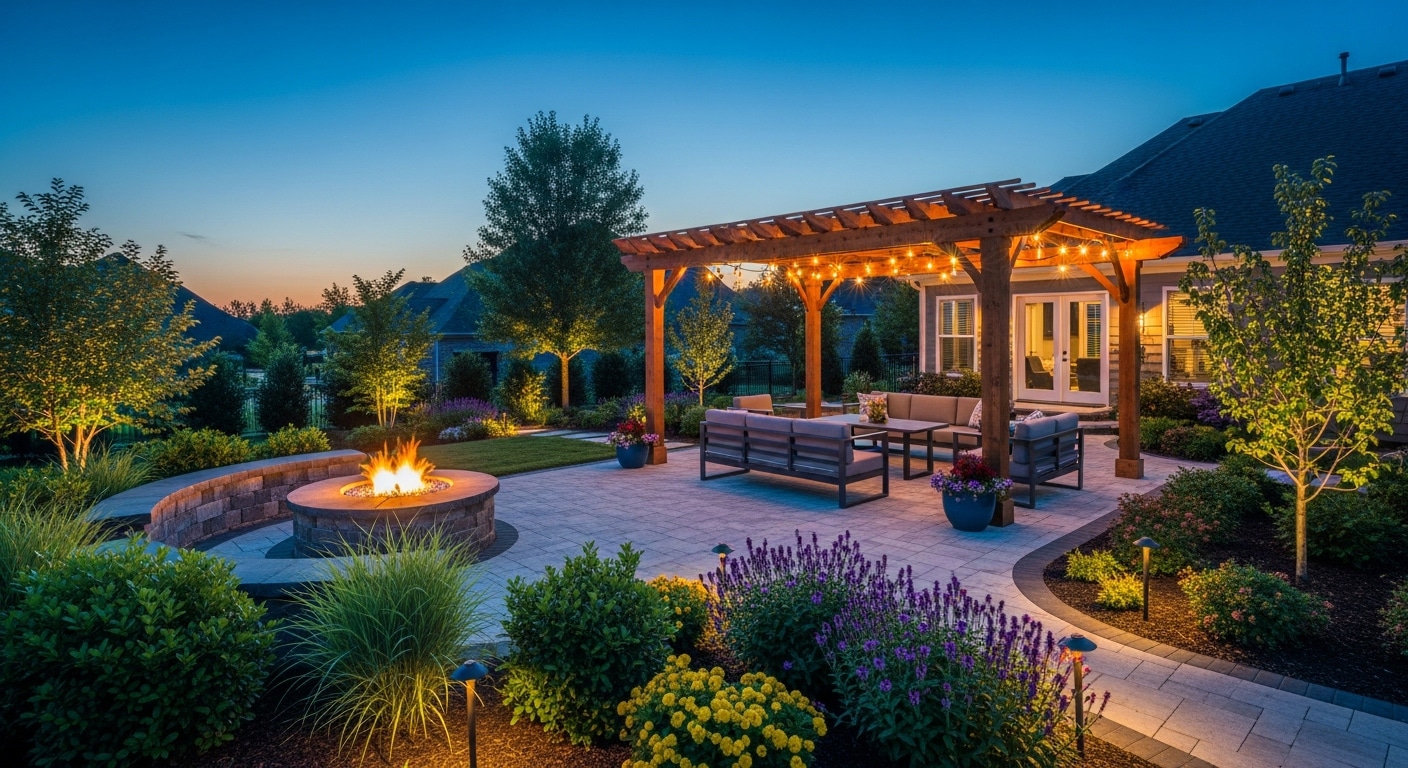
One of the most common questions Broken Arrow and Tulsa homeowners ask during outdoor living planning is whether they can get color in their concrete — and if so, which colors hold up in Oklahoma’s sun, heat, and freeze-thaw cycles. The answer is yes, color is available and durable when done correctly. The follow-up is that not all coloring methods are equal, and the difference between a patio that looks great for twenty years and one that looks washed out in five often comes down to the method chosen and the quality of execution.
Integral Color — Mixed In, Not Painted On
Integral color is added to the concrete mix before it’s poured. The pigment runs through the entire slab — if the surface chips or wears, the color below matches. This is the most durable method for concrete patio color in Oklahoma. Integral colors are available in a wide range of earth tones: warm tans, browns, terracottas, grays, and charcoals. Saturated colors (bright reds, blues, greens) don’t work well as integral color — they tend to look muted and inconsistent in concrete. Integral color works best when paired with a saw-cut or stamped pattern that gives the surface visual interest beyond flat color alone.
Acid Stain — Chemical Reaction for Natural Variation
Acid staining is a chemical process that reacts with the minerals in existing concrete to create permanent, natural-looking color variation. The result is a mottled, organic appearance — no two acid-stained slabs look identical. Colors are limited to earth tones and metallics because the reaction is chemistry-based, not pigment-based. Acid stain can be applied to existing concrete, making it an option for homeowners who want to improve the appearance of an existing patio without replacing it. The result must be sealed to protect the finish and enhance the color depth. Properly maintained acid-stained concrete in Oklahoma holds up well.
Water-Based Stain — More Color Range
Water-based concrete stains penetrate the surface and offer a broader color range than acid stains, including some muted blues and greens alongside earth tones. The result is more consistent than acid stain — closer to uniform color with some natural variation. Like acid stain, it must be applied to existing concrete and sealed properly. Water-based stain is a reasonable option for homeowners who want a specific color that isn’t achievable with integral color or acid stain.
Stamped Concrete Color — Base Plus Release
Stamped concrete uses two colors: the base color (integral to the mix) and a release agent (a powder or liquid that adds a secondary color to the high points of the stamp pattern, simulating the look of natural stone or brick). The combination creates dimensional color that reads as depth and shadow — this is why stamped concrete looks more natural than a single-color slab. In Broken Arrow and Tulsa, popular stamped concrete combinations include gray base with charcoal release (slate look), tan base with brown release (flagstone look), and buff base with terra cotta release (brick look).
Colors to Avoid in Oklahoma’s Climate
Very light colors (near-white, light cream) show staining from leaves, pollen, and organic debris quickly and become maintenance burdens in Oklahoma. Very dark colors (near-black, very dark charcoal) absorb heat aggressively — in Oklahoma summers, a dark concrete patio can become uncomfortably hot to walk on barefoot. The practical sweet spot is mid-range earth tones: warm grays, light to medium browns, tans, and terracottas. These colors read well visually, absorb moderate heat, and hide everyday outdoor staining.
Sealing and Maintenance
All colored concrete should be sealed — both for protection and to enhance the color’s depth and vibrancy. Acrylic sealers provide a wet-look sheen and good protection but require reapplication every 2–3 years. Penetrating sealers provide protection without changing the surface appearance and last longer. For stamped concrete, a high-gloss acrylic sealer is typical — it accentuates the pattern and color. Resealing every 2–3 years is the primary maintenance requirement for colored concrete patios in Oklahoma.