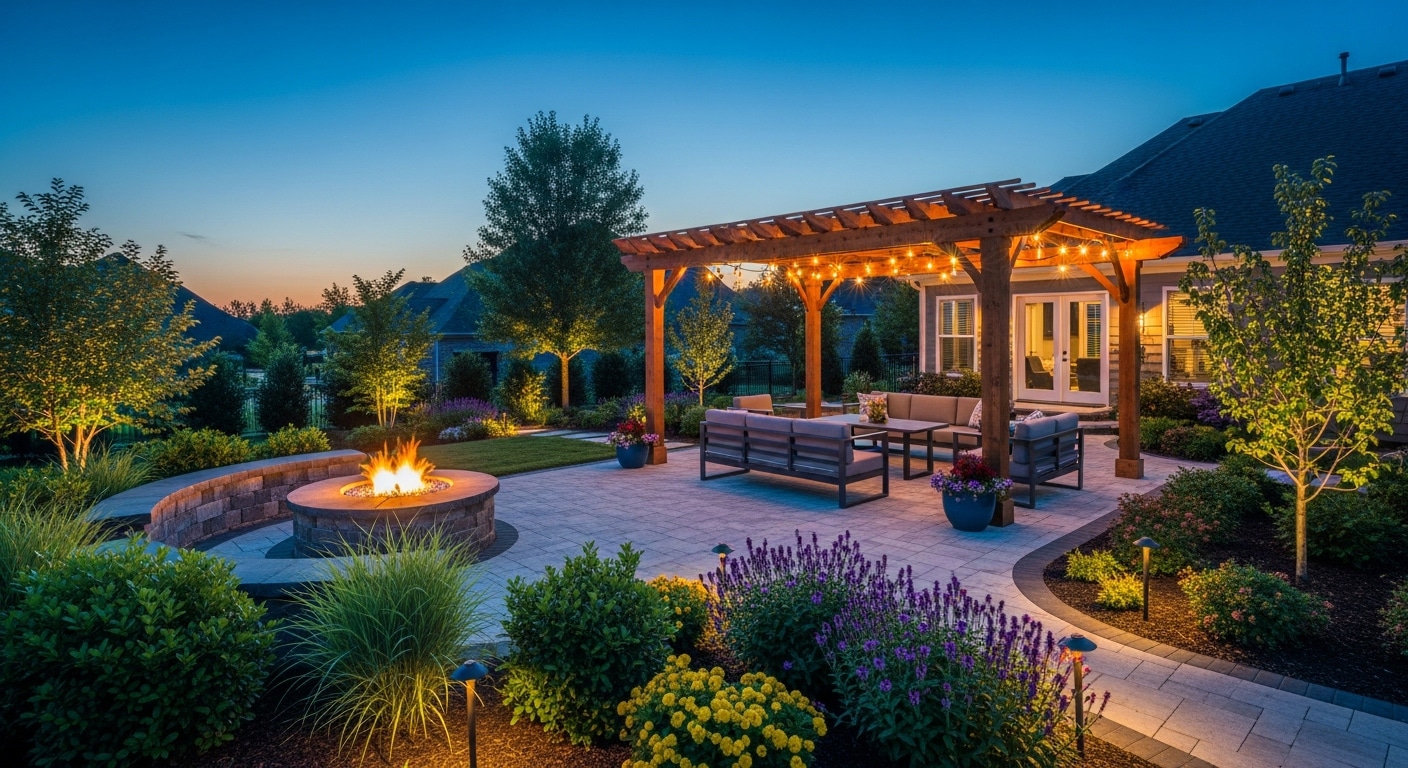
An existing concrete patio in Broken Arrow can be transformed with stain, decorated with overlay systems, or protected with sealer — without replacing the slab. Here’s how to think through your options.
Penetrating Sealers — Protection Without Changing Appearance
A silane-siloxane penetrating sealer soaks into concrete and bonds within the pore structure, creating a hydrophobic barrier that repels water without changing the surface appearance. No sheen, no color change — just protection.
Best for: Homeowners who like the natural concrete look and just want to extend the life of the slab and reduce water and stain penetration.
Application interval: Every 3–5 years in Broken Arrow’s climate. Penetrating sealers don’t peel — they gradually deplete through the pore structure.
Film-Forming Acrylic Sealers — Wet Look or Matte Finish
Acrylic sealers sit on top of the concrete surface and create a film that can range from high-gloss “wet look” to matte, depending on the product. They enhance color — natural gray concrete looks noticeably richer — and provide good surface protection against stains, UV, and light abrasion.
Best for: Stamped concrete patios where color enhancement is the goal. Most stamped concrete is sealed with an acrylic or solvent-based sealer at installation.
Application interval: Every 1–3 years. Oklahoma’s UV exposure is aggressive — acrylic sealers on sun-exposed concrete fade and chalk faster than in milder climates.
Acid Staining — Permanent Color Transformation
Acid staining reacts chemically with concrete’s calcium hydroxide and aggregate, producing permanent, translucent colors with natural variation that can’t be replicated by paint. Common tones: terracotta, antique brown, bronze, and mottled earth tones. The chemical reaction is permanent — it won’t peel or chip because the color is within the concrete surface, not on top of it.
What acid stain can’t do: Produce bright, uniform colors. Acid stain’s palette is limited to earth tones, and the results will have natural variation and mottling. If you want a specific, uniform color, concrete dye or an overlay system is the better path.
Requires: Clean concrete free of existing sealers, paint, or coatings. Old sealers block acid penetration and prevent the chemical reaction. Surface prep (grinding or shot blasting) may be needed to open the concrete surface.
Concrete Dye — Wider Color Options
Water-based or solvent-based concrete dyes produce a wider range of colors than acid staining — including blues, greens, and brighter palettes. They penetrate into concrete but don’t react chemically the way acid stains do. More UV-sensitive than acid stain in Oklahoma’s direct sun — top-quality dyes with UV inhibitors are more stable, but expect more maintenance than acid stain over time.
Decorative Overlay Systems
A polymer-modified concrete overlay (Micro-Topping, OverlayMax, Ardex) applied over an existing slab gives you a fresh surface to stamp, color, and finish. The overlay is typically 3/8–3/4 inch thick and can create virtually any appearance — including patterns that look nothing like the original concrete. Requires a structurally sound base slab; overlays over moving or severely cracked concrete will crack through within a few seasons.
Get an Assessment for Your Existing Patio
We evaluate existing concrete patios for staining, sealing, and overlay feasibility. Call 918-779-1317 or reach out through our website. We’ll assess your slab condition and recommend the approach that gives you the best result.