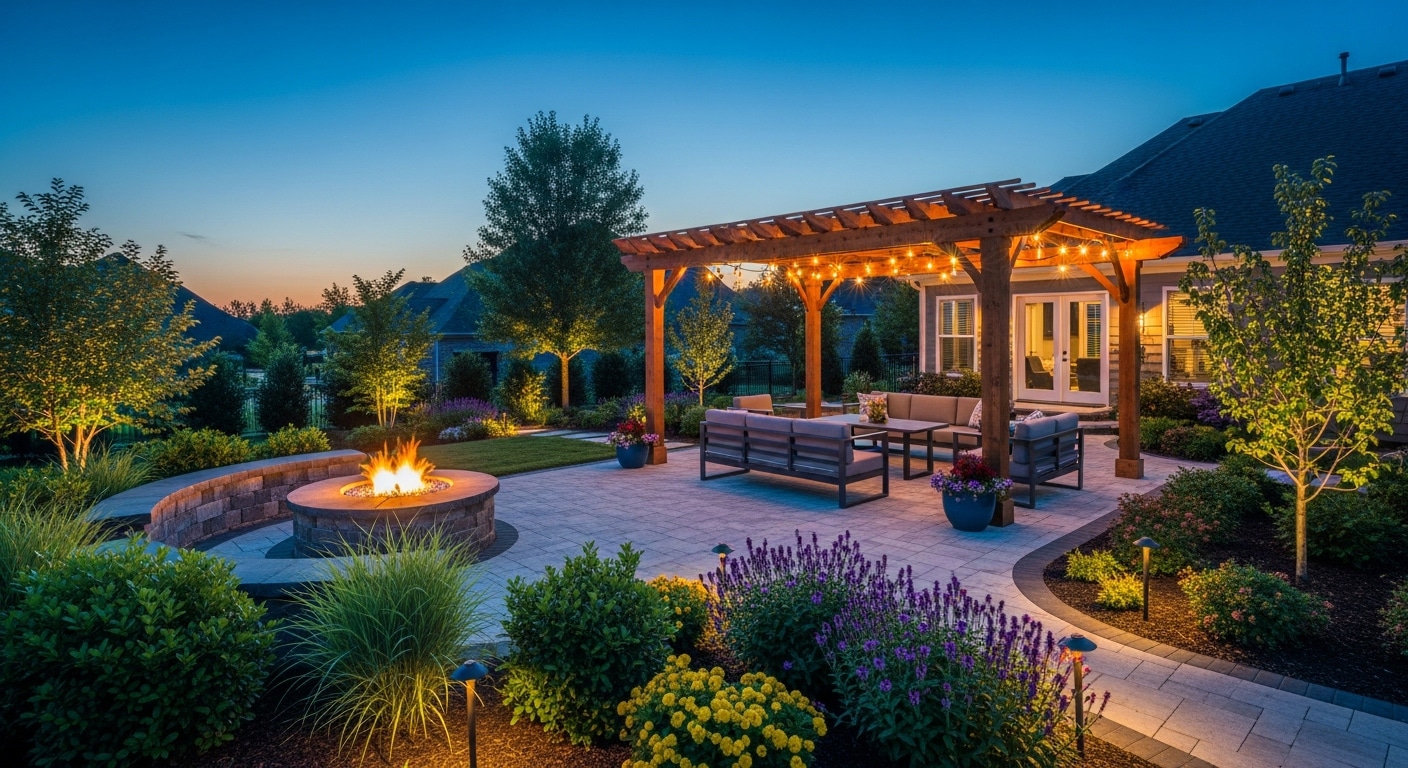
Concrete vs. Paver Patio Under an Outdoor Kitchen in Oklahoma: Which Base Is Best?
Before the first block of your outdoor kitchen masonry goes up, you need a stable, level, appropriately designed patio base beneath it. The two main options in the Broken Arrow and Tulsa market are poured concrete and interlocking pavers. Each has genuine strengths and specific limitations for outdoor kitchen support in Oklahoma’s challenging climate. This guide gives you the straight comparison so you can make the right call for your project.
VistaScapes Design | (918) 779-1317 | 413 N Walnut Ave Suite A, Broken Arrow, OK 74012
The Core Challenge: Oklahoma’s Expansive Clay Soil
Before comparing materials, you need to understand the ground you’re building on. Northeast Oklahoma is dominated by expansive clay soils — soils that swell when wet and shrink when dry. This movement is the #1 cause of patio failure in the Tulsa metro. Any patio base under an outdoor kitchen must account for clay soil movement, or the masonry structure above it will crack and shift.
Both concrete and pavers can be designed to handle Oklahoma clay — but the methods differ, and the cost of getting it wrong is high.
Poured Concrete: The Strongest Base for Outdoor Kitchen Masonry
Why Concrete Is Our Default for Outdoor Kitchen Bases
For the outdoor kitchen masonry structure itself (the CMU block frame that supports the countertop and appliances), poured concrete is the correct and preferred base. Here’s why:
- Continuous monolithic surface — no joints, no movement between sections under load
- Structural integrity under masonry weight — CMU block + countertop + appliances can easily weigh 5,000–15,000+ lbs; concrete provides the structural base this load requires
- Can be reinforced specifically for masonry load distribution — we spec 4″ to 5″ thick reinforced concrete with rebar grid under the kitchen footprint
- Lower initial cost than pavers for equivalent square footage
- Monolithic connection to foundation possible — for very large or heavy kitchen structures, the slab can be connected to a dedicated foundation system for extreme stability
Concrete Limitations in Oklahoma
- Cracking is normal, not failure — Oklahoma’s clay soil movement and temperature extremes will produce hairline cracks in concrete slabs within 3–7 years. Control joints placed during pour minimize cracking. Hairline cracks are cosmetic in properly designed slabs.
- Aesthetics are limited without treatment — plain gray concrete reads as a utility surface; stamped concrete, colored concrete, or aggregate finish upgrades the appearance
- Difficult to add drainage changes — once poured, slope and drainage are fixed; pavers are more adjustable if drainage problems develop
- Requires full replacement to address significant damage — a broken-up paver area can be repaired section by section; damaged concrete often requires full pour replacement
Interlocking Pavers: The Premium Look with Flexibility
Paver Advantages
- Premium appearance — natural stone pavers, concrete pavers, porcelain pavers, and brick offer a significantly richer aesthetic than plain concrete
- Flexibility in clay soil — pavers laid on compacted aggregate base with proper sand bedding can absorb minor soil movement that would crack rigid concrete
- Repairability — individual pavers can be removed and replaced; sections can be lifted and releveled if settlement occurs
- Drainage options — permeable paver systems allow water infiltration through the surface; excellent for Oklahoma’s heavy rain events
Paver Limitations for Outdoor Kitchen Support
- Cannot directly support CMU block masonry — paver surfaces are not rigid enough to serve as the direct base for outdoor kitchen masonry without a concrete pad beneath the kitchen footprint. The approach: concrete under the kitchen, pavers in the surrounding patio area.
- Higher installation cost — professional paver installation costs 30–60% more per square foot than concrete
- Requires ongoing maintenance — pavers need annual joint sand replenishment, periodic re-leveling, and sealing (optional but recommended in Oklahoma’s UV)
- Weed control — polymeric sand and proper base preparation minimize weed intrusion; unsealed or improperly installed paver joints accumulate weeds in Oklahoma’s growing conditions
Our Recommendation: Hybrid Approach for Most Oklahoma Homeowners
For outdoor kitchens in Broken Arrow and Tulsa, the optimal approach is typically:
- Reinforced concrete pad under the outdoor kitchen structure — 4–5″ thick with #4 rebar on 18″ centers; this is the structural base the masonry requires
- Pavers in the surrounding patio area — premium aesthetic for the dining and lounge zones; flexible joint system handles clay soil movement in areas not under rigid masonry load
- Transition detail between concrete and pavers — a clean edge detail where the concrete kitchen pad meets the paver patio; hidden by the kitchen structure or a border paver row
This hybrid approach gives you structural integrity where you need it (under the kitchen) and aesthetic flexibility in the surrounding areas that guests actually see and walk on.
Frequently Asked Questions — Patio Base for Outdoor Kitchens
Ready to plan your patio and outdoor kitchen together? Call VistaScapes Design at (918) 779-1317. We handle the complete project — foundation, patio, kitchen, and pergola — under one contract.