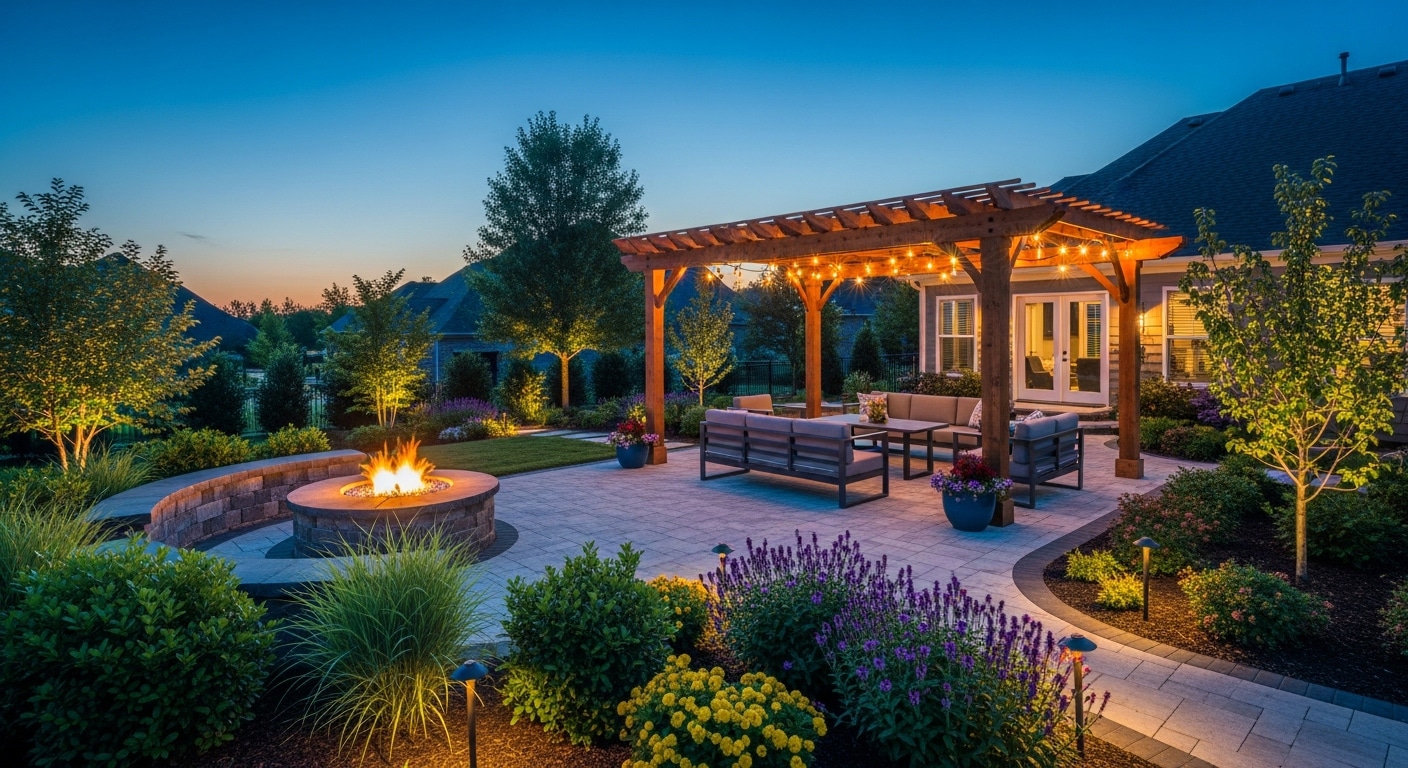
The hip versus gable roof configuration for a covered patio is one of the first structural decisions in a covered patio project and one that affects both the structure’s appearance and its performance in Oklahoma’s wind conditions. VistaScapes & Design builds covered patios in both hip and gable roof configurations throughout Tulsa and helps homeowners understand which configuration best suits their home’s architecture and their project’s performance requirements.
Gable Roof Covered Patios
A gable roof covered patio has two sloping roof planes that meet at a ridge line, with triangular gable ends visible at the structure’s sides. Gable roofs are the most common residential roof type in Tulsa and the configuration that most homeowners recognize as the standard pitched roof. For attached covered patios, a gable roof runs with the ridge parallel to the home’s wall — the roof pitches away from the house on both sides from the ridge — or perpendicular to the wall with the ridge running away from the house. Gable roofs are more economical to frame than hip roofs and create significant volume under the peak, which allows ceiling heights that feel more spacious than a shed roof at equivalent eave heights. The gable end panels above the beam level can be open for ventilation, screened, or enclosed in framing that matches the home’s siding material.
Hip Roof Covered Patios
A hip roof covered patio has four sloping roof planes that meet at a central ridge or peak, with no vertical gable ends. Hip roofs are more complex to frame than gable roofs and typically cost more per square foot of covered area, but they offer advantages in both appearance and performance. In appearance, a hip roof is more architecturally integrated — the sloping eaves wrap around all four sides of the structure, creating a pavilion-like visual character that many Tulsa homeowners prefer for freestanding pavilion structures where all four sides are visible. In performance, hip roofs are more wind-resistant than gable roofs because there are no vertical gable end panels to catch wind load. In Oklahoma’s high-wind exposure zone, a hip roof’s aerodynamic profile handles severe storm winds with better structural integrity than a comparable gable roof. For freestanding pavilions in exposed locations, we often recommend hip roof configurations for this structural advantage.
Matching Your Home’s Architecture
The most important factor for an attached covered patio roof style is matching the home’s existing roof character. A home with a strong gable roof aesthetic — visible gable ends, steep pitch, prominent ridge — typically calls for a gable roof covered patio addition that continues the home’s architectural vocabulary. A home with a hip roof or a Prairie-influenced profile with wide overhanging eaves benefits from a covered patio addition that mirrors the hip configuration. A covered patio that contrasts sharply with the home’s existing roof type will look like a mismatched addition rather than an architectural extension of the home. We evaluate the home’s existing roof character at every site visit and recommend the covered patio roof style that will produce the most architecturally cohesive result.
Call VistaScapes & Design at (918) 779-1317 for a free covered patio consultation in Tulsa. We’ll evaluate your home’s architecture and recommend the roof configuration that creates the most cohesive result for your property.