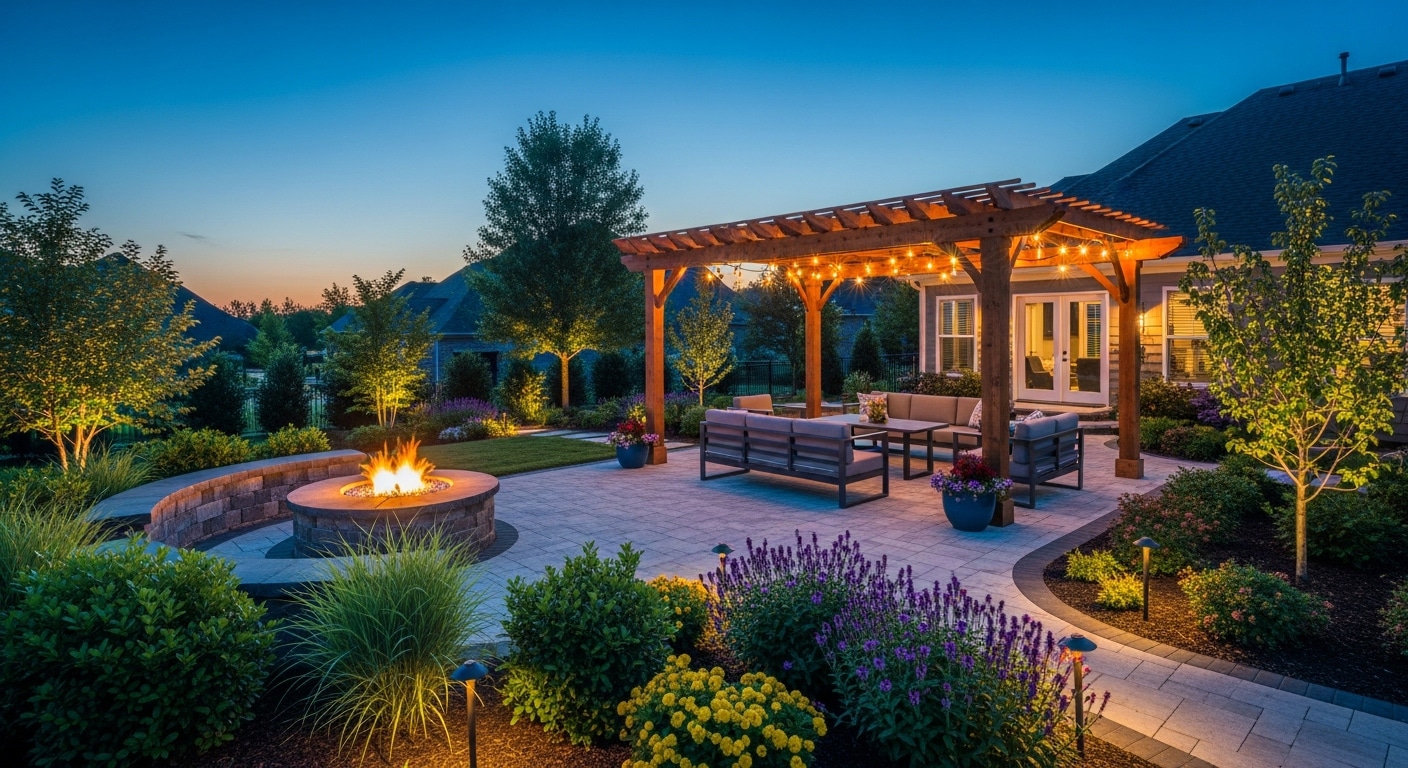
Before we install a fire pit anywhere in Broken Arrow or Tulsa, we make sure our clients understand the local rules and regulations that govern outdoor burning. This isn’t an area where you want to learn by violation — and understanding these rules upfront often influences the type of fire feature that makes the most sense for your property.
Tulsa City Ordinances for Outdoor Fires
The City of Tulsa regulates outdoor burning under its fire code, administered by the Tulsa Fire Department. Key points for residential property owners:
- Recreational fires are permitted in Tulsa within a container (a fire pit, chiminea, or similar device) on private residential property.
- Open burning of yard waste is restricted and often requires a permit. This is different from a recreational fire pit.
- No burning during burn bans: Oklahoma’s fire marshal and local fire chiefs issue burn bans during dry, windy conditions — these apply to all outdoor burning including gas fire features in some cases. Check the Oklahoma Forestry Services burn ban map before lighting up during dry weather.
- Fires must be attended: An adult must be present whenever the fire is burning.
- Extinguishment requirements: A garden hose or bucket of water must be accessible.
Broken Arrow Fire and Building Requirements
Broken Arrow generally follows the Oklahoma State Fire Code for residential outdoor fires. Built-in fire pits and outdoor fireplaces that are constructed permanently — masonry, concrete, or permanent steel — may require a building permit from the City of Broken Arrow Building Services Department. This is true for any structure considered a permanent improvement to the property.
We handle permit applications for all built-in fire features we install in Broken Arrow. This protects our clients from code violations and ensures the work passes inspection correctly.
Setback Requirements
Fire features need to be set back from structures, property lines, and combustible materials. General guidelines:
- Minimum 10 feet from any structure (house, garage, fence, shed)
- Minimum 10 feet from property lines
- 25 feet from overhead power lines or wires
- No overhanging branches within 10 feet of the fire area
These are general guidelines — your specific municipality or fire district may have more restrictive requirements. We always verify setback requirements during the design phase for any fire feature project.
Gas Fire Pits vs. Wood-Burning Fire Pits: Regulatory Differences
This is one of the most important regulatory distinctions for homeowners in subdivisions and HOA communities. Natural gas and propane fire pits produce no smoke, no sparks, and no ash — and as a result, they are typically exempt from burn bans (though you should confirm with your local fire authority during declared emergency conditions).
Wood-burning fire pits, while legal in most Tulsa and Broken Arrow residential areas, produce smoke that can affect neighbors and sparks that create fire risk. HOAs in many Broken Arrow subdivisions restrict or prohibit wood-burning fires entirely, even while permitting gas fire features. Always check your HOA’s Declaration of Covenants, Conditions, and Restrictions (CC&Rs) before selecting a fire feature type.
Why Many Clients Choose Gas Fire Features
Given the combination of burn ban risk in Oklahoma’s dry seasons, HOA restrictions in many Broken Arrow communities, and the convenience of push-button ignition versus building a wood fire, the majority of fire pits VistaScapes installs are natural gas or propane. They’re available year-round regardless of burn conditions, require no wood storage or ash cleanup, and eliminate the smoke-and-neighbors problem entirely.
VistaScapes Design installs gas and wood-burning fire features throughout Broken Arrow, Tulsa, Owasso, Jenks, and Bixby. We handle permits and setback verification for every project. Call 918-779-1317 to get started.