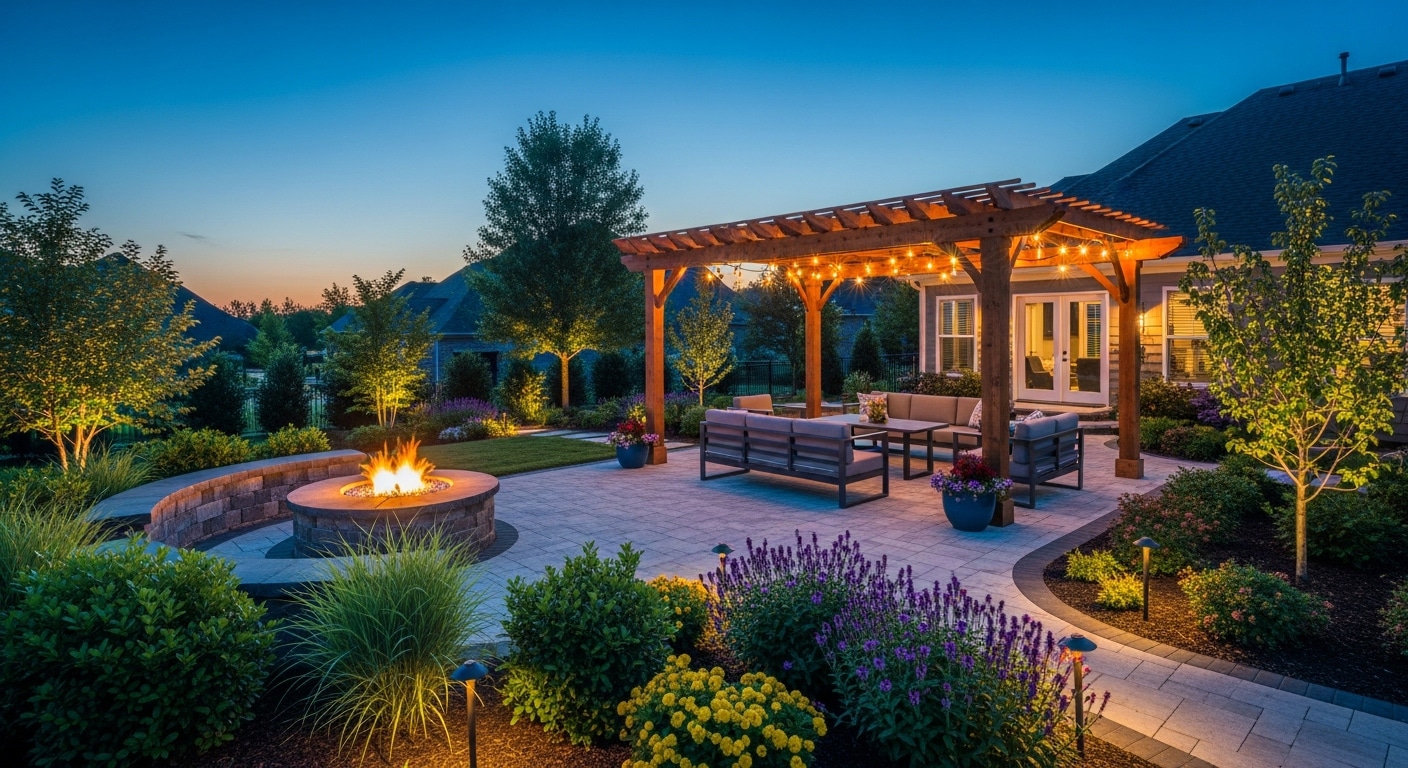
If you’ve tried to grow anything in Broken Arrow or Tulsa and struggled, Oklahoma clay soil is likely the culprit. Our native soil is some of the most challenging in the country — heavy, compacted, slow-draining, and prone to cracking during summer droughts. At VistaScapes, every landscape installation begins with soil correction because the most beautiful plants will fail without a healthy soil foundation.
Why Oklahoma Clay Soil Is a Problem
Clay soil has extremely small particle sizes, which creates several issues for homeowners:
- Poor drainage — water pools on the surface rather than penetrating, causing root rot in many plants
- Compaction — clay compacts under foot traffic and equipment, restricting root penetration
- Nutrient lock — dense clay binds to nutrients, making them unavailable to plant roots
- pH issues — Oklahoma clay tends to be alkaline (pH 7.0–8.5), limiting availability of iron, manganese, and zinc
- Cracking — during summer drought, clay shrinks dramatically, damaging shallow roots
The VistaScapes Soil Amendment Process
We don’t just drop plants in existing clay and hope for the best. Every VistaScapes landscape installation includes a targeted soil amendment protocol:
Step 1 — Soil Testing
We start with a soil test to measure pH, organic matter content, and macro/micronutrient levels. Oklahoma State University’s extension lab offers affordable tests ($10–$20) that guide exactly which amendments your property needs.
Step 2 — Tilling and Breaking Up Compaction
We till planting beds 8–12 inches deep to break up the hardpan layer just below the surface. This creates a transition zone where roots can establish before hitting native clay. On severely compacted areas, we may use subsoil aeration first.
Step 3 — Organic Matter Integration
We incorporate 3–4 inches of quality compost or aged hardwood compost into tilled soil. Organic matter physically separates clay particles, improving drainage and creating air pockets for root growth. This single step transforms clay more effectively than any other amendment.
Step 4 — pH Correction
For alkaline Oklahoma soils, we apply elemental sulfur to gradually lower pH toward the optimal range of 6.0–6.8 for most landscape plants. This is a slow process — expect 6–12 months for significant change. For acid-loving plants like blueberries or azaleas, we may create raised beds with amended, acidic growing media.
Step 5 — Gypsum Application
Agricultural gypsum (calcium sulfate) is one of the most effective clay-breakers available. It doesn’t change soil pH but dramatically improves drainage and structure. We apply 20–40 lbs per 1,000 square feet to heavy clay areas.
Step 6 — Mulch as a Long-Term Protector
After planting, we apply 2–3 inches of shredded hardwood mulch over all beds. Mulch moderates soil temperature, retains moisture, and as it breaks down, continuously adds organic matter to the clay beneath. Over 2–3 years, mulched beds develop significantly improved soil structure.
Plants That Actually Thrive in Oklahoma Clay
While we always amend soil, we also select plants adapted to Oklahoma conditions. These perform well even in challenging clay:
- Native grasses: Big Bluestem, Little Bluestem, Sideoats Grama
- Shrubs: Oklahoma Redbud, Possumhaw Holly, Knockout Roses, Forsythia
- Perennials: Black-eyed Susan, Purple Coneflower, Salvia, Daylilies
- Trees: Bur Oak, Chinkapin Oak, Lacebark Elm, Shumard Oak
- Ground covers: Liriope, Ajuga, Native Sedge
Want a landscape that actually survives Broken Arrow’s summers? VistaScapes builds every project on a solid soil foundation. Call us at (918) 779-1317 or request a consultation — we’ll assess your soil and design a landscape that thrives for years.