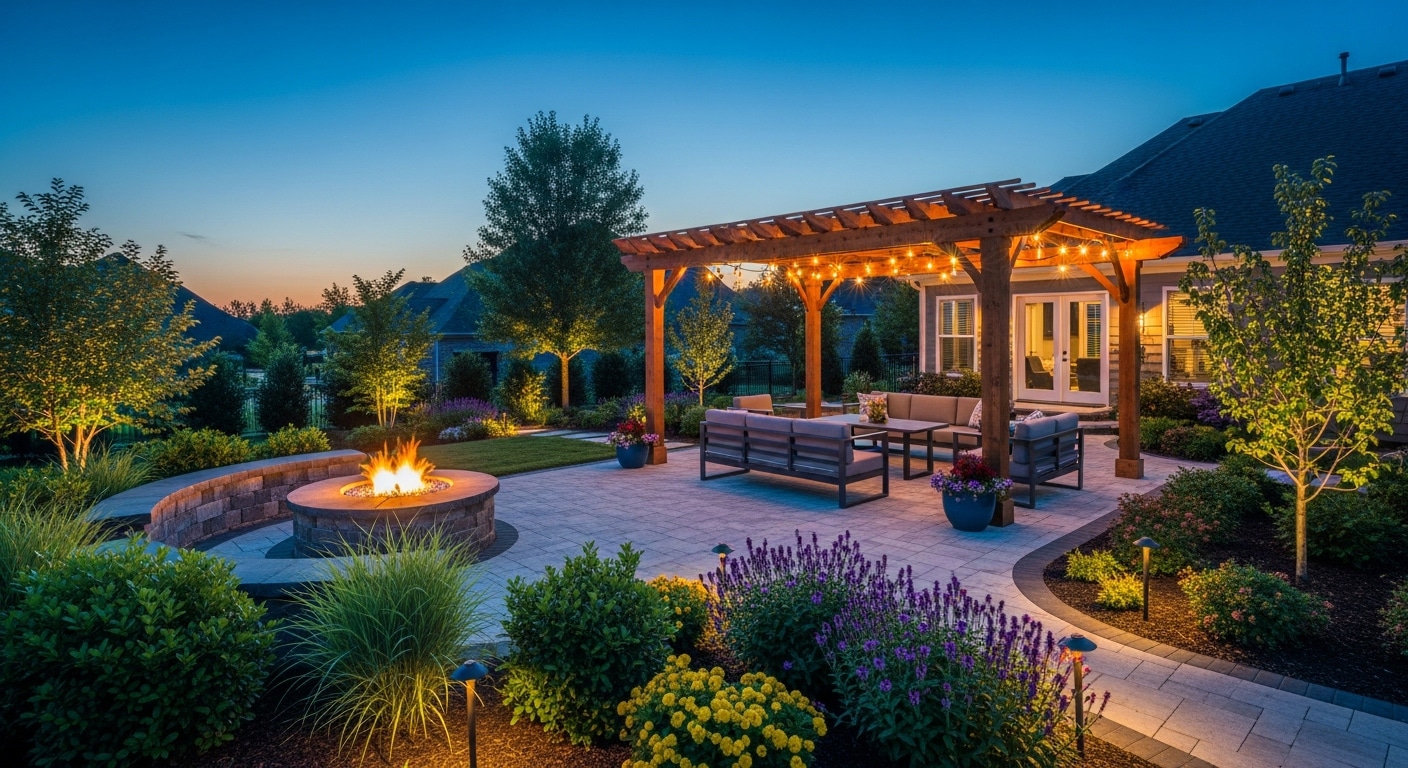
Oklahoma’s climate is tough on outdoor surfaces — extreme heat, intense rainfall, freeze-thaw cycles, and expansive clay soils all work against patio longevity. Here’s what you can realistically expect from different patio materials in our region, and what you can do to maximize lifespan.
Patio Lifespan by Material in Oklahoma
Premium Concrete Pavers: 30–50+ Years
Quality concrete pavers from manufacturers like Belgard, Unilock, or Techo-Bloc are the most durable option for Oklahoma patios. They’re rated to withstand freeze-thaw cycles, have compressive strengths of 8,000+ PSI, and water absorption rates that prevent the cracking and spalling that destroys cheaper materials. Individual pavers can be replaced if damaged, meaning the patio never needs full replacement — just maintenance of specific areas over time.
We’ve seen well-installed paver patios from the 1980s that still look great with minimal maintenance. With proper base preparation and joint sand maintenance, expect 30–50+ years from a quality paver installation.
Natural Stone (Travertine, Limestone, Flagstone): 25–50+ Years
Natural stone is extremely durable when properly installed. Oklahoma limestone has been used in construction for over a century — you can see century-old limestone buildings throughout the state that are still structurally sound. Travertine requires sealing every 2–3 years in Oklahoma’s climate to prevent freeze damage to its porous surface. Properly sealed and installed on a solid concrete base, travertine and limestone patios last 25–50+ years.
Stamped Concrete: 10–25 Years
Stamped concrete typically lasts 10–25 years in Oklahoma’s climate before significant cracking, color fading, or surface spalling requires major repair or replacement. The clay soil movement in our region is particularly hard on monolithic concrete slabs. Resealing every 2–3 years extends life and maintains appearance. Eventually, the cracks and repairs become visually intrusive enough that full replacement makes more sense than continued patching.
Basic Poured Concrete: 10–20 Years
Basic poured concrete slabs in Oklahoma typically show significant cracking within 5–10 years and become problematic within 10–20 years. This is not a contractor quality issue — it’s simply the reality of our clay soils expanding and contracting. Control joints slow but don’t prevent cracking. The low initial cost of poured concrete often doesn’t reflect the replacement cost when a full section needs removal and reinstallation.
Big-Box Store Pavers: 5–15 Years
The concrete pavers sold at big-box retailers are lower density with higher water absorption than contractor-grade pavers. In Oklahoma’s climate, they absorb water, freeze-thaw cycles cause spalling within a few years, and the color fades rapidly under intense UV exposure. We frequently replace these installations after 5–10 years with contractor-grade paver systems that will last decades longer.
What Extends Patio Lifespan in Oklahoma
- Proper base preparation: 4–6 inches of compacted crushed limestone over geotextile fabric, with excellent drainage slope
- Quality materials: Commercial-grade pavers or natural stone rated for freeze-thaw cycling
- Proper drainage: Water should flow away from the patio surface and not pool anywhere
- Regular maintenance: Re-sanding paver joints annually, sealing stone every 2–3 years, cleaning vegetation from joints promptly
- Tree management: Large tree roots near patios are one of the top causes of premature failure in Oklahoma — plan tree placement carefully
Build a Patio That Lasts in Broken Arrow or Tulsa
VistaScapes & Design uses only contractor-grade materials and proper base preparation on every project. We build patios that last — and back them with a workmanship warranty. Call (918) 779-1317 or request a free estimate.