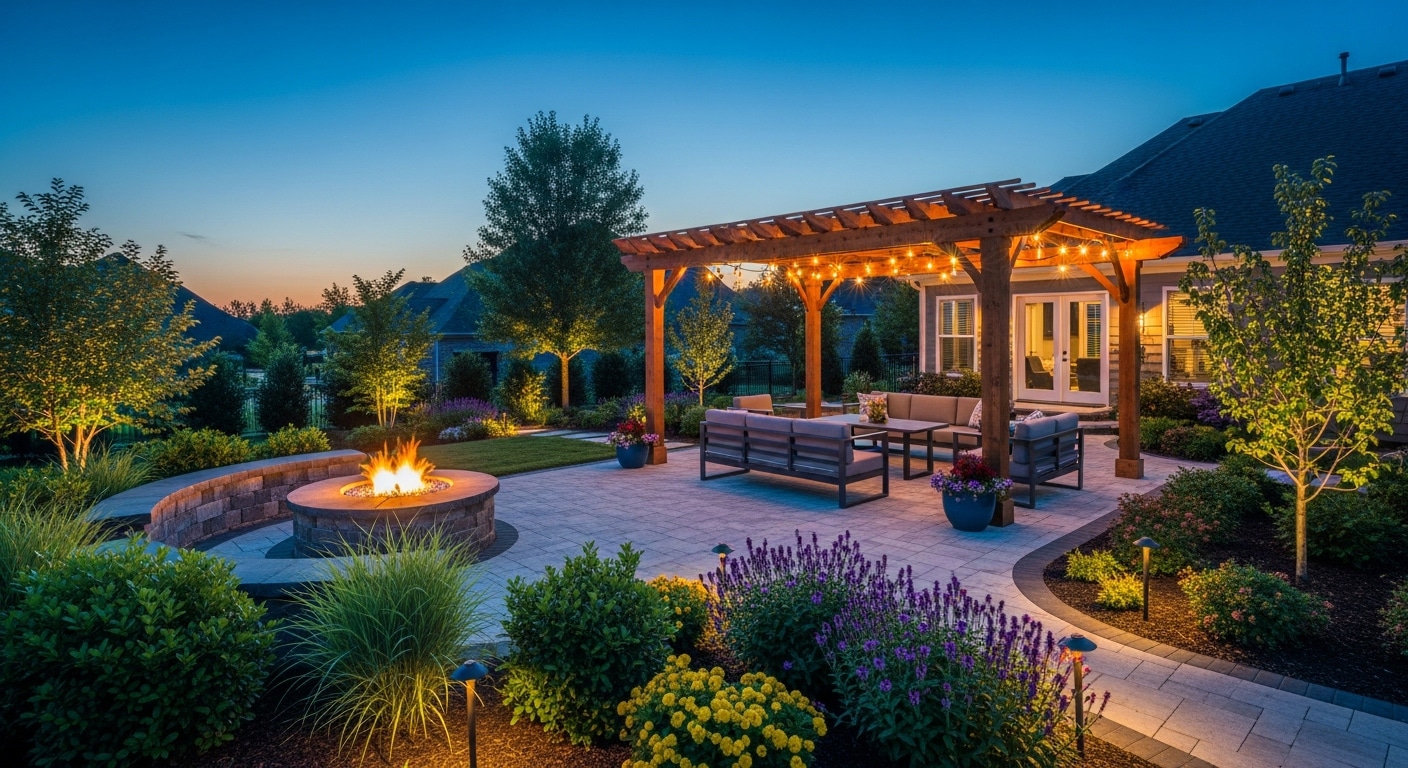
One of the most overlooked impacts of building outdoor living features is what happens to the existing irrigation system. Covered structures block precipitation. Hardscaping eliminates turf zones. Raised planters create new watering needs. And the new construction itself — footings, trenching, conduit — can cut irrigation lines, shift heads, and disturb zone patterns established years ago. This guide covers what to expect, what to plan for, and how to come out of an outdoor living project with an irrigation system that actually works.
What Outdoor Living Construction Does to Existing Irrigation
Most outdoor living construction involves digging — footings for posts and pergolas, trenching for gas lines and electrical conduit, paver installation that requires base excavation. Oklahoma irrigation systems run PVC laterals at 6–12 inch depth, well within the excavation zone for most footings and trenching. Before any digging begins, your contractor should mark all irrigation zones (or have you run the system head by head to identify lines), and your irrigation provider should cap and re-route any lines in the construction path. Lines cut during construction and not properly repaired become leak points that destroy water bills and kill landscaping.
Rezoning After Construction
After hardscaping and covered structures are installed, the original zone layout may be obsolete. Areas now covered by concrete or pavers don’t need irrigation. Areas shaded by a structure have very different water needs than they did in full sun. Newly planted beds around the structure may need their own dedicated zones. An irrigation contractor should walk the completed outdoor living project and remap the zones to match the new site conditions — turning off heads in covered areas, adjusting runtimes for shaded zones, and adding heads for new plantings.
Drip Irrigation for Planters and Landscape Beds
Outdoor living projects often include raised planters, container gardens, or new landscape beds adjacent to the hardscaping. These areas are best served by drip irrigation rather than spray heads — drip delivers water directly to root zones without overspray onto hardscaping or covered structure walls. A dedicated drip zone on a separate valve with a timer allows precise watering schedules independent of the turf zones. In Broken Arrow and Tulsa’s clay soil, overwatering planters leads to root rot and plant loss — drip with a soil moisture sensor is the best long-term solution for outdoor living plant areas.
Rain Sensors and Smart Controllers
Oklahoma spring and fall can bring significant rainfall that makes automatic irrigation wasteful. A rain sensor or soil moisture sensor on the irrigation controller prevents watering after rain events. Smart irrigation controllers (Rachio, RainBird ESP-Me with Wi-Fi module, Hunter Hydrawise) integrate with weather data to automatically skip cycles during and after rain, adjust schedules based on evapotranspiration rates, and let you monitor and control the system from your phone. If your outdoor living project is near an existing irrigation controller, upgrading to a smart controller during the project is a logical addition that pays back in water savings.
Coordinating the Irrigation Contractor
Irrigation work should happen in two phases for outdoor living projects. Pre-construction: identify and mark all lines, cap or re-route anything in the construction path, protect heads in the work zone. Post-construction: rezone to match the new site, add drip zones for new plantings, adjust runtimes, and verify full system function before the project is considered complete. Some outdoor living contractors coordinate irrigation sub-contractors directly. Others expect the homeowner to manage this separately. Clarify this during contract negotiation — you want a clear answer about who is responsible for irrigation work and when it occurs relative to construction.