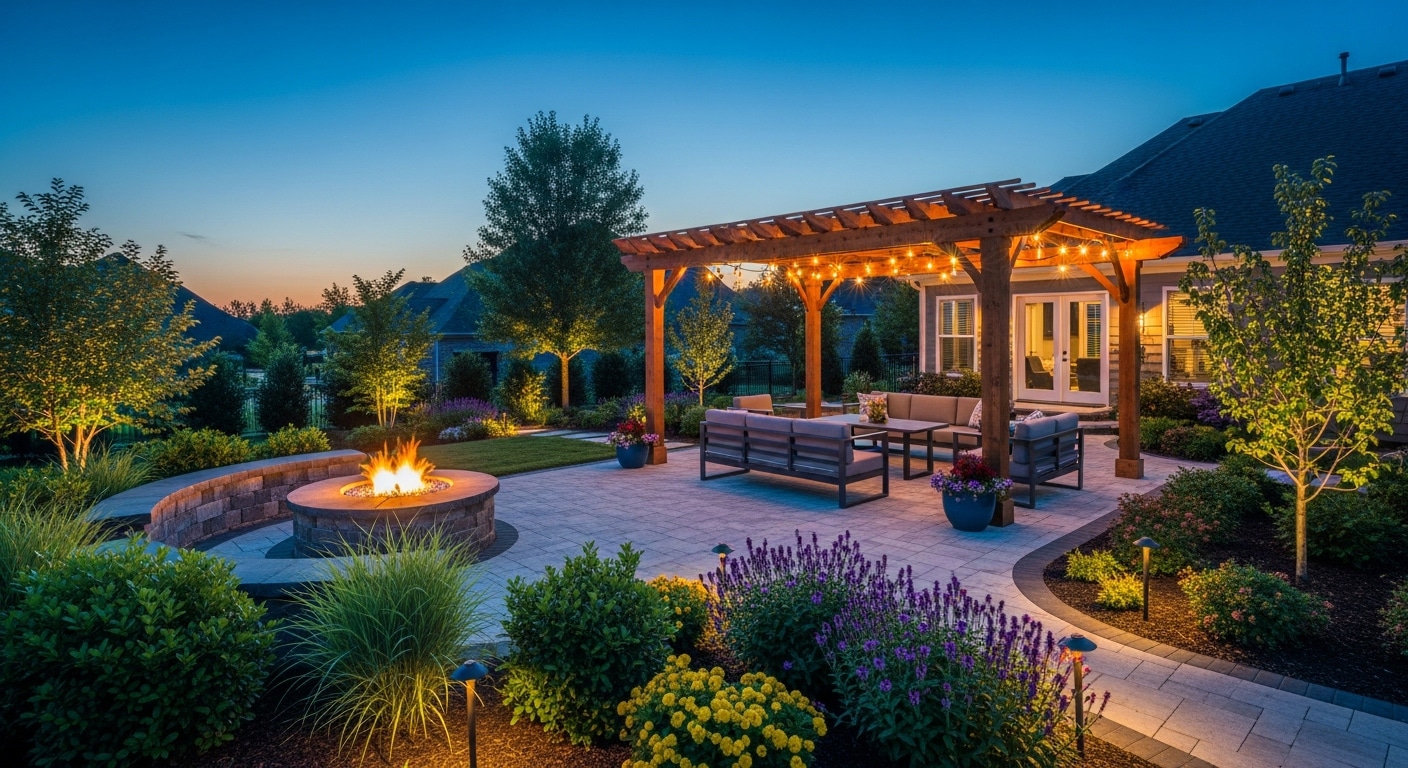
Outdoor fireplace construction in Tulsa Oklahoma is more involved than most homeowners realize — and the quality of construction determines whether your fireplace works correctly for decades or becomes an expensive repair project in a few years. VistaScapes approaches every outdoor fireplace project with the same structural rigor we’d apply to an indoor fireplace: proper foundation, correct masonry materials at every level, and verified draft geometry before the structure is enclosed.
The VistaScapes Outdoor Fireplace Construction Process
Phase 1: Design and Engineering
Before any dirt is moved, we design the fireplace on paper. We size the firebox opening for the intended use and scale of the outdoor space. We calculate the firebox depth, smoke shelf dimensions, smoke chamber taper, and flue area based on established fireplace design ratios. We specify the footer dimensions based on the fireplace’s total weight and soil conditions. We confirm setback compliance with Tulsa building code requirements. This design phase takes time — but it’s what prevents field problems during construction.
Phase 2: Foundation
We excavate and form a reinforced concrete footer sized for the fireplace’s load. Tulsa’s freeze depth is approximately 18 inches, so footers are poured at 20 to 24 inches below finished grade minimum. Rebar is installed in a grid pattern and the concrete is poured in a single pour to avoid cold joints that can weaken the foundation. We allow the footer to cure before beginning block work above it.
Phase 3: Block and Firebox Construction
The structural core of the fireplace rises from the footer in concrete masonry unit (CMU) block. The firebox interior walls are built with dense, hard-burned firebrick laid in refractory mortar — the only material combination rated for sustained direct flame contact. We build the firebox opening to the designed width and height and position the smoke shelf at the correct elevation above the firebox floor to create the proper throat geometry for draft.
Phase 4: Smoke Chamber
The smoke chamber is built above the firebox throat and tapered inward toward the flue opening above. Interior smoke chamber walls are sloped at the correct angle and parged smooth with refractory cement — eliminating the rough surfaces that cause turbulence and draft problems. The smoke shelf at the base of the smoke chamber deflects downdrafts from the flue back upward before they can push smoke into the firebox.
Phase 5: Chimney and Flue
The chimney column rises from the smoke chamber to the final height. We line the interior with terracotta clay flue tiles — sized to 1/8th of the firebox opening area minimum. Flue tiles are mortared in sections as the chimney rises. The top of the chimney is finished with a sloped mortar crown to direct water away from the flue opening, and capped with a stainless steel spark arrestor to prevent embers from escaping.
Phase 6: Exterior Finish
The structural CMU core receives a scratch coat and metal lath in preparation for stone or brick veneer. We apply your chosen exterior finish — natural stone, face brick, manufactured stone veneer, or stucco — with proper mortar mix, joint tooling, and weep details at the base of the veneer. The cap stone or mantel is set last, mortared to the top course of brick or stone with a full bed of mortar and a slight forward pitch to shed water.
Ready to build a custom outdoor fireplace in Tulsa? Call VistaScapes at 918-779-1317 for a free design consultation and estimate. We build outdoor fireplaces throughout Tulsa, Broken Arrow, Bixby, Jenks, Owasso, and all of northeast Oklahoma.