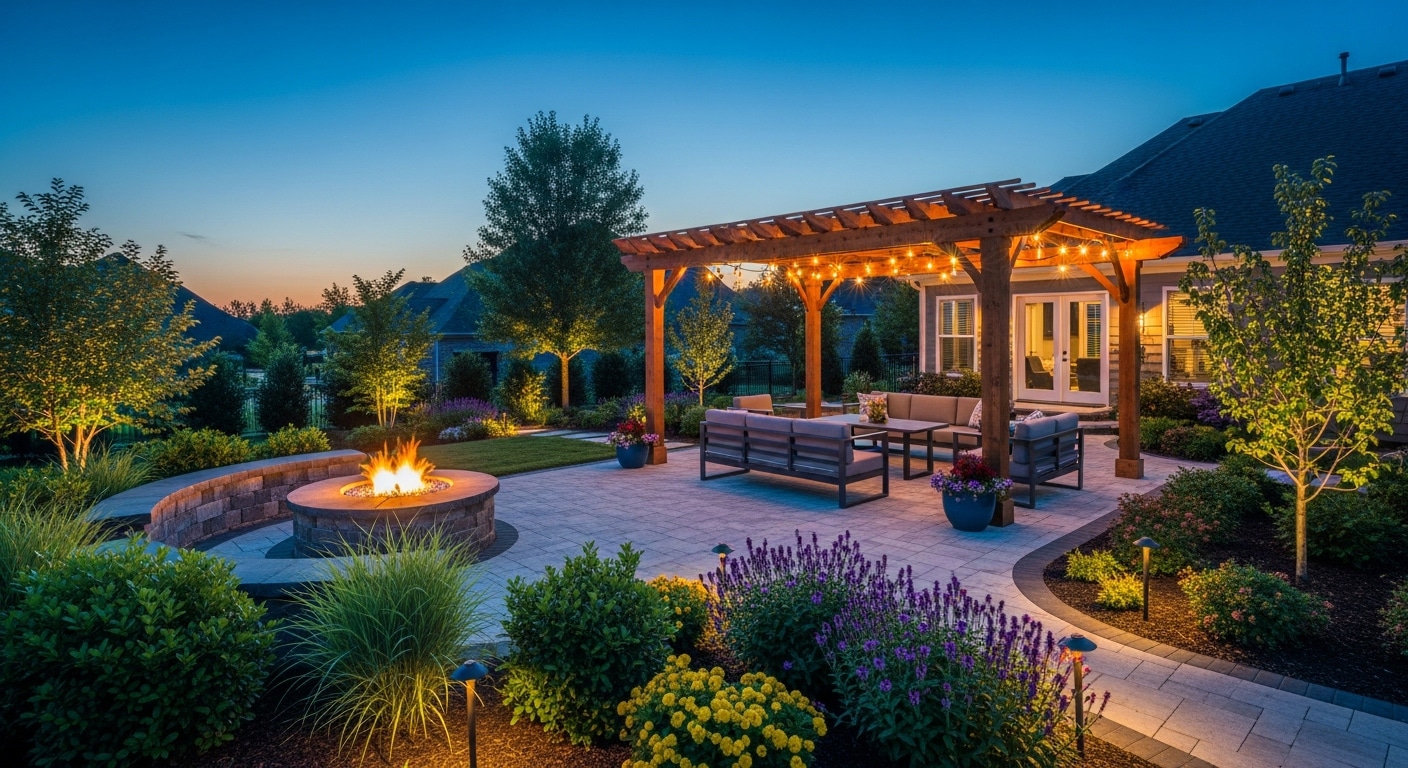
A wood-burning outdoor fireplace is among the most permanent and characterful features a Tulsa homeowner can add to an outdoor living space. Unlike gas fire features, a wood-burning fireplace involves real fire management — building, tending, and managing a wood fire — which is part of the appeal for homeowners who prefer an authentic outdoor hearth experience over the convenience of a gas switch. VistaScapes & Design builds wood-burning outdoor fireplaces using masonry construction methods that produce properly drafting, durable structures designed for Oklahoma’s outdoor conditions.
Firebox Proportions and Draft
A wood-burning fireplace that smokes back into the outdoor living area is one of the most common complaints about poorly designed outdoor fireplaces. Smoke rollout happens when the firebox proportions and chimney design do not create adequate draft — the upward air movement that carries combustion gases and smoke up and out of the chimney. Proper outdoor fireplace draft design involves the Rumford proportions: a firebox opening height that is approximately the same as its width, a throat that opens 10 to 12 inches above the top of the firebox opening, and a chimney height calculated to produce adequate draft given the firebox throat area and local wind conditions. We follow these proportions on every wood-burning outdoor fireplace we build.
Chimney Height in Oklahoma
Oklahoma’s variable wind conditions — including the downslope winds that create unpredictable draft reversals — require careful chimney height design. A chimney that terminates too close to the adjacent covered patio roof can experience backpressure when wind flows over the roof and creates a downwash condition at the chimney top. We calculate chimney height based on the firebox throat area, the covered patio roof height and proximity, and Oklahoma’s prevailing wind characteristics to specify a chimney that drafts well under the majority of conditions the homeowner will experience. A properly designed chimney height also reduces spark emittance, which is important in Oklahoma’s dry fall season when fire risk is elevated.
Oklahoma Burn Ban Considerations
Oklahoma regularly issues countywide burn bans during drought and high-fire-risk periods, particularly in late summer and fall. A wood-burning outdoor fireplace cannot be used legally during an active burn ban, which can eliminate the feature’s usability during some of Oklahoma’s best outdoor living weather. Homeowners who live in areas with frequent burn bans, or who want a fire feature usable during burn-ban periods, should consider a gas-burning outdoor fireplace instead. Gas fireplaces — including natural gas and propane models — are typically exempt from burn bans because they do not produce the uncontrolled sparks and embers that dry-weather fire bans are designed to prevent. We discuss burn ban patterns and their implications during the design consultation.
Firewood Access and Storage
A wood-burning outdoor fireplace requires a firewood supply and convenient storage close to the fireplace. We plan firewood storage as part of the outdoor living space design — either built-in masonry log storage niches flanking the fireplace, a separate wood storage rack positioned adjacent to the outdoor room, or covered storage that keeps the wood dry during Oklahoma’s frequent spring rains. A cord of firewood takes up approximately 128 cubic feet of stacked space, which is a meaningful volume to accommodate near the fireplace area without the storage becoming visually dominant.
Call VistaScapes & Design at (918) 779-1317 for a free outdoor fireplace consultation in Tulsa. We’ll evaluate your outdoor space, discuss wood-burning versus gas options for your specific use case, and deliver a written proposal covering the complete fireplace structure.