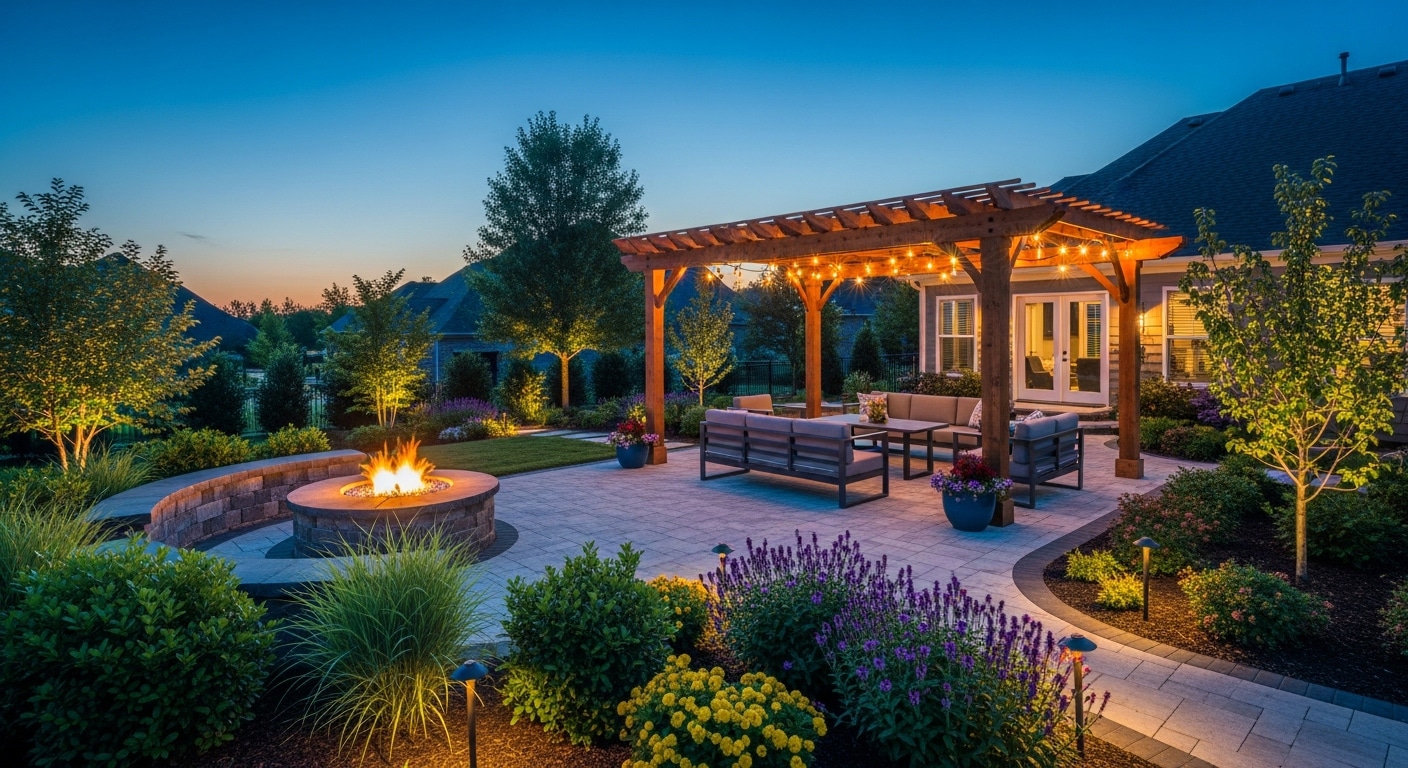
Oklahoma is one of the most precipitation-intense states in the country — thunderstorms that drop two inches of rain in an hour are not unusual. Outdoor kitchens that aren’t designed for proper drainage become problems quickly: pooling water under the kitchen structure, water infiltrating tile grout and masonry, and water draining toward the house foundation instead of away from it. At VistaScapes Design & Build, we design drainage into every outdoor kitchen build from the beginning. Here’s what you need to know.
Patio Slope — The Foundation of Good Drainage
The patio or concrete slab your outdoor kitchen sits on must be sloped for drainage — typically 1/4 inch drop per foot of surface. This is enough slope to drain water away from the outdoor kitchen and toward a designated drainage point without being noticeable when you’re standing or walking on the surface. A flat concrete slab will pool water every time it rains, leading to standing water around your outdoor kitchen structure, accelerated grout deterioration, and potential structural issues over time.
The direction of the slope matters — water should drain away from the house, not toward it. If your outdoor kitchen is close to the house, the slope should direct water toward the yard or a drain at the outer edge of the patio. This is a design detail that’s much easier to get right during construction than to correct afterward.
French Drains and Area Drains
For outdoor kitchen areas that collect water from adjacent lawn or elevated areas, a French drain or area drain incorporated into or around the patio may be needed. A French drain — a gravel-filled trench with a perforated pipe — intercepts groundwater and directs it away from the outdoor kitchen area. An area drain (a surface catch basin) collects surface water and routes it through underground pipe to a discharge point.
We evaluate drainage around every outdoor kitchen site during the consultation phase. If the existing yard drains toward the house or toward the proposed outdoor kitchen location, we incorporate drainage solutions into the project design — not as an afterthought after the concrete is poured.
Gutter and Roof Drainage Away From the Outdoor Kitchen
If your outdoor kitchen is under a pergola or patio cover, roof drainage from the cover structure needs to go somewhere specific — not cascade off the edge and directly onto the outdoor kitchen surface or adjacent areas. We design gutters and downspouts into covered outdoor kitchen structures and route the water away from the patio and house foundation. In Oklahoma’s intense rain events, a 12×16 foot pergola roof can generate significant water volume — routing that properly is important.
Sink Drainage
If your outdoor kitchen includes a sink, the drain line needs to go somewhere — either to the home’s sewer/septic system, to a dry well in suitable soil, or to a collection point. This is a plumbing decision that requires planning during design. Running a sink drain line through a concrete patio slab after the fact is an excavation project. Planning the drain route before the concrete is poured costs far less.
Protecting the Outdoor Kitchen Structure From Water
Beyond bulk drainage, protecting the outdoor kitchen structure from water infiltration at joints, seams, and grout lines is also important for Oklahoma’s rain intensity. We use outdoor-rated caulk at all joints between the outdoor kitchen structure and the countertop, and between the countertop and any adjacent wall surfaces. Grout joints are sealed with epoxy grout or a penetrating sealer. These details prevent the slow water infiltration that causes freeze-thaw damage over multiple Oklahoma winters.
Design Your Outdoor Kitchen With Drainage in Mind
Call VistaScapes Design & Build at (918) 779-1317 to discuss drainage planning for your outdoor kitchen. We assess the existing drainage patterns at your site during the consultation and design for proper water management from the start — so your outdoor kitchen stays in great condition through years of Oklahoma’s demanding weather.