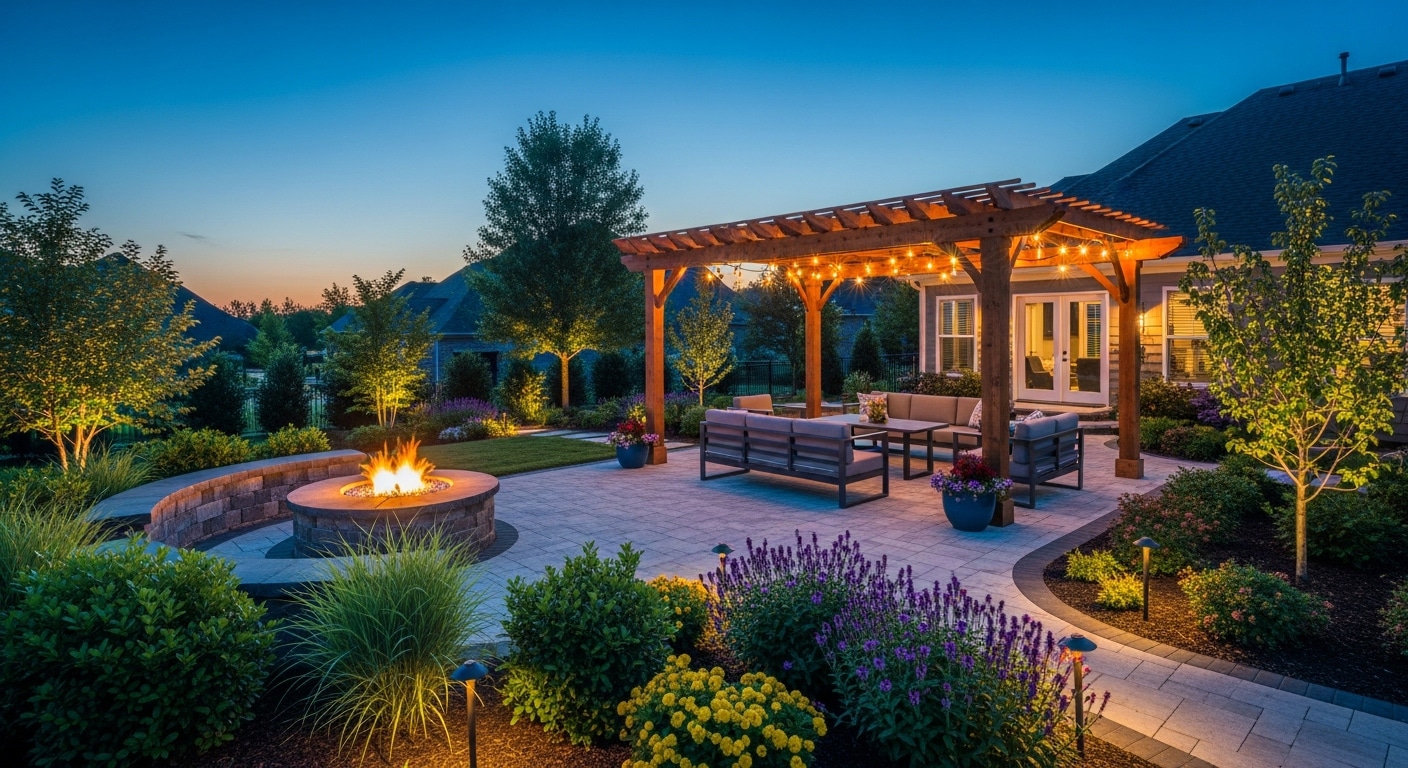
If you’re building or upgrading a gas fire pit or outdoor fireplace in Oklahoma, the media you choose — the material that sits above the burner — makes a major difference in appearance, heat output, and maintenance. Fire glass and lava rock are the two most popular options, and each has genuine strengths. Here’s an honest comparison to help you decide.
What Is Fire Glass?
Fire glass is tempered glass that has been tumbled to remove sharp edges, then heat-treated to withstand direct flame exposure. It comes in dozens of colors — from classic amber and copper to cobalt blue, emerald green, and reflective chrome. When lit, fire glass refracts flame light in all directions, creating a jewel-like sparkle effect that’s become the signature aesthetic of modern outdoor fire features.
What Is Lava Rock?
Lava rock — also called volcanic rock or pumice — is exactly what it sounds like: porous volcanic stone. It’s been used in gas fire features for decades because it’s naturally heat-resistant, readily available, inexpensive, and completely non-reactive with gas flames. Lava rock has a natural, earthy aesthetic that suits traditional, rustic, and farmhouse-style outdoor designs.
Appearance Comparison
Fire Glass: Visually dramatic, reflective, and modern. Works best in contemporary, transitional, or sleek outdoor kitchen designs. Color choices allow personalization. The flame appears to dance through the glass, which most people find genuinely beautiful.
Lava Rock: Natural and understated. Works well in traditional, craftsman, or organic-aesthetic outdoor spaces. The flame sits on top of lava rock rather than dancing through it, creating a campfire-like visual. Less visually striking than fire glass but more at home in naturalistic designs.
Heat Performance
Both materials transmit heat efficiently from the gas burner. Fire glass actually performs slightly better for radiant heat because the glass surfaces absorb heat and radiate it outward more effectively than porous lava rock. For an outdoor fire feature in Oklahoma’s cool spring and fall evenings, fire glass provides slightly better warmth at the same BTU output.
Cost Comparison
Lava Rock: Generally $10 to $25 per pound at landscape and hardware suppliers. A standard 30-inch round fire pit uses 15 to 25 pounds — total cost roughly $150 to $400.
Fire Glass: Premium fire glass runs $25 to $60 per pound, with specialty colors at the high end. The same 30-inch fire pit uses 20 to 30 pounds of fire glass — total cost $500 to $1,800. Fire glass is a premium upgrade, not a budget item.
Maintenance in Oklahoma’s Climate
Lava Rock: Oklahoma’s red clay dust and pollen settle into lava rock’s porous surface and can be difficult to remove. After 3 to 5 years, lava rock typically looks dingy and benefits from replacement. It can also absorb moisture — fire up a wet lava rock bed and you’ll get popping sounds that, while harmless, can startle guests.
Fire Glass: Much easier to maintain — rinse with water, stir to redistribute, and it cleans up easily. Glass doesn’t absorb moisture, so it performs consistently after rain. Oklahoma’s intense storms can scatter light fire glass, so a fire feature with sides tall enough to contain the media is important.
Which Should You Choose for Your Oklahoma Outdoor Kitchen?
Choose fire glass if: You want a dramatic visual focal point, your outdoor kitchen design is contemporary or transitional, and you’re willing to pay the premium for longevity and low maintenance.
Choose lava rock if: Your design aesthetic is naturalistic or traditional, budget matters more than maximum visual impact, and you’re open to replacing media every 4 to 6 years.
VistaScapes Design Helps You Choose
At VistaScapes Design, we design outdoor kitchens, fire pits, and fireplaces throughout Broken Arrow, Tulsa, and the surrounding Oklahoma area. We’ll help you select fire media that fits your design vision and budget, and we build fire features that showcase either option beautifully. Call us at (918) 779-1317 or visit 413 N Walnut Ave Suite A, Broken Arrow, OK 74012.