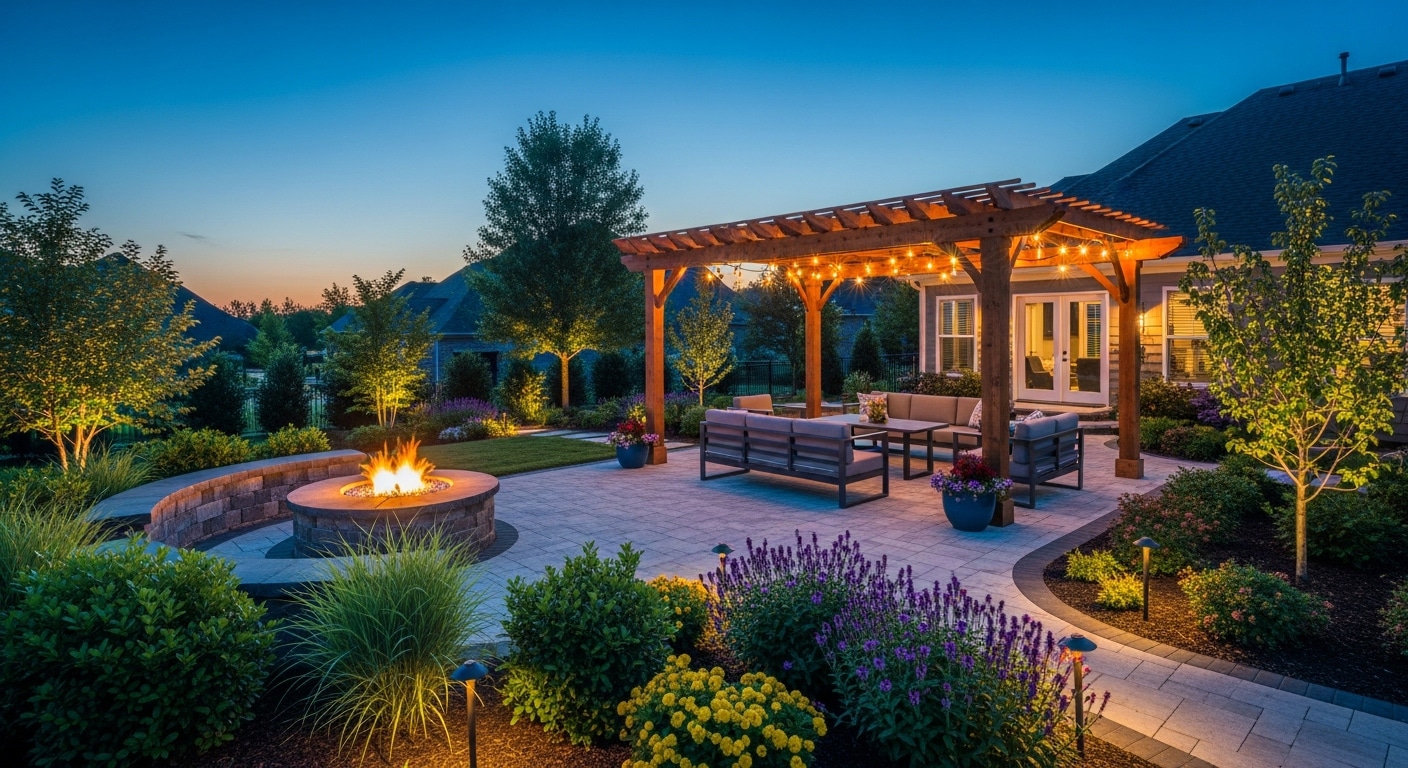
Oklahoma’s outdoor season runs from roughly April through October at comfortable temperatures — but with the right heating infrastructure, you can push that to 10 or even 11 months. Radiant heat and heated floor systems for covered patios and outdoor kitchens are increasingly popular among homeowners who want to use their outdoor spaces year-round without bundling up against the January cold. VistaScapes Design & Build integrates radiant heating into outdoor builds across Broken Arrow and northeast Oklahoma.
Why Heat an Outdoor Covered Patio?
Oklahoma winters are relatively mild compared to northern states, but temperatures regularly drop into the 20s and 30s during December and January. A covered patio without heat becomes largely unusable for several months. Adding radiant heat changes that equation dramatically — the space becomes functional for outdoor cooking, dining, and entertaining year-round.
For homeowners who’ve invested $30,000 to $80,000 or more in a premium outdoor kitchen and covered patio, a heating system costing $2,000 to $8,000 is a logical addition that maximizes the return on the entire project.
Radiant Heat Options for Covered Outdoor Spaces
Overhead Infrared Heaters
The most common and cost-effective option for Oklahoma patios. Infrared heaters mount to ceiling joists or overhead beams and emit radiant heat downward, warming people and surfaces rather than air. They work even in breezy conditions and require no ductwork or flooring modification. Options include:
- Electric infrared panels — clean, quiet, instant-on, best for smaller covered areas
- Natural gas or propane infrared heaters — higher heat output, better for larger spaces, requires gas line
- Tube heaters — long radiant panels that distribute heat evenly across a wide coverage area
In-Floor Electric Radiant Heat
Electric radiant mats or cables installed beneath tile or stone flooring create a heated floor surface. This is a premium option that requires planning during construction — the heating elements are embedded in the mortar bed before tile is set. It’s ideal for fully enclosed or semi-enclosed covered patios where the floor heat can accumulate and remain effective. Costs are higher upfront, and ongoing electricity usage is a factor, but the comfort level is exceptional.
Outdoor-Rated Electric Fireplaces and Fire Features
Outdoor linear fireplaces (gas or electric) mounted into outdoor kitchen structures or accent walls provide radiant heat with dramatic visual effect. While not a primary heating system, they contribute meaningful warmth within a 6 to 10-foot radius and extend the usability of the space into cooler evenings.
What to Consider Before Adding Radiant Heat
- Power supply — electric heaters require dedicated circuits; larger systems need 240V service run to the outdoor space
- Gas availability — if you already have a natural gas line for your outdoor kitchen, adding gas infrared heaters is relatively straightforward
- Coverage area — overhead heaters work best in enclosed or semi-enclosed patios; open pergolas lose heat quickly
- Ceiling height — infrared heaters perform best at 8 to 10 feet; higher ceilings reduce efficiency
- Local code — outdoor electrical and gas installations require permits in Broken Arrow and surrounding jurisdictions
Planning Heat Into Your Outdoor Kitchen Build
The best time to plan for outdoor heating is during the initial design phase — not after construction is complete. When we design your covered patio or outdoor kitchen, we can rough in electrical circuits, gas lines, and structural blocking for heater mounts so that adding heating later is simple and clean rather than a retrofit. Even if you’re not ready to install heaters now, planning the infrastructure saves significant cost down the road.
VistaScapes Design & Build integrates all utilities — gas, electrical, water — into our outdoor kitchen builds. Call us at 918-779-1317 to discuss how to plan your outdoor space for year-round use.