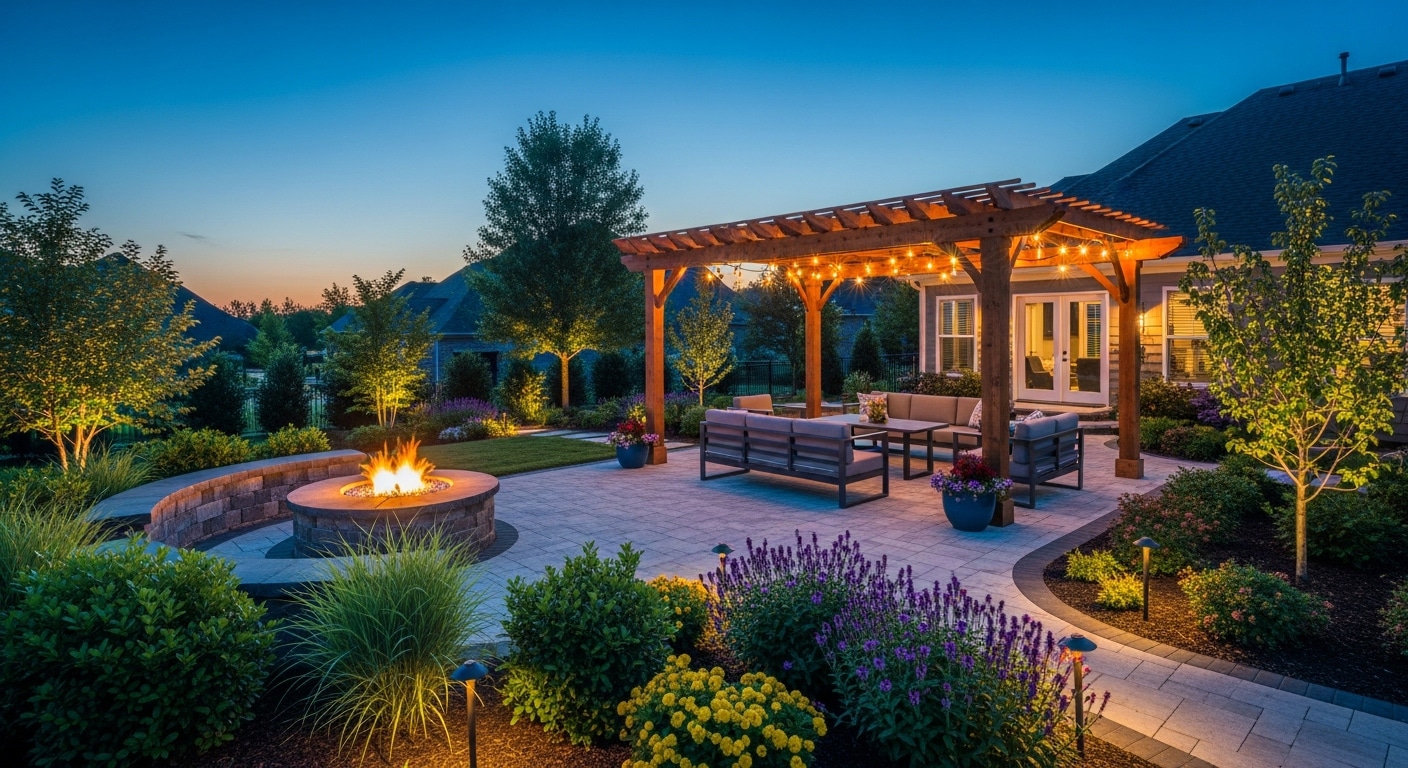
An outdoor kitchen that looks like it was dropped into a landscape as an afterthought is a missed opportunity. The best outdoor kitchen designs integrate with surrounding plantings, hardscape transitions, and landscape features in a way that makes the entire backyard feel designed as a coherent space. In Oklahoma’s climate, landscape integration also serves functional purposes — providing shade, managing drainage, and softening the hardscape mass of a permanent outdoor kitchen structure.
Plan the Landscape Before Construction Begins
The most common landscape integration mistake is treating plants as an afterthought — adding them around an already-built outdoor kitchen to fill in gaps. This approach almost always produces a “planted around” look rather than an “integrated into” look. The right sequence is to design the outdoor kitchen and the immediately surrounding landscape simultaneously, so hardscape transitions, planting zones, and drainage flow are coordinated from the start.
Hardscape Transitions: From Outdoor Kitchen to Yard
The transition zone between your outdoor kitchen’s patio surface and the surrounding lawn or landscape beds is one of the most important design elements in the entire backyard. Options that work well in Oklahoma:
- Gravel or decomposed granite border: A 2- to 4-foot gravel border between the patio edge and the lawn creates a clean, low-maintenance transition that also reduces weed pressure at the patio perimeter
- Raised planting beds with stone edging: CMU block or natural stone raised beds flanking the outdoor kitchen structure frame the space, add green softness, and create a defined planting zone that’s easy to maintain
- Step-down transitions: On sloped lots, stepped hardscape transitions between the outdoor kitchen patio and the lower yard provide both function and design interest — multi-level outdoor kitchens with step transitions are among the most visually compelling designs we produce
- Paving pattern transitions: Using a secondary paving pattern or material (pavers versus concrete, flagstone versus travertine) to define the outdoor kitchen zone from a broader patio or walkway area creates visual structure without a physical barrier
Oklahoma-Appropriate Plants for Outdoor Kitchen Integration
Oklahoma’s climate eliminates plants that need consistent moisture or that can’t handle temperature extremes. These species consistently perform well near outdoor kitchens in the Tulsa area:
Screening and Privacy Plants
- Nellie R. Stevens holly: Evergreen, fast-growing, heat and cold tolerant — excellent privacy screen that looks refined
- Leyland cypress: Fast-growing privacy hedge, appropriate where space allows
- Wax myrtle: Evergreen, fragrant, native-adjacent — appropriate for naturalistic landscape settings
- Eastern red cedar: Oklahoma native, extremely tough, excellent windbreak and privacy screen for rural and acreage properties
Ornamental Grasses and Perennials
- Karl Foerster feather reed grass: Upright, architectural form — excellent contrast to the geometric lines of an outdoor kitchen structure
- Muhly grass: Oklahoma-tough, beautiful fall pink plumes, drought tolerant
- Black-eyed Susan: Native, drought tolerant, bright yellow blooms from June through frost
- Salvia ‘May Night’: Heat-tolerant perennial with deep blue-purple spikes, low water needs
Herbs Near the Outdoor Kitchen
Raised herb planters integrated into or adjacent to an outdoor kitchen structure add culinary function and visual appeal. Rosemary, thyme, and oregano are tough enough for Oklahoma’s sun and heat. Basil thrives in full Oklahoma summer sun but needs water. A built-in herb planter on the end panel of a CMU block outdoor kitchen counter is a popular design feature — functional, fragrant, and visually distinctive.
Drainage Planning in the Landscape
Oklahoma’s intense rainfall events — 2 to 3 inches in under an hour during severe thunderstorm seasons — require that landscape grading around the outdoor kitchen direct water away from the structure foundation and patio surface. Grade away from the outdoor kitchen at a minimum 1% slope (1 inch of drop per 8 feet). French drain systems or dry creek beds can carry water from the patio area to a lower drainage point in the landscape. This is not optional — water infiltration at the base of a CMU structure accelerates deterioration and can shift patio surfaces over time.
Shade Trees and Outdoor Kitchen Placement
Oklahoma’s summer heat makes afternoon shade at the outdoor kitchen area enormously valuable. When siting an outdoor kitchen relative to existing trees, consider where shade falls at 3 to 5 PM — the hottest part of the afternoon. Building the outdoor kitchen where afternoon shade from mature trees falls naturally reduces cooling needs, makes the cooking zone more comfortable, and extends usable hours. Note that proximity to trees also means managing leaf fall into the outdoor kitchen and debris on the patio — weigh both factors.
Design Your Outdoor Kitchen and Landscape Together with VistaScapes
VistaScapes Design builds outdoor kitchens throughout Broken Arrow, Tulsa, and the surrounding Oklahoma area with landscape integration as part of the design conversation. We can help coordinate your outdoor kitchen build with hardscape transitions and planting zones that make the entire backyard feel intentionally designed. Call (918) 779-1317 or visit 413 N Walnut Ave Suite A, Broken Arrow, OK 74012 to schedule your free consultation.