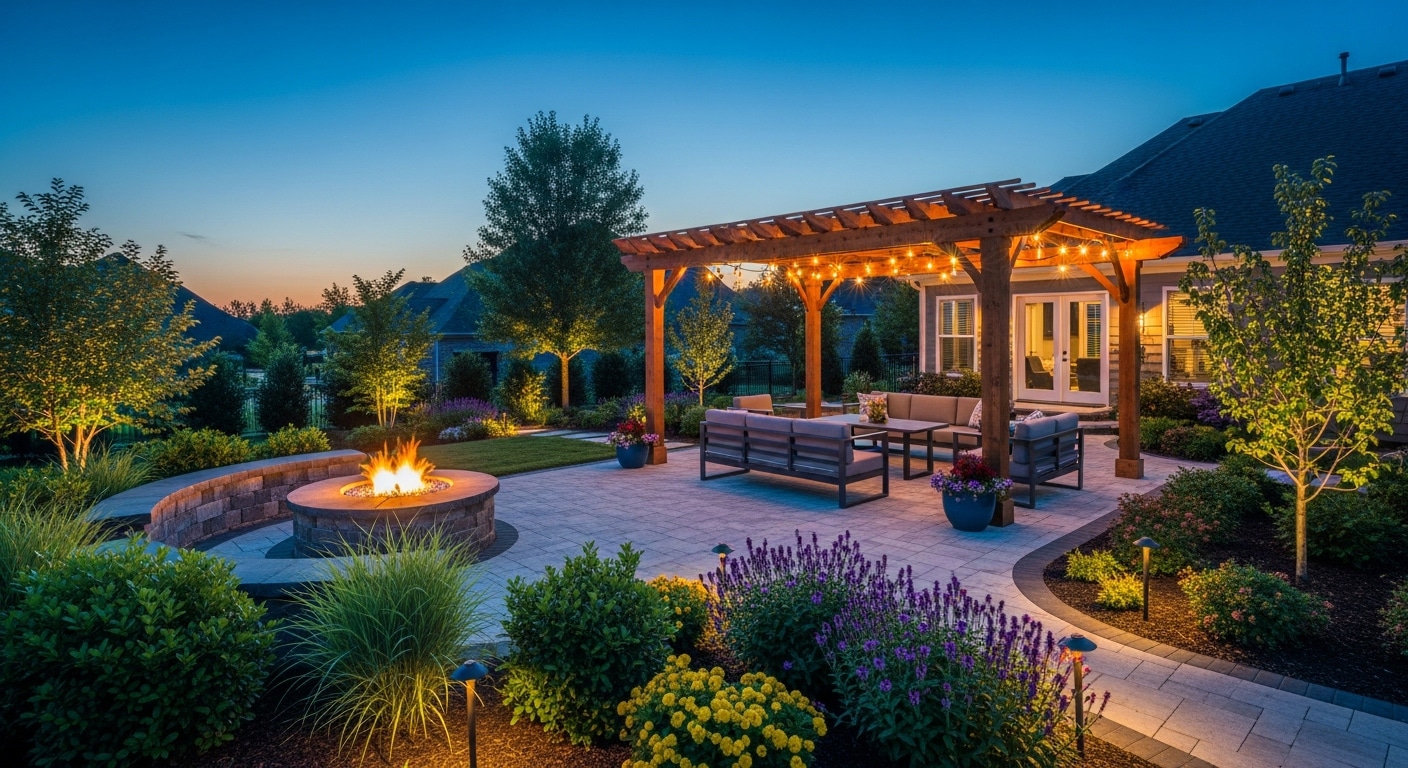
Integrating Your Outdoor Kitchen with Landscaping: A Design Guide for Oklahoma Backyards
The difference between an outdoor kitchen that looks dropped into a backyard and one that looks like it belongs there is landscape integration. When the hardscape, plantings, lighting, and outdoor kitchen design all speak the same visual language, the result feels inevitable — like the backyard couldn’t look any other way. When they don’t coordinate, even an expensive outdoor kitchen can feel like a foreign object in its own environment.
At VistaScapes Design, we plan landscape integration into every outdoor kitchen project from the start. Here’s the framework we use.
Start with the Views: What Do You See from the Outdoor Kitchen?
Before any landscaping decision is made, identify the primary views from the outdoor kitchen. If the cook faces the house, the cooking experience is focused inward. If the cook faces the yard, they see what’s there — and what’s there should be intentional.
The best outdoor kitchen designs position the cook’s sightline toward the best view available: the pool, a mature tree, a planted bed, or an open lawn with good natural light. The landscape behind and around that sightline should be treated as the backdrop of the outdoor kitchen experience.
Plant Selection for Oklahoma’s Climate
The plants you choose for the outdoor kitchen zone need to perform in Oklahoma’s climate extremes — the 105°F summers, the freeze events, the spring hail, and the periodic drought conditions that affect the Tulsa/Broken Arrow area. Native and adapted plants that thrive here without excessive maintenance:
Foundation Plantings Adjacent to the Outdoor Kitchen
- Ornamental grasses: Karl Foerster feather reed grass, Gulf muhly, and little bluestem — heat-tolerant, drought-resistant, architectural texture. Move well in Oklahoma wind. Plant at the corners and ends of the island zone for a “planted in” effect.
- Native shrubs: Encore azaleas (reblooming), viburnum, and American beautyberry — all perform well in northeast Oklahoma with minimal maintenance once established.
- Agaves and yuccas: For drought-tolerant, architectural interest near the outdoor kitchen. These plants look intentional and add a Southwestern character that pairs well with stucco island finishes.
- Dwarf crepe myrtles: Multi-stemmed small trees that provide summer bloom, fall color, and winter structure. Plant as accents at the corners of the patio or at pergola post bases.
Fragrance and Function
Herbs integrated into the landscape near the outdoor kitchen are both functional and aromatic:
- Rosemary (perennial in Broken Arrow’s zone 7a, marginally hardy) — plant in a protected microclimate near the island
- Thyme (excellent Oklahoma ground cover alternative) — plant between flagstone joints near the cooking zone
- Mexican mint marigold — fragrant, perennial, heat and drought-tolerant alternative to tarragon in Oklahoma
Hardscape Transitions: Connecting the Patio to the Yard
The edge where the patio meets the lawn is the most visually important hardscape transition in the outdoor kitchen design. Options:
- Planted bed border: A 2- to 3-foot planted bed between the patio edge and the lawn creates a natural visual buffer and avoids the abrupt concrete-to-grass transition. Mulched and planted with ornamental grasses or low perennials, this border anchors the patio in the landscape.
- Flagstone stepping path: A flagstone or paver stepping path connecting the outdoor kitchen patio to other points in the yard (pool, gate, garage) unifies the landscape and creates intentional circulation rather than footpaths worn through the lawn.
- Defined lawn edge: A clean, maintained lawn edge at the patio perimeter — maintained with a steel edging border or a mow-strip of matching paver material — creates sharp definition that elevates the entire design.
- Boulders as transitions: Natural limestone boulders placed at the patio corners or at the edge of planting beds create weight and naturalism that softens the hard edge of the patio structure.
Privacy Screening: Blocking the Neighbors Without Blocking the Sun
In Broken Arrow and Tulsa’s residential neighborhoods, the outdoor kitchen is visible to neighbors. Strategic privacy screening creates the sense of an enclosed outdoor room without building a fence:
- Ornamental grass masses: A mass planting of Karl Foerster or Miscanthus sinensis at 6 to 8 feet tall on the property line creates a seasonal screen (full density May through November, bare December through March)
- Evergreen shrub screening: Holly varieties (Nellie Stevens, Savannah), photinia, and wax myrtle provide year-round screening at 8 to 12 feet with minimal maintenance
- Vertical cedar slat screen: A built-in vertical cedar or pressure-treated slatted screen panel — designed to match the pergola materials — provides immediate privacy without waiting for plant establishment
- CMU block garden wall: A low CMU block wall (3 to 4 feet) at the patio perimeter, finished in the same veneer as the outdoor kitchen island, creates a cohesive enclosure and doubles as a sill for potted plants or outdoor candles
Outdoor Lighting as Landscape Integration
Landscape lighting doesn’t just illuminate the outdoor kitchen — it defines the relationship between the kitchen and the surrounding yard. Key lighting moves:
- Uplight any significant trees near the outdoor kitchen — moonlighting through oak or cedar branches creates a canopy effect that makes the space feel like it’s inside nature
- Downlight planting beds adjacent to the patio — low-voltage path and accent lights in the planted border make the landscape feel active after dark
- Step lights at every level change — safety and elegance in one fixture
- Coordinate landscape lighting tone with outdoor kitchen ambient lighting — 2200K to 2700K warm white throughout creates a unified atmosphere
Year-Round Plant Interest
Oklahoma backyards should have landscape interest in every season — not just peak summer growth. Plan for:
- Spring: Crepe myrtle leafing, azalea bloom, ornamental grass new growth
- Summer: Ornamental grass fullness, perennial color, herb production
- Fall: Ornamental grass plumes and fall color, crepe myrtle seed heads, native grass warm tones
- Winter: Evergreen screening plants, ornamental grass structure, boulder and hardscape interest
Let VistaScapes Design Your Complete Outdoor Environment
VistaScapes Design handles the complete outdoor kitchen and hardscape scope, and we coordinate landscape design with the overall project to ensure your outdoor kitchen looks like it belongs to its environment from day one.
Call (918) 779-1317 or visit vistascapesdesign.com.