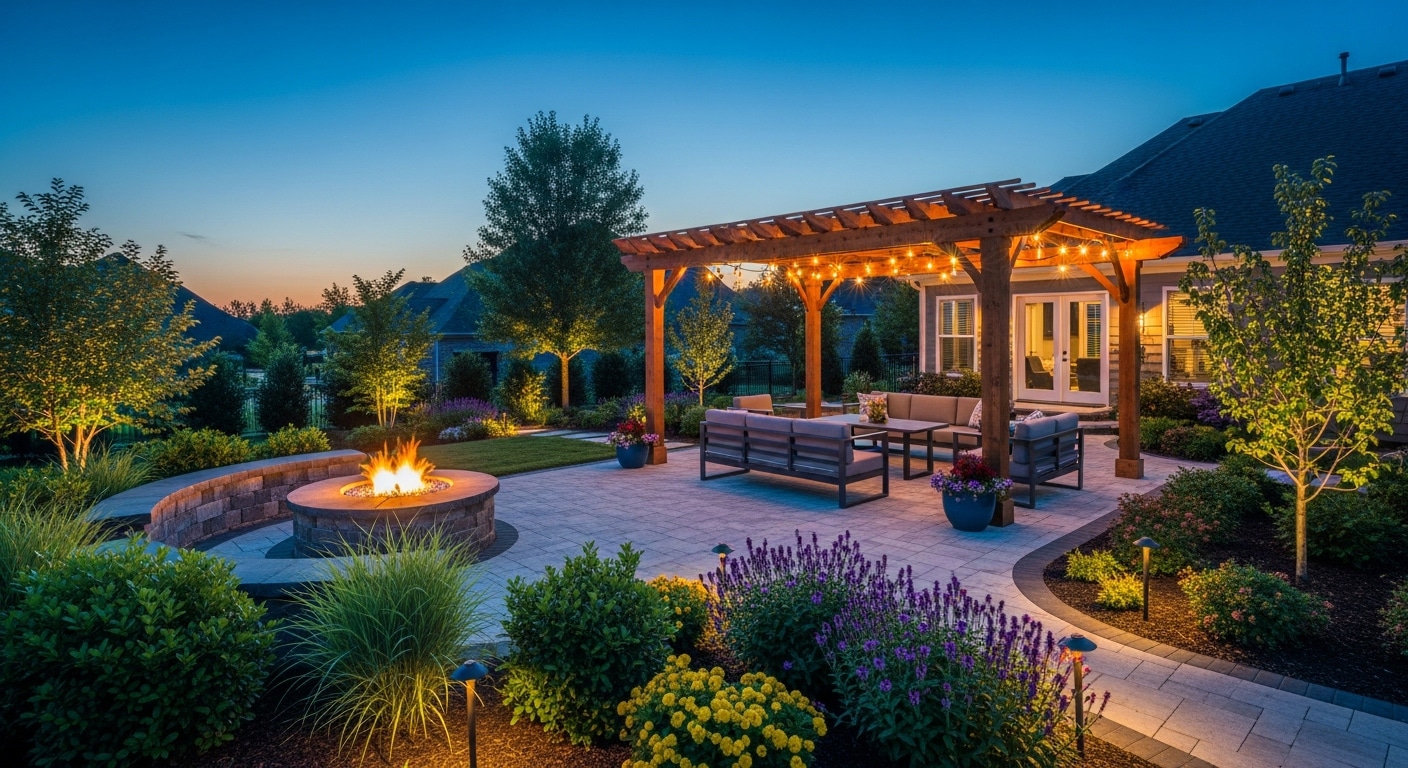
Outdoor kitchen layout is the first real design decision — and it has more downstream consequences than almost any other choice. The layout determines how the space functions during cooking, how many people can gather around it, how traffic flows between the kitchen and the seating area, and how it reads architecturally from the house. Here’s a guide to the main outdoor kitchen layout types we design for Oklahoma backyards and when each one makes sense.
Linear (Straight) Island
The linear island is the most common entry-point outdoor kitchen layout — a single straight run of counter and cabinet space ranging from 8 to 16 feet. Everything is in one line: grill at one end, prep space in the middle, storage and optional refrigerator or side burner at the other end.
Best for: Tighter backyards, entry-level budget projects, properties where the outdoor kitchen backs against a fence or retaining wall. Linear layouts work especially well when placed against the back wall of a covered patio structure, anchoring one end of the outdoor room.
Trade-off: No natural gathering zone. Guests can stand on one side, but the layout doesn’t create the horseshoe of social space that an L or U-shape does. The cook faces the wall while cooking unless the island is positioned as a room divider.
L-Shaped Island
The L-shaped layout adds a perpendicular run to one end of the linear island — creating a corner that can anchor a bar overhang on the inside face, a seating area, or a zone transition. This is our most commonly built configuration in Broken Arrow and Tulsa outdoor kitchens.
Best for: Most mid-range Broken Arrow outdoor kitchens with 18–25 feet of patio depth. The L creates natural zones — cooking on the long leg, serving/bar seating on the short leg. It corners well into a covered patio structure, uses the back corner of the patio efficiently, and creates a social gathering space without requiring a U-shaped footprint.
Trade-off: The inside corner of the L is dead space if not designed carefully. A bar overhang on the short leg’s inside face solves this — seating wraps the corner and puts guests in conversation proximity to the cook. Without the bar overhang, the corner becomes storage that’s hard to access.
U-Shaped Island
The U-shaped layout wraps on three sides — a center run and two parallel legs. This configuration works best in larger outdoor spaces and creates the most social engagement: multiple cooking zones, generous bar seating on the inside face, and guests wrapped around three sides of the cook’s work area.
Best for: Premium Broken Arrow outdoor kitchen projects on properties with 25+ feet of patio depth. Homes where serious cooking and entertaining are both priorities. Large outdoor rooms where a single linear or L-shape would feel under-scaled relative to the paved area. U-shaped kitchens typically anchor the middle of an outdoor room rather than against a wall.
Trade-off: Requires more footprint than L or linear. Costs more. Must be accessed from outside the U (you walk in from the open end), which creates traffic flow constraints if the open end doesn’t face the right direction relative to the patio entry point.
Island Plus Bar Station
A separate bar station — a smaller secondary island, typically 6–8 feet, positioned across from the main cooking island — creates a double-island layout with a work aisle between them. The bar station houses the refrigerator, icemaker, beverage center, and bar sink. The main island handles all the cooking. Guests gather at the bar station and stay out of the cook’s work zone.
Best for: Premium outdoor kitchens where cooking and entertainment flow are both priorities. Works best in covered outdoor rooms with 15+ feet of patio depth between the two islands. The double-island layout is the most functional for serious outdoor cooking — equipment is organized by function rather than squeezed into a single long run.
Layout and the Patio Cover Relationship
The outdoor kitchen layout must be designed in relationship to the covered patio or pergola structure, not independently. Pergola or cover posts can’t land in the middle of an island — structural post locations and island corners need to coordinate. The ventilation required above a grill inside a covered structure requires clear distance between grill location and cover roof. These coordination requirements are one reason outdoor kitchens and their shade structures should be designed simultaneously rather than piecemeal.
Questions about the right layout for your Broken Arrow or Tulsa backyard? Call (918) 582-7890 or fill out the form below for a free consultation.
[contact-form-7 id=”contact-form” title=”Contact Form”]