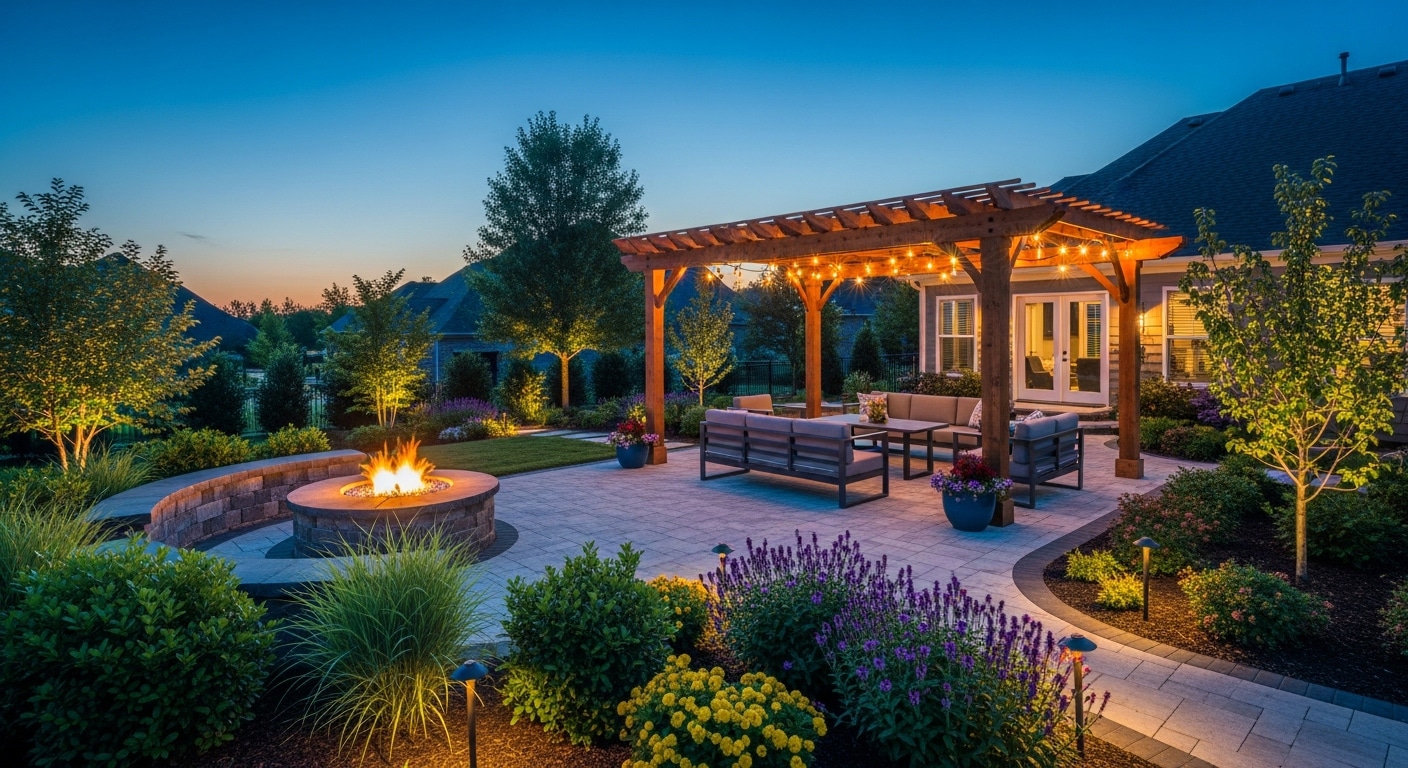
Oklahoma’s wind is one of the most significant environmental factors in outdoor kitchen design, and it is one that many homeowners don’t consider until after the kitchen is built. Persistent winds from the south and southeast during grilling season affect fire behavior, smoke direction, cooking temperature consistency, and the comfort of guests seated at the kitchen. VistaScapes & Design incorporates wind analysis into every outdoor kitchen design in Tulsa and the surrounding area.
How Wind Affects Outdoor Kitchen Performance
Wind affects a gas grill’s performance in two primary ways. First, wind cools the grill cooking surface by carrying heat away from the grill box, which extends preheat time and creates uneven temperature distribution across the grates. Second, wind can cause flare-ups by pushing oxygen into the grill from the sides, which intensifies combustion bursts when grease contacts the flame. On wood-fire or charcoal grills, wind affects combustion consistency even more dramatically. Smoke direction is also a wind-driven problem — smoke from the grill should carry away from the covered patio seating area, not into it, and the grill position relative to prevailing wind direction determines whether smoke is a recurring issue.
Prevailing Wind Direction in Tulsa
The Tulsa area’s prevailing winds during spring and summer grilling season come predominantly from the south and south-southeast. This means that for most Tulsa properties, orienting the grill at the northeastern end of the kitchen station and under a covered patio structure to the south creates the most favorable smoke management — smoke from the grill carries northeast, away from the covered seating area to the south. Wind patterns vary by individual property location, surrounding structures, and mature tree canopy, so we evaluate the specific site rather than applying a blanket orientation rule.
Covered Patio Integration
Building the outdoor kitchen under a covered patio structure addresses the most significant wind performance issues. The roof structure breaks the wind above the kitchen and reduces the direct wind exposure that affects grill performance. Side walls, partial screening, or gabion walls on the windward side of the covered structure further reduce wind effect at the cooking surface level. We recommend that outdoor kitchens in the Tulsa area — where sustained winds above 15 mph are not unusual during grilling season — be incorporated into covered patio designs rather than installed in open, exposed yard locations whenever the property layout allows.
Windbreak Strategies
For outdoor kitchens in exposed locations without a covered structure, windbreak plantings or masonry screen walls on the south and southwest sides of the kitchen can significantly improve performance. A masonry screen wall 4 to 6 feet tall placed 8 to 12 feet upwind from the grill creates a wind shadow that reduces surface wind speed at the grill. Native evergreen windbreak plantings — eastern red cedar, Nellie Stevens holly — provide long-term wind reduction that grows more effective as the plantings mature. We consider windbreak options as part of the overall outdoor kitchen and landscape design process.
Gas Connection Considerations
Oklahoma’s wind also affects the choice between natural gas and propane for outdoor kitchens in exposed locations. Natural gas grills are permanently connected to the supply line and are not affected by wind in any meaningful way from a fuel supply standpoint. Propane tank installations require positioning the tank in a location that meets code clearance requirements from the structure and ignition sources — a consideration that wind direction should inform, since the tank should be positioned so that any minor propane release does not carry toward the kitchen’s ignition sources.
Call VistaScapes & Design at (918) 779-1317 for a free outdoor kitchen consultation in Tulsa. We evaluate wind exposure and grill orientation during the initial site visit so the kitchen is designed to perform in Oklahoma’s conditions from day one.