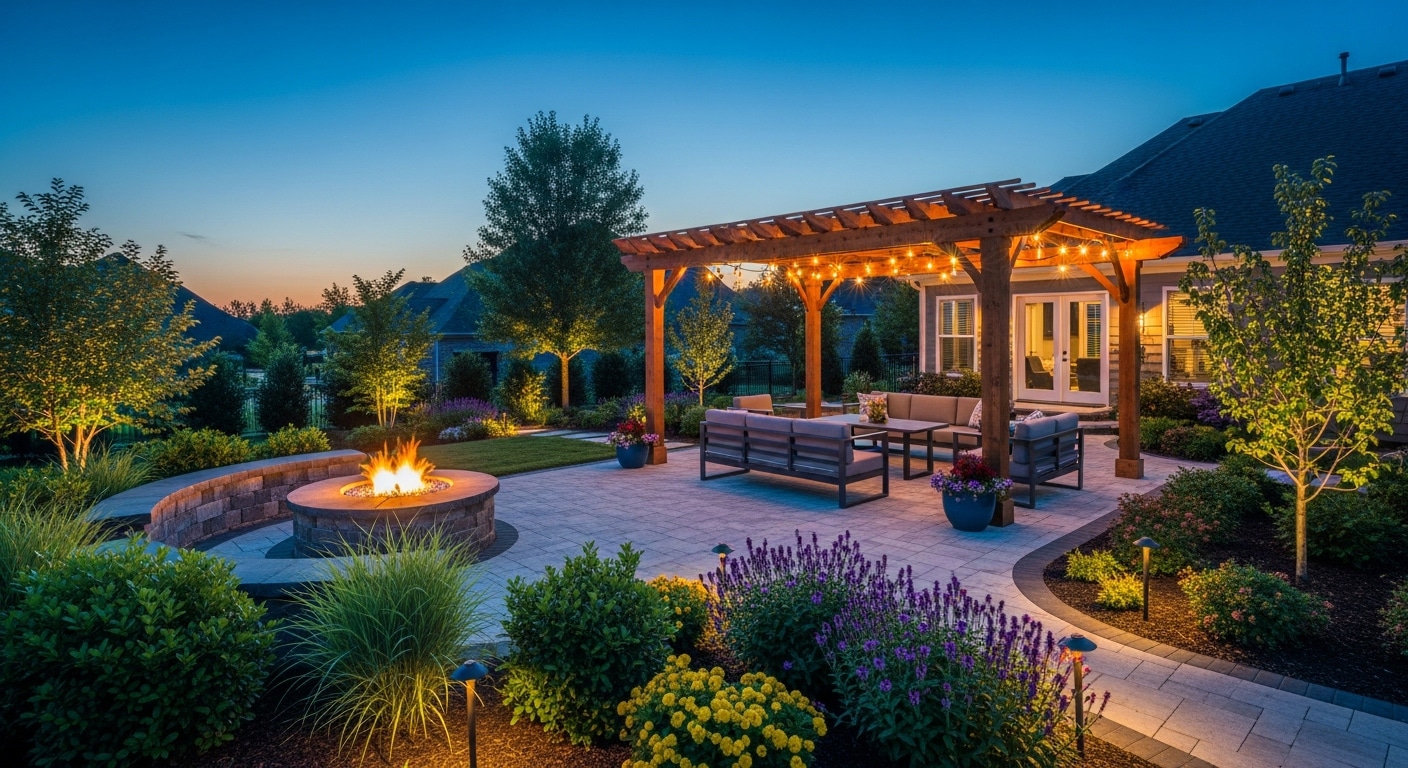
Catoosa sits at the eastern edge of the Tulsa metro, just off the Cherokee Turnpike, and its homeowners represent a mix of long-established residents and newer arrivals taking advantage of the area’s relative affordability and larger lots. Outdoor living investments in Catoosa tend to be practical and permanent — homeowners here build for their own enjoyment, not primarily for resale appeal, and they want quality that lasts through decades of Oklahoma weather. This guide covers what’s being built in Catoosa, what local conditions matter, and what to expect from the outdoor living market in this part of the metro.
The Catoosa Property Profile
Catoosa properties skew toward larger lots than you’ll find in Broken Arrow or South Tulsa subdivisions. One-third to half-acre lots are common, and some acreage properties exist on the east side of town. Larger lots give outdoor living projects more room to breathe — full outdoor kitchen setups, fire pit areas separate from the main patio, and dedicated outdoor entertaining zones are more achievable here than on tight suburban lots. The community’s proximity to the Cherokee Turnpike and Highway 412 makes it accessible for contractors based in Broken Arrow or Tulsa without significant travel time.
Soil and Site Conditions Near Catoosa
Catoosa sits on the Rogers County and Wagoner County line, with soil characteristics that vary from clay-heavy bottomland near the Arkansas River to slightly sandier upland soils. The clay-heavy areas require the same footing depth and base preparation considerations as elsewhere in northeast Oklahoma — 24-inch minimum footing depth, compacted gravel bases under concrete and pavers, and expansion joints in flatwork. Catoosa’s tornado exposure is also worth noting for outdoor structure design — pergola post connections and roof attachment methods matter in a region where high winds occur every spring season.
Popular Projects in Catoosa
Covered patio additions with metal or shingle roofing are among the most common outdoor living projects in Catoosa — they provide shelter from Oklahoma’s unpredictable spring weather while extending the outdoor season. Outdoor kitchens on Catoosa’s larger lots often include more equipment than their Tulsa counterparts — smokers, dedicated grilling stations, and bar setups are common because the space exists. Fire pits are popular on larger lots where there’s room to create dedicated seating zones separate from the kitchen area. Concrete patio extensions and paver work add clean hardscaping that connects multiple outdoor zones.
What Outdoor Living Costs in Catoosa
Outdoor living budgets in Catoosa generally track with the broader Tulsa metro market. A basic covered patio addition runs $15,000–$35,000. Outdoor kitchen packages start around $20,000 for a simple grill setup and run to $50,000+ for full stations with premium appliances. Fire pits with seating walls run $4,000–$12,000 depending on materials. Concrete patio work runs $6,000–$20,000 depending on square footage. Larger-lot outdoor living complexes in Catoosa — combining covered patio, kitchen, fire pit, and extensive hardscaping — often reach $60,000–$100,000 for homeowners who want a comprehensive setup.
Finding a Contractor for Catoosa
Most established outdoor living contractors in the Broken Arrow and Tulsa area serve Catoosa. The drive from Broken Arrow is under 20 minutes, and contractors who work across the metro are familiar with the soil conditions, permit requirements, and building practices for this area. VistaScapes serves Catoosa and the surrounding east Tulsa metro for outdoor kitchens, fire features, covered structures, and concrete work. If you’re planning an outdoor living project in Catoosa, contact us for a site visit and detailed proposal.