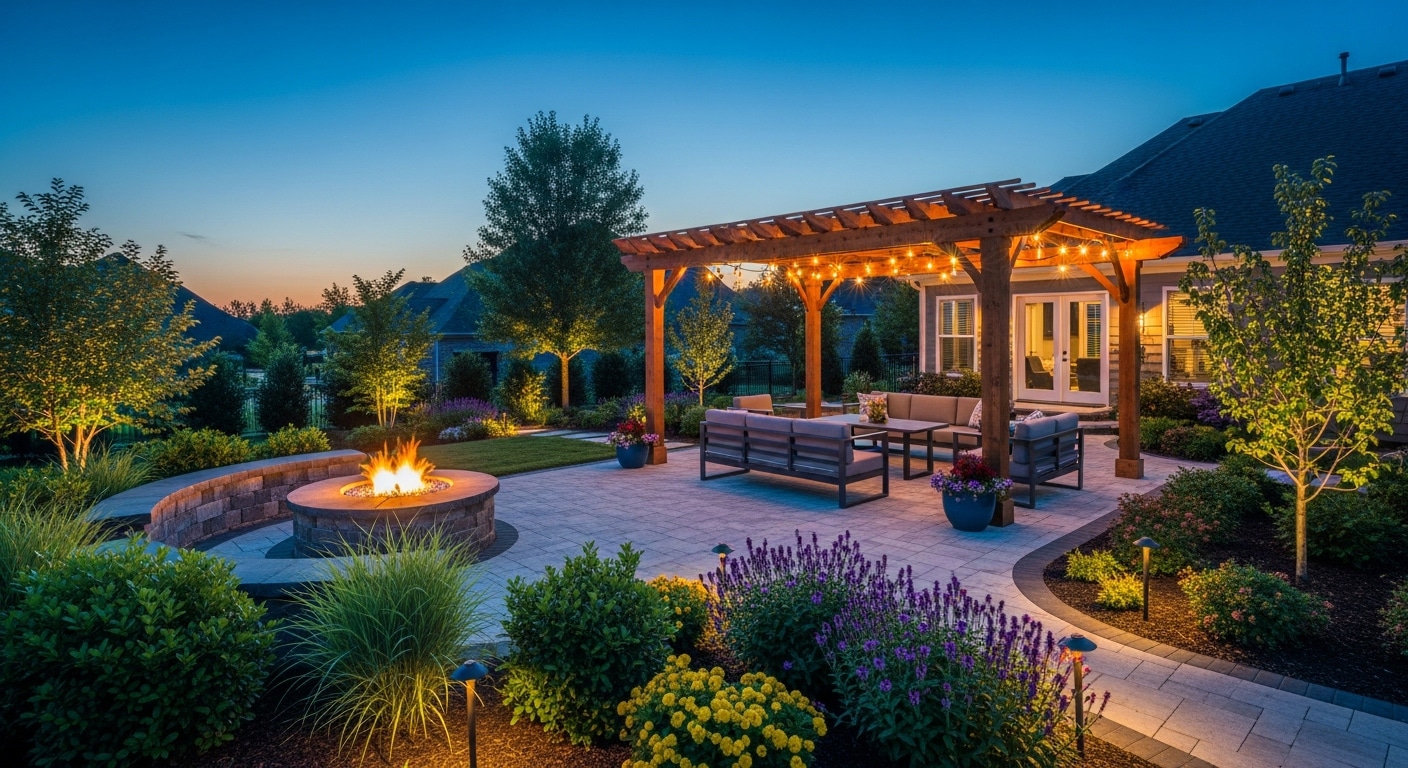
Outdoor Living Cost Breakdown in Broken Arrow, OK — What You’re Actually Paying For
When a homeowner sees a $35,000 outdoor living estimate and another for $22,000 for what sounds like “the same project,” the natural question is: where does the money go, and why is there a $13,000 difference? Understanding cost structure in outdoor living construction helps homeowners evaluate bids, make value-based decisions, and understand why the lowest bid is often the highest-risk choice. Here’s a complete cost breakdown for a typical Broken Arrow outdoor living project.
Material Costs — 40–50% of Project Total
Materials are the most visible cost driver and the most legitimate place for price variation between bids. Concrete quality (3,500 PSI vs. 2,500 PSI), rebar vs. fiber reinforcement, cedar vs. aluminum pergola structure, Blaze vs. entry-level grill, porcelain vs. standard tile — every material specification choice affects cost. A bid with significantly lower cost than competitors is almost always using lower-specification materials, not achieving the same result more efficiently. When comparing bids, list the specific materials each contractor has specified and compare those lists before comparing the total numbers.
Labor Costs — 30–40% of Project Total
Labor rates in the Broken Arrow outdoor living market vary significantly. A crew of experienced masons, carpenters, and general laborers represents different cost structures than a crew assembled from general labor without specialty trade experience. Properly reinforced concrete work, masonry fireplace construction, and pergola structural installation require skilled labor. Skilled labor costs more and makes fewer expensive mistakes. The cost of a single correctable error on a masonry fireplace — having to tear out and rebuild an incorrectly proportioned smoke chamber — exceeds the labor rate premium of an experienced mason over an inexperienced one.
Equipment and Overhead — 10–15% of Project Total
Concrete trucks, concrete pumps for rear-access pours, excavation equipment, and specialized masonry tools represent real costs that legitimate contractors include in their overhead and pricing. A contractor who uses no equipment might be doing small projects by wheelbarrow — which works for simple slab pours but is impossible for complex grading, deep footing excavation, or large-volume concrete placements. Equipment investment is a proxy for the scope of projects a contractor can execute correctly.
Permits and Insurance — 3–8% of Project Total
Permits cost $200–$800 for typical residential outdoor living projects. Contractor general liability insurance and worker’s compensation insurance add to overhead that legitimate contractors carry. A contractor with a “no permit” policy is shifting risk onto the homeowner and is often uninsured — a combination that represents significant liability if anything goes wrong during or after construction. Never hire an outdoor living contractor who suggests skipping permits to save money.
Profit Margin — 10–15% of Project Total
A legitimate contractor needs a healthy margin to sustain operations, warranty their work, and be available when a customer needs post-completion service. The contractor who wins every bid at the lowest price in any market is either using inferior materials and labor, or will be out of business before your warranty expires. When a bid is substantially below all others, the question isn’t “how did they come in so low” — it’s “what are they not including?”
What VistaScapes Charges and Why
VistaScapes provides detailed, itemized estimates that show exactly where your project dollars go. We don’t obscure costs in lump sums. Call 918-779-1317 and we’ll walk through every line item of your project estimate so you understand exactly what you’re getting for every dollar invested.