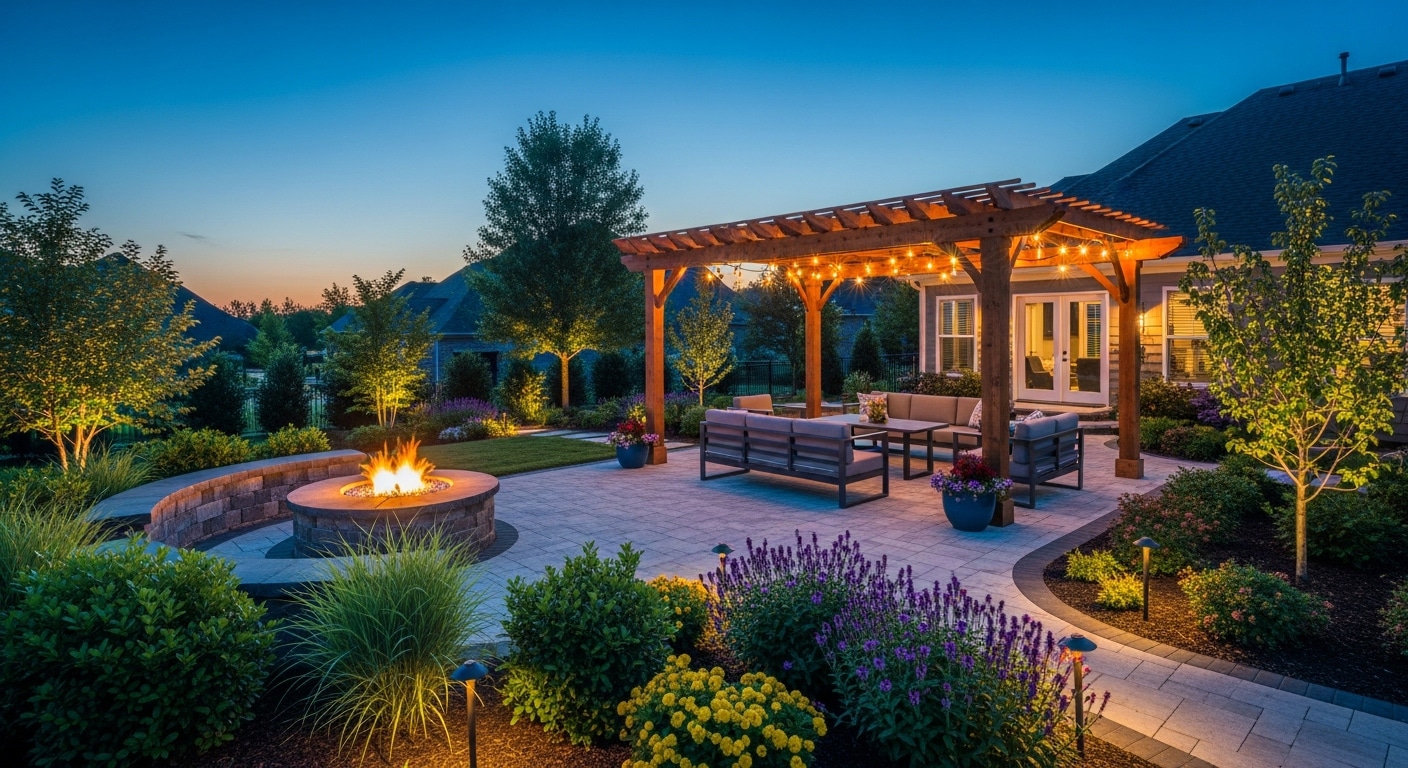
The outdoor living market in Oklahoma includes homeowners across the full spectrum — from those who contract out every project regardless of complexity to those who want to handle everything themselves. The truth is somewhere in between, and knowing where the line is between practical DIY and dangerous or legally problematic self-service saves both money and the consequences of getting it wrong.
What Oklahoma Homeowners Can Reasonably DIY
Outdoor furniture assembly, cushion selection, low-voltage landscape lighting installation (plug-in systems, not hardwired), planting and landscaping around a completed hardscape, paint and stain touch-ups on completed wood structures, and routine maintenance like sealing pavers and cleaning outdoor kitchen surfaces are all within the range of capable homeowners. These tasks do not require licenses, do not have safety consequences if done imperfectly, and do not require the precision of structural work.
Certain decorative elements — a simple paver border along a garden bed edge, a small raised planter using retaining wall block, or a freestanding canopy installation on a flat surface — are within the skill range of handy homeowners. The qualifier is “simple” — anything that involves structural footings, drainage design, or significant material volume crosses into territory where errors compound quickly.
What Requires a Professional in Oklahoma
Gas line work is non-negotiable in Oklahoma — it requires a licensed plumber and a permit. There is no gray area here. Electrical work beyond plug-in systems requires a licensed electrician and a permit. Structural concrete work — footings, patio slabs, retaining walls — requires professional execution because mistakes are expensive to correct after the concrete cures. Masonry fireplace and outdoor kitchen construction requires specific skills and knowledge that most homeowners do not have, and errors in firebox construction create fire hazards.
Any work requiring a permit by definition requires qualified, licensed professionals who can pull the permit under their license. In Broken Arrow and Tulsa, attempting to pull a permit as a homeowner-builder for gas or electrical work is possible but requires demonstrating the work yourself — which most homeowners cannot legitimately do for complex systems.
The Middle Ground: What Looks Simple but Isn’t
Paver installation looks approachable — it is just stones on sand, right? In practice, a paver installation that lasts in Oklahoma’s clay soil requires precise base preparation: a minimum 6-inch compacted aggregate base, a bedding sand layer of exactly 1 inch, edge restraints at every perimeter edge, and proper drainage design so water does not pool under the pavers and undermine the base. Most homeowner paver installations fail within three to five years in Oklahoma because the base preparation was inadequate.
Pergola installation is similarly deceptive. A bolt-together pergola kit seems straightforward. In Oklahoma, the wind loads on a pergola require footings of specific depth and diameter — not the minimal footings that a kit manufacturer specifies for national average conditions. A pergola that blows over in an Oklahoma spring storm because the footings were inadequate is a safety hazard, not just a maintenance problem. If it lands on a person or a vehicle, the liability is real.
The Smart Hybrid Approach
Most experienced Oklahoma homeowners who want to control costs use a hybrid approach: hire professionals for structural, utility, and permit-required work — the things where quality is invisible until it fails — and DIY or owner-supply the finishing elements that add cost without adding complexity. Buy your own outdoor furniture, source your own plant material, choose your own lighting fixtures. Let the contractor do the concrete, the gas, the electrical, and the masonry. The savings on the finish elements can be substantial without compromising the quality of the work that matters.