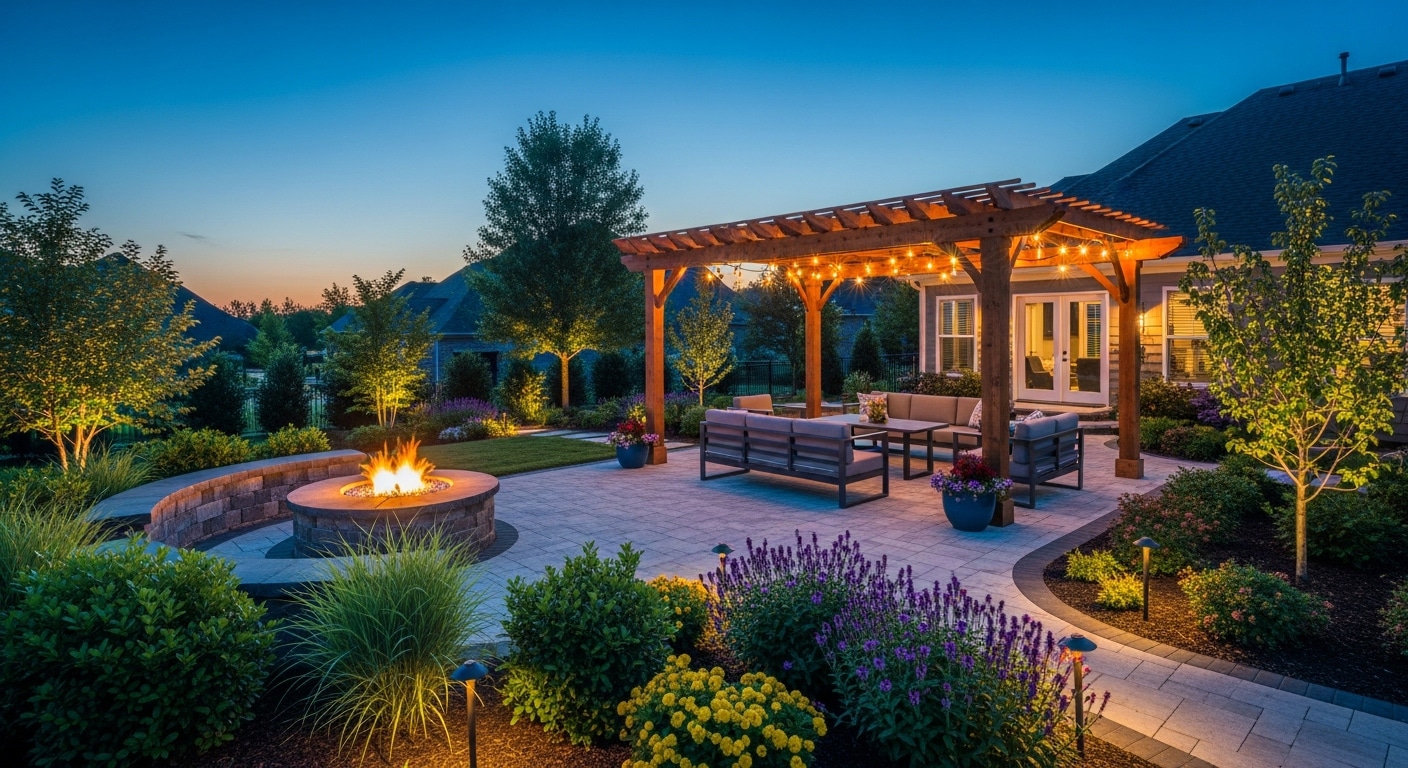
How Long Do Outdoor Living Spaces Last in Oklahoma?
Oklahoma is not a gentle climate. Between summer UV intensity that bleaches and cracks materials, freeze-thaw cycles that heave concrete and rot wood, spring hail that dents metals and shatters pavers, and humidity fluctuations that warp and swell, the materials you choose for your outdoor living space matter enormously. Here’s an honest lifespan guide from VistaScapes — Broken Arrow’s outdoor living contractor — based on what we see in the field every year.
Patio Surfaces
Concrete Patio: 25–50+ Years
Concrete is the most durable patio surface for Oklahoma conditions when installed correctly. Correct installation means: proper subgrade preparation (compacted gravel base), adequate thickness (4″ minimum, 5–6″ preferred), reinforcing mesh or rebar, control joints spaced to manage cracking, and a penetrating sealer applied every 2–3 years. Improperly poured concrete — thin, unreinforced, over uncompacted soil — will crack and heave within 5–10 years. The difference between a 10-year patio and a 50-year patio is entirely in the preparation before the pour.
Paver Patio: 25–50+ Years
Quality concrete pavers and natural stone pavers are rated for 50+ years under normal use. Unlike poured concrete, individual pavers that crack or settle can be replaced without demolishing the entire surface. The limiting factor is the base preparation — a paver patio installed over a properly compacted gravel base will stay level for decades. Pavers installed over poorly prepared soil will shift, tip, and create trip hazards within a few years. Sand joints between pavers need to be re-sanded every 3–5 years to prevent weed infiltration and joint erosion.
Stamped Concrete: 20–40 Years
Stamped concrete’s lifespan matches standard concrete, but the color and surface texture require more active maintenance. Color sealers need reapplication every 2–3 years to prevent UV fading. Once stamped concrete loses its sealer in Oklahoma’s sun, the color fades dramatically within one season. Well-maintained stamped concrete looks great for 20+ years. Neglected stamped concrete looks shabby within 5–7 years.
Pergolas & Shade Structures
Cedar Pergola: 15–25 Years
Cedar is naturally rot-resistant and handles Oklahoma’s humidity better than pine. With oil-based stain applied every 2–3 years, a cedar pergola will remain structurally sound for 20–25 years. Neglected cedar starts surface checking (surface cracks) within 3–5 years and develops structural softness in joints and post bases within 10–15 years. Post-to-ground connections are the most vulnerable point — we always use metal post bases rather than embedding wood directly in concrete.
Pressure-Treated Pine Pergola: 10–15 Years
Pressure-treated pine is the budget option for pergola construction and the lifespan reflects it. It’s functional and structurally sound but requires staining every 2 years to prevent rapid UV degradation. Joints and notches in pressure-treated lumber are the first areas to fail as the treatment doesn’t penetrate cut surfaces as deeply.
Aluminum Pergola: 30–50+ Years
Aluminum pergola systems with powder-coat finishes are the longest-lasting shade structure you can install in Oklahoma. They don’t rot, they don’t check or split, they’re not affected by Oklahoma’s termites, and they don’t require painting or staining. Louvered aluminum pergola systems can handle moderate hail without structural damage. The powder-coat finish can fade after 15–20 years of intense UV exposure and can be repainted. Structural integrity remains essentially indefinite with normal use.
Outdoor Kitchens
Masonry Kitchen Structure: 50+ Years
A concrete block outdoor kitchen structure, properly built on a stable patio surface, is essentially permanent. The block, mortar, and stone or stucco finish are unaffected by Oklahoma’s heat, UV, and moisture. What wears out in a masonry outdoor kitchen are the appliances inside it — not the structure itself. Build the masonry correctly once and plan to replace the grill and refrigerator on their natural appliance lifecycle.
Outdoor Grill: 8–15 Years
Grill lifespan varies enormously by brand and maintenance habits. Budget grills last 5–8 years. Professional-grade grills (Blaze, Lynx, DCS, Summerset) last 12–20 years with cleaning and proper cover use. The primary failure modes are burner deterioration and grate corrosion. Covering the grill when not in use — especially critical in Oklahoma’s UV environment — adds 3–5 years to grill life.
Fire Features
Masonry Fireplace: 50+ Years
A properly built masonry outdoor fireplace — with correct firebox sizing, smoke chamber, appropriate flue tile, and spark arrestor — is a permanent structure. The only maintenance is annual inspection of the flue liner and mortar joints. Oklahoma’s freeze-thaw cycles can deteriorate mortar over 15–20 years, requiring repointing (replacing mortar joints) — a straightforward maintenance task that extends fireplace life indefinitely.
Gas Fire Pit: 10–20 Years
Gas fire pit burner systems last 10–15 years under normal use. The surrounding masonry structure (if applicable) lasts indefinitely. Lava rock or glass media needs replacement every 5–7 years as it discolors and deteriorates. The gas line and ignition system are the most maintenance-intensive elements — annual inspection by a licensed plumber keeps everything safe and functional.
Investing in Quality Up Front Saves Money Over Time
The outdoor living projects that homeowners regret are the ones where they chose the cheapest contractor and cheapest materials, then watched the investment deteriorate in 5 years. A properly built patio, pergola, kitchen, and fire feature is a 30–50 year investment in your property. VistaScapes builds to last — because we’re still in business in Broken Arrow and we don’t want to see our work falling apart around the metro.
Ready to build something that lasts? Call us at 918-779-1317 for a free consultation and written estimate.