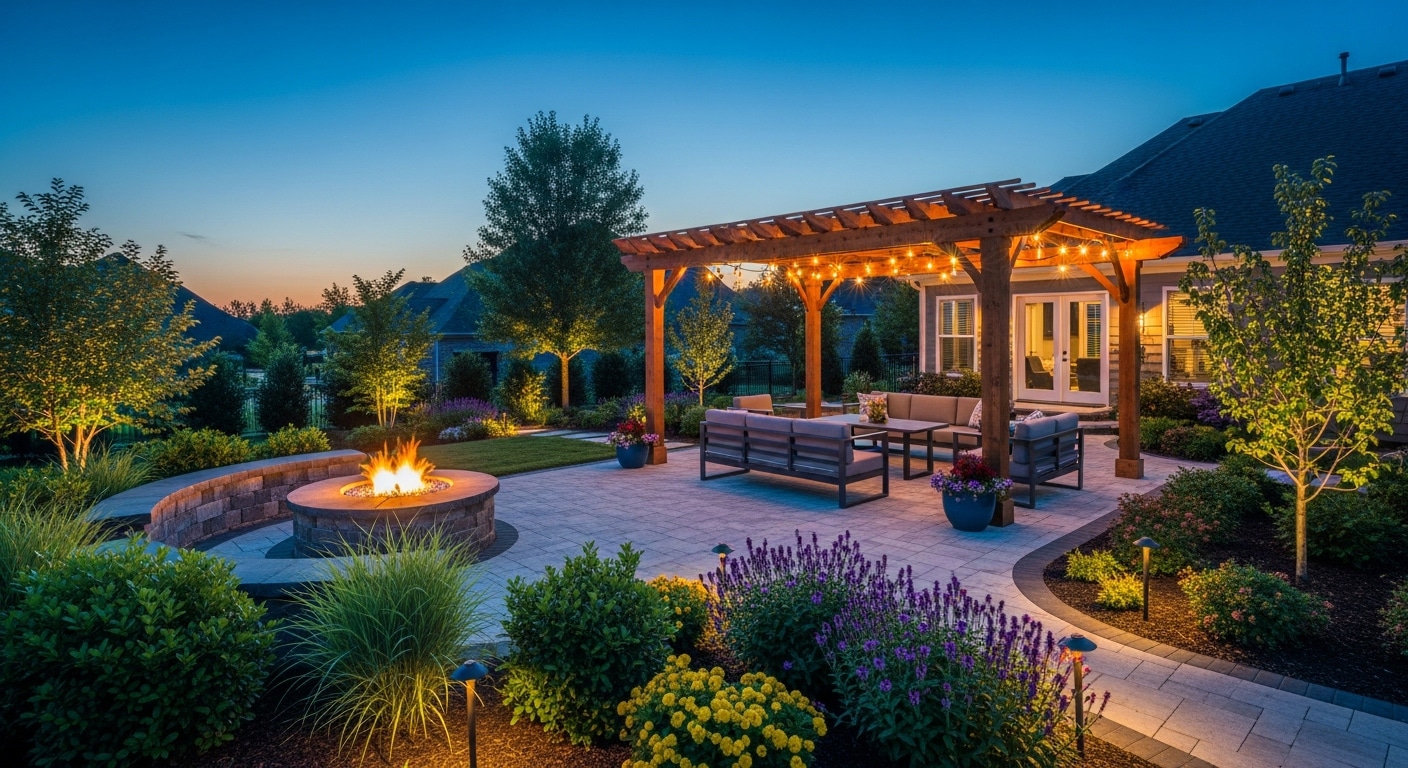
Multi-family entertaining — the 4th of July gathering, the Thanksgiving weekend cookout, the high school graduation party — is a core part of life for families in Broken Arrow and Tulsa. When your backyard is the venue for 30 to 50 people several times a year, the design requirements are fundamentally different from an outdoor space designed for a household of four. Capacity, flow, and service infrastructure all need to be sized for the actual event, not for average Tuesday evening use.
Capacity as the Starting Point
Before any design conversation, establish your realistic maximum event headcount. Not the typical Thursday evening — the biggest gathering you realistically host. If that number is 40 people, the design needs to accommodate 40 people standing, moving, eating, and gathering in groups, not 40 people seated at tables. Standing and circulating events require approximately 10 to 15 square feet per person in the active social zone; seated dinners require 25 to 30 square feet per seat. A 40-person standing event needs 400 to 600 square feet of usable patio area. A 40-person seated dinner requires 1,000 to 1,200 square feet of patio plus service aisles.
Most homeowners underscale their patio for actual event use because they design for typical use rather than maximum use. The solution is to zone the outdoor space so that the primary hardscape area is the minimum needed for daily use, and the adjacent lawn area is graded and maintained specifically to accommodate overflow event seating when needed.
Multiple Cooking Stations
Feeding 40 people from a single residential grill takes forever and creates a bottleneck that leaves half the party waiting while the other half eats. Multi-family entertaining at scale benefits from distributed cooking: the primary built-in grill in the outdoor kitchen handles the main protein; a secondary grill or smoker elsewhere in the patio area handles sides or overflow; and an outdoor prep and counter station provides the surface area to stage food across the meal without everything backing up at the primary cooking zone.
A large cooler station — either a large outdoor ice chest built into the kitchen base or a designated drink station separate from the primary kitchen — keeps guests out of the cooking zone when refilling drinks. This is one of the most impactful single layout decisions for large-group entertaining: a dedicated drink station 15 feet from the kitchen eliminates half the traffic through the cook’s workspace.
The Fire Pit Zone as Evening Anchor
Large gatherings in Oklahoma naturally transition as the evening progresses. Dinner at the kitchen and dining area; dessert and drinks distributed; evening conversation around the fire. A fire pit seating zone sized for 12 to 16 people — the subset of guests who stay late — creates the natural evening anchor that extends the gathering beyond the meal. Without a fire zone, large events tend to disperse to the interior after eating. With a fire zone, the most engaged guests continue gathering outdoors through the best part of the Oklahoma evening.
Restroom Proximity and Traffic Flow
For large events, the distance from the outdoor living space to a bathroom inside the house is a practical design consideration. Homes with a bathroom accessible directly from the back door or through a screened porch without walking through the kitchen or living area create smoother event flow. If your home layout requires guests to walk through the kitchen to reach the nearest bathroom, consider this in how you arrange the cooking station — or discuss a future accessory structure with a half bath with your contractor if events are frequent enough to justify the investment.