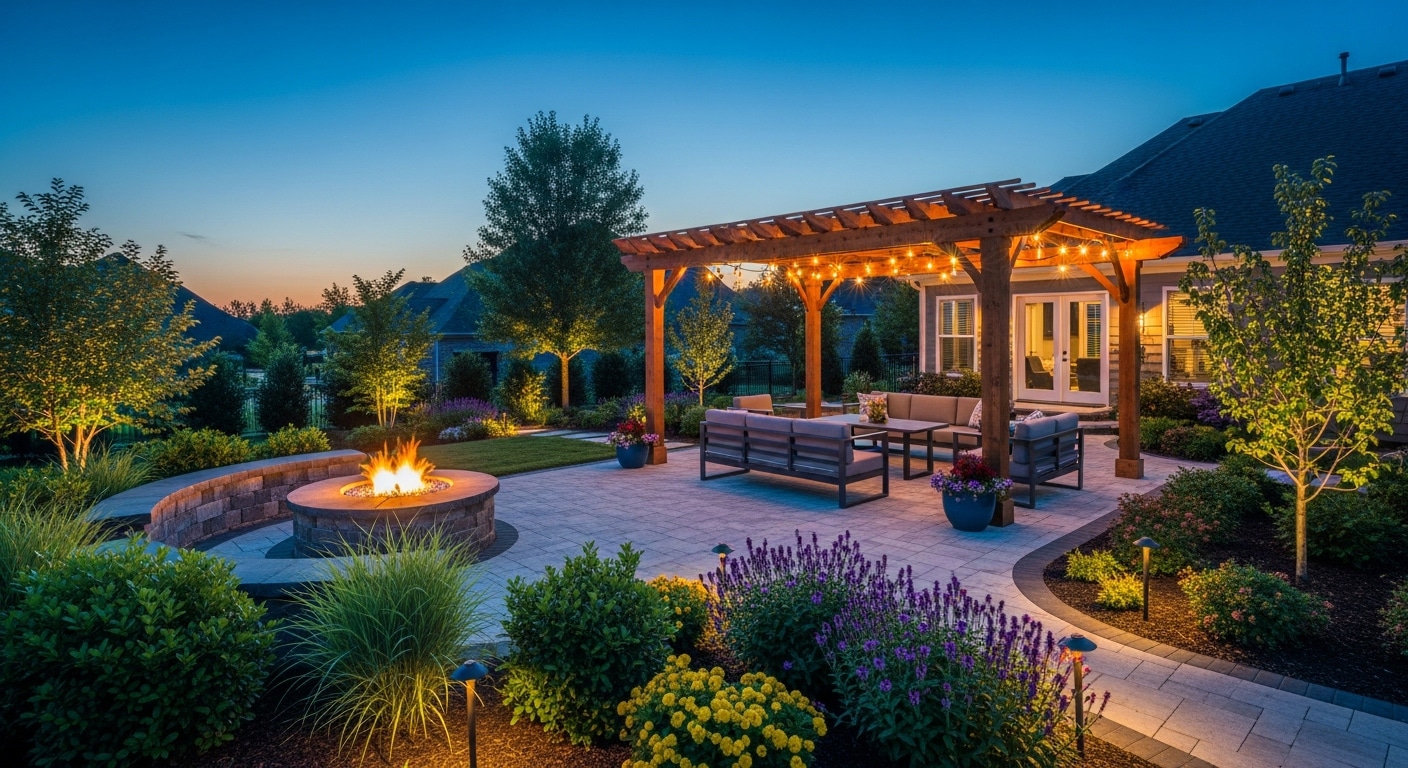
Oklahoma’s climate is simultaneously one of the best and most challenging environments for outdoor living. The state enjoys 230+ sunny days per year, a long warm season, and mild fall and spring conditions perfect for outdoor entertaining. It also delivers relentless summer heat, dramatic spring thunderstorms, occasional ice storms, and expansive clay soil that moves with the seasons. Building an outdoor living space in Oklahoma without accounting for these realities means building something that looks good at delivery and deteriorates within a few years. This guide covers what Broken Arrow and Tulsa homeowners need to know about designing outdoor living spaces for Oklahoma’s specific climate.
Summer Heat: Design for Shade and Airflow
July and August temperatures in Broken Arrow and Tulsa regularly exceed 95–100°F. An uncovered south or west-facing patio is effectively unusable during peak afternoon hours in summer. Design for shade first: a pergola that provides 40–60% shade coverage makes a patio usable year-round. Orient dining and seating areas to catch prevailing south or southeast breezes. Use light-colored patio surfaces (lighter concrete or stone) that reflect rather than absorb heat. Consider ceiling fans in covered patio areas for summer air movement.
Spring Thunderstorms: Design for Weather Protection
Oklahoma’s spring thunderstorm season runs from March through June, with the most active period in April and May. Outdoor spaces without overhead protection get disrupted frequently during this season. A solid-roof pavilion keeps you dry through any storm. An outdoor kitchen needs to be designed with appliance covers or some overhead protection for rain — stainless steel is standard because it resists moisture, but even stainless will pit faster without weather protection. Patio surfaces should slope away from the home and toward drainage inlets to handle 2–3″ rainfall events without ponding.
Oklahoma Clay Soil: Engineer Every Foundation
Oklahoma’s clay soil is the primary reason outdoor structures fail prematurely. Clay expands up to 10% when wet and shrinks when dry. This seasonal movement is why improperly footed outdoor fireplaces crack, poured concrete patios heave, and retaining walls lean. Every VistaScapes project in Broken Arrow and Tulsa accounts for clay soil: deep concrete footings for fireplaces, pergolas, and outdoor kitchens; granular aggregate base for all concrete and paver surfaces; and compacted native soil before any base goes in.
Freeze-Thaw Cycles: Use the Right Materials
Oklahoma’s winters bring freezing temperatures that create real challenges for moisture-absorbing patio materials. Water infiltrates small cracks and surface pores, freezes, expands, and spalls the material surface. The right materials for Broken Arrow and Tulsa: ASTM-rated clay flue tiles in fireplaces, firebrick with refractory mortar in fireboxes, sealed natural stone on patios, and freeze-thaw rated paving products. Sealing natural stone and concrete patios every 3–5 years maintains moisture protection and extends material life dramatically.
Extended Season Design: Fireplaces and Fire Pits
Oklahoma’s fall and early spring — September through November, March through April — offer the best outdoor weather of the year. A fireplace or fire pit extends comfortable outdoor use through these shoulder seasons, and even into mild winter evenings. Broken Arrow homeowners who invest in an outdoor fireplace or fire pit consistently report using their outdoor space more overall — not just because the fireplace is there, but because the presence of a heat source makes the shoulder seasons genuinely comfortable for outdoor entertaining.
VistaScapes designs and builds outdoor living spaces in Broken Arrow and Tulsa that account for Oklahoma’s climate at every stage — from material selection through construction engineering. Call us at 918-779-1317 to discuss your outdoor living project.