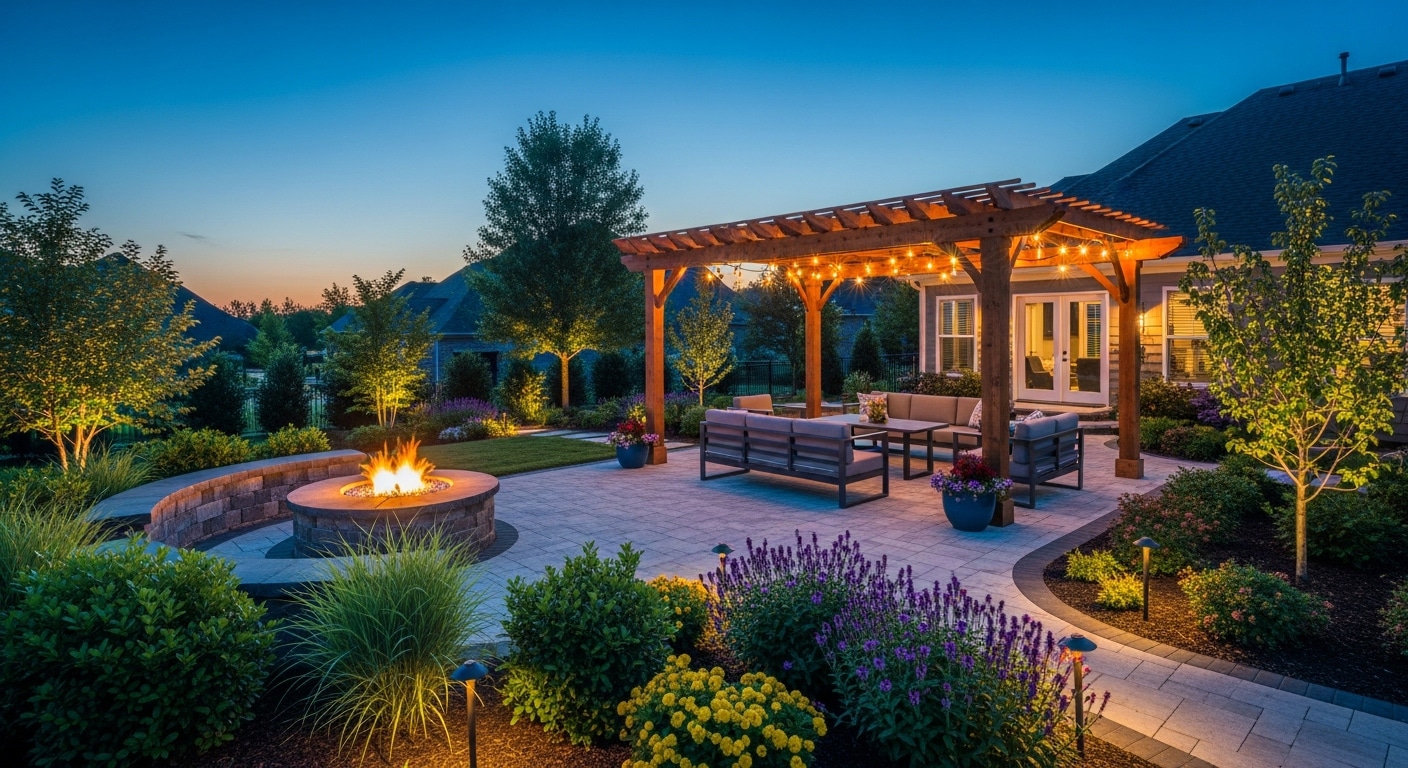
Oklahoma receives significant annual rainfall — concentrated in spring severe weather seasons that can deliver several inches of rain in a single event. Outdoor living spaces that are not designed for water management quickly develop problems: pooling water on patios, drainage into covered kitchen areas, moisture damage to outdoor kitchen cabinets and electrical, and standing water that creates slip hazards and accelerates surface deterioration. Getting drainage right from the start is as important as any aesthetic decision.
Hardscape Slope: The Foundation of Drainage
Every hardscape surface — concrete, pavers, natural stone — must be installed with a positive slope that drains water away from the house and structures. The standard minimum is 1 to 2 percent slope (1 to 2 inches of drop per 10 feet of run). In Oklahoma where summer storms deliver rain faster than it can sheet off a flat surface, 2 percent is the better target. Patio surfaces installed dead-level or with negative slope toward the house are a common contractor error that creates immediate problems and expensive corrections.
Before a concrete pour or paver base compaction, verify with your contractor that the finished surface will slope correctly. This is a grade control decision made during base preparation — changing slope after concrete is poured requires demolition and repour.
Channel Drains and Area Drains
For larger patios, patios against the house, and any outdoor kitchen area, channel drains (linear drains) positioned at the low point of the hardscape or at the transition between covered and open areas intercept surface water before it accumulates. A 4-inch channel drain running across the front of an outdoor kitchen catches rain blown in under the pergola, drainage from the kitchen sink, and any other water that finds its way onto the kitchen floor.
Area drains — point drains in the center or low corner of a patio basin — work for patios with a bowl-shaped slope profile. They require regular cleaning of debris to prevent clogging, which is particularly important in Oklahoma’s fall leaf season. Both drain types must connect to a functional outlet: a daylight outlet at a slope below the drain, a dry well, or the municipal storm drainage system where permitted.
Covered Patio and Pergola Waterproofing
A pergola with open lattice rafters provides partial shade but no rain protection. For genuine rain coverage in Oklahoma, you need a solid roof structure: insulated patio covers, polycarbonate panel roofs, tongue-and-groove ceiling with an impermeable membrane above, or a metal standing seam roof. Each system has different water management requirements — gutters and downspouts to redirect collected water away from the patio perimeter are essential for any solid-roof structure.
For pergolas with louvered roofs — adjustable aluminum louver systems that can open for sun and close for rain — the louver system must include an integrated gutter and drainage system. Quality louvered pergola systems include this as a standard component. Cheaper systems may not drain adequately, resulting in water overflowing into the patio area even when the louvers are in the closed position.
Outdoor Kitchen Waterproofing Details
Outdoor kitchens in Oklahoma need waterproofing at every transition: the countertop-to-backsplash joint, the backsplash-to-structure joint, the base cabinet interior, and around any sink cutout. These are the locations where water infiltration leads to structural damage in concrete block structures and rapid deterioration in steel-frame structures. A high-quality exterior-rated silicone sealant at all transitions, reapplied every two to three years, is maintenance that prevents expensive repairs. Outdoor-rated cabinet systems with stainless steel or HDPE interiors are more tolerant of occasional water infiltration than wood-core cabinet systems — another reason material selection matters for Oklahoma conditions.