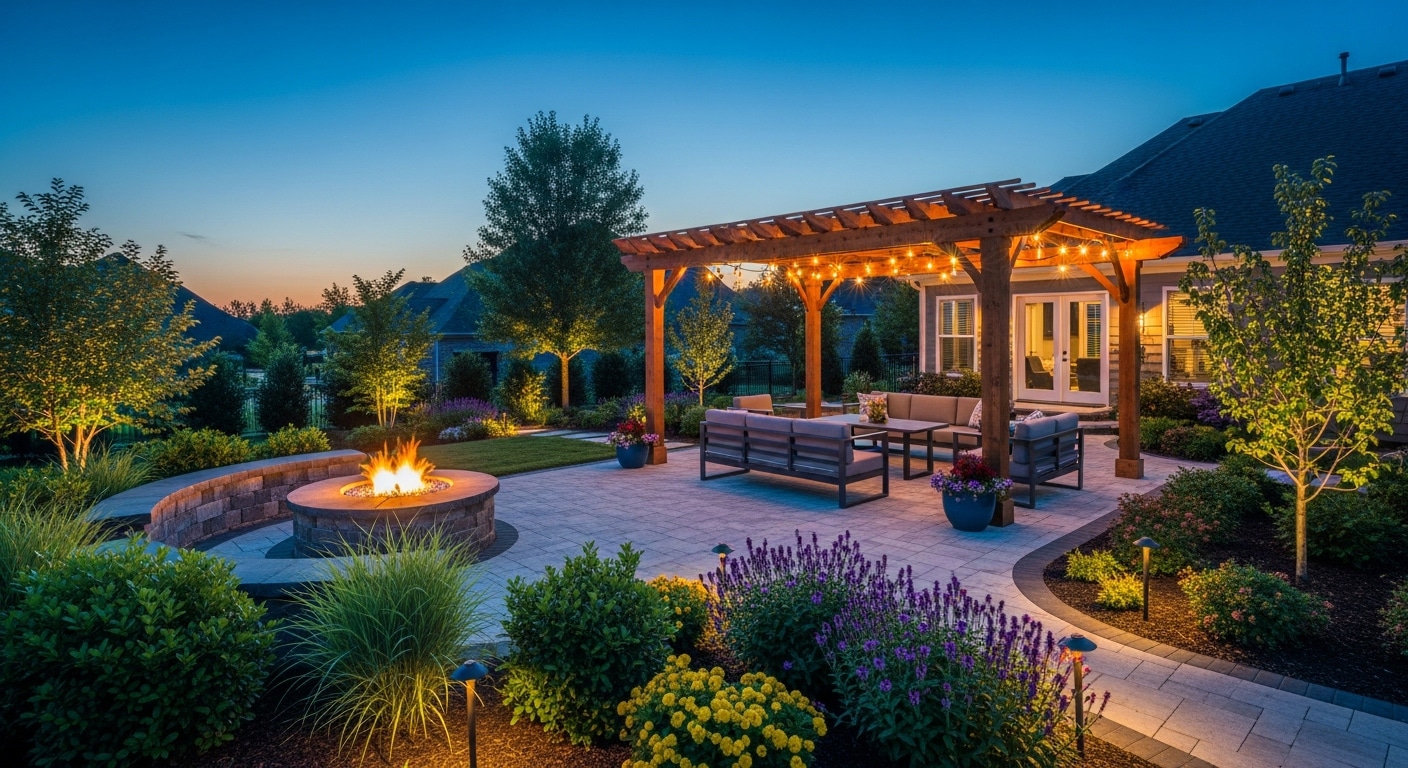
Patio drainage is one of the most consequential decisions in any outdoor living project in Tulsa, Broken Arrow, and the surrounding northeastern Oklahoma area — and one of the most frequently neglected by lower-quality contractors. Oklahoma’s heavy spring rains, clay soils that resist percolation, and freeze-thaw cycles create drainage challenges that will fail a patio built without proper engineering from the start. Here’s what every Tulsa-area homeowner needs to understand about outdoor drainage before signing a contract.
Why Oklahoma Drainage Is Different
Tulsa’s annual rainfall averages 40+ inches — heavier than Denver, Dallas, and most of the country’s interior. More critically, that rainfall is concentrated in intense spring storm events that can dump multiple inches in hours. Clay soils in Broken Arrow, Owasso, and Jenks absorb water slowly and retain moisture long after a rain event, meaning surface water has nowhere to go quickly without proper grading and drainage infrastructure.
Patio Drainage Methods
- Surface grading (slope) — The most fundamental drainage element; all patio surfaces must slope away from the home’s foundation at a minimum of 1/8 inch per foot (1% grade); 1/4 inch per foot (2% grade) is preferred. Improper slope is the #1 cause of water pooling and foundation damage from patios in Tulsa’s clay soil conditions.
- Channel drains (trench drains) — Linear drains installed at the low edge of the patio or at the transition between the patio and a lower surface; captures surface water and routes it away via underground pipe. Standard on covered patios and any patio adjacent to a home’s foundation or below-grade walls.
- French drain systems — Perforated pipe in gravel-filled trench installed around and/or below the patio perimeter; captures subsurface water in clay-heavy soils. Often required on sloped lots in Tulsa’s residential neighborhoods where subsurface water migrates toward hardscape areas.
- Pop-up emitters — Connects underground drainage pipes from channel drains and French drains to a discharge point in the yard away from the home; opens under water pressure and closes when dry to prevent backflow. The drainage system’s exit point.
- Sump or dry well — Underground collection reservoir for situations where drainage cannot flow by gravity to a suitable discharge point; used on some Broken Arrow and Tulsa lots with challenging topography.
Retaining Wall Drainage
Every retaining wall in Tulsa and Broken Arrow requires a perforated pipe drain at the base of the wall behind the block face, surrounded by clean gravel, with outlets at regular intervals. Without proper retaining wall drainage, clay soil behind the wall saturates, expands, and creates hydrostatic pressure that fails walls — typically within 5–10 years in northeastern Oklahoma’s wet spring seasons.
Questions to Ask Your Patio Contractor
- What slope will the finished patio surface have, and in which direction will it drain?
- Is a channel drain or trench drain included in the design?
- Where does the drainage water discharge on the property?
- If there’s a retaining wall, what drainage is installed behind it?
Contractors who can’t answer these questions specifically — or who say “it’ll be fine” — are the ones building patios that fail in Tulsa’s rainy seasons.
Call VistaScapes & Design at (918) 779-1317 for a free on-site consultation. We evaluate drainage conditions on every property before designing or pricing a project. Serving Tulsa, Broken Arrow, Owasso, Jenks, Bixby, and the Tulsa metro.